
Table of Contents
Why the Legendary Mechanical Engine Still Dominates (12 Valve Cummins)
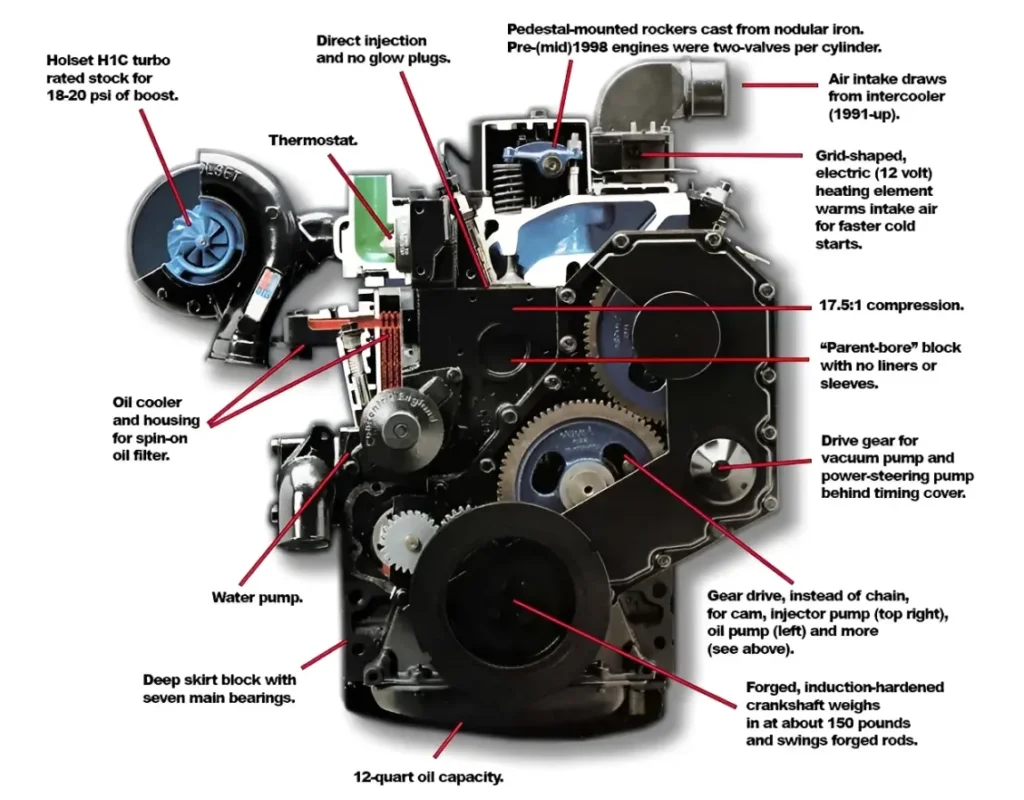
The 12 valve cummins engine is often called the “million-mile diesel.” Built with a fully mechanical system, it does not rely on complex electronics. This simplicity is the core reason for its unmatched durability.
Installed in Dodge Ram 2500 and Dodge Ram 3500 from 1989 to 1998, the 5.9L inline-six became a benchmark for reliability.
Key durability data:
- Engine lifespan: 500,000–1,000,000 miles or 15,000+ operating hours (with scheduled maintenance)
- Mechanical failure rate: <1% (significantly lower than the 15%+ failure rate in early electronic systems)
- Fuel system pressure (stock): ~17,000–18,000 psi (Bosch P7100 pump)
Unlike modern engines, the 12 valve Cummins operates without EGR, DPF, or SCR systems. This eliminates heat-related stress, prevents exhaust backpressure, and reduces failure points.
For operators, this means:
- Lower maintenance complexity (No ECU diagnostics required)
- Easier field repairs (Can be serviced with basic hand tools)
- Higher long-term reliability
This is why the mechanical diesel platform still dominates restoration, agriculture, and performance builds today.
Core Differences: Mechanical vs. Electronic (12 Valve Cummins vs 24 Valve)
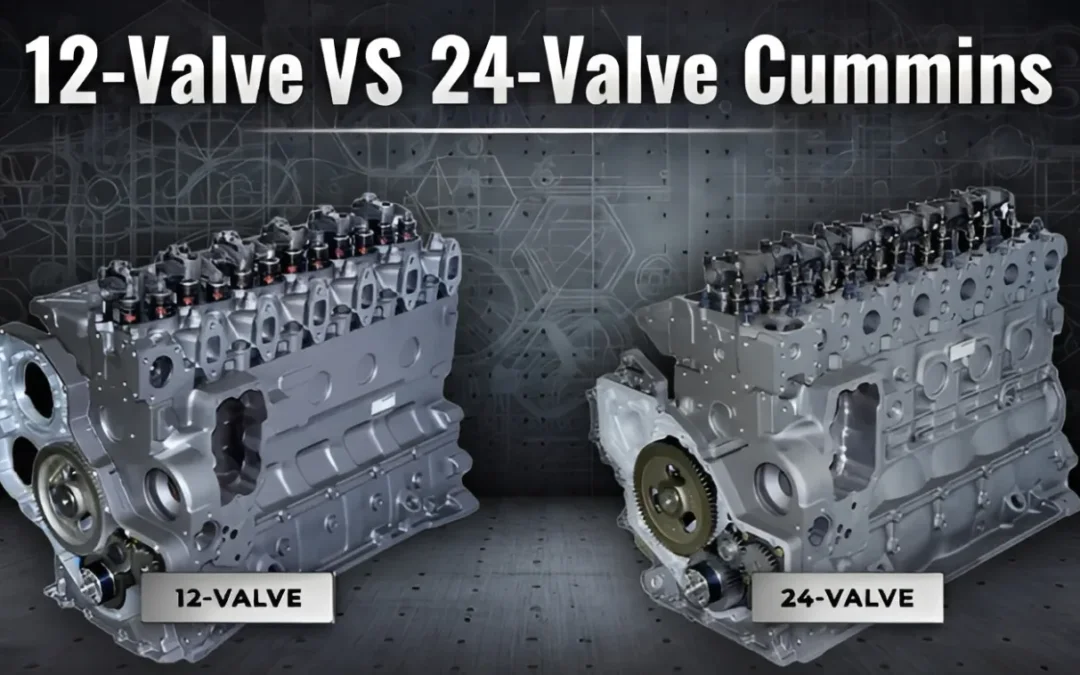
The difference between 12-valve Cummins and 24-valve engines defines their reliability and performance behavior.
Fuel Injection Systems (P7100 vs VP44)
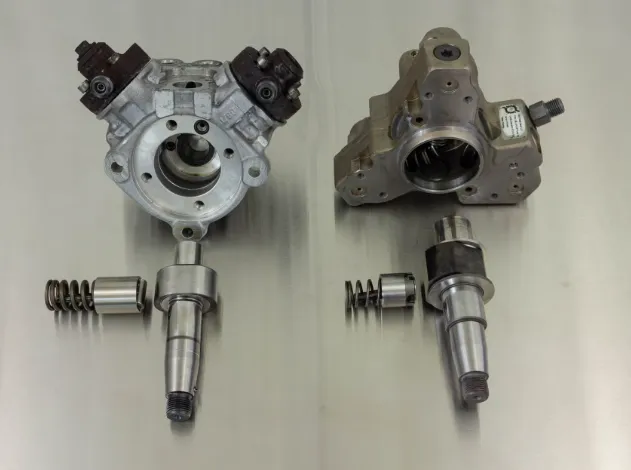
The 12 valve engine uses the Bosch P7100 mechanical injection pump, known for strength and simplicity.
In contrast, 24 valve engines use the VP44 electronic pump.
| Feature | P7100 (12V) | VP44 (24V) |
| Control | Mechanical | Electronic |
| Lubrication Method | Engine Oil (Highly resilient) | Fuel-Lubricated (Vulnerable to ULSD) |
| Peak Injection Pressure | ~18,000 psi | ~23,000 psi |
| Reliability | Very high | Moderate (Prone to heat failure) |
| Failure mode | Gradual wear over time | Sudden catastrophic failure |
| Upgrade potential | Extremely High (Mechanical tuning) | Limited (Requires electronic modules) |
The P7100 system supports significant power increases with simple adjustments to the fuel plate and governor springs.
Cylinder Head Airflow and Valve Train
The 24 valve head improves airflow and efficiency.
| Feature | 12 Valve | 24 Valve |
| Valves per cylinder | 2 | 4 |
| Stock Intake Airflow | ~140 CFM (@ 0.500" lift) | ~180 CFM (@ 0.500" lift) |
| Heat Cracking Resistance | Extremely High (Thick casting) | Moderate (Thinner casting between valves) |
| Airflow efficiency | Moderate | High |
| Complexity | Low | High |
While 24 valve engines produce better stock performance and emissions, the structural simplicity and thicker casting of the 12 valve design support easier rebuilds and extreme modification.
The 53 Block Casting Issue
Some 24-valve engines suffer from the “53 block” cracking issue due to thin water jacket walls.
Failure Data:
- Occurs in certain 1998.5–2001 engine block castings
- Block wall thickness drops to ~6mm in affected areas (vs 12mm standard)
- Cracks form along exterior coolant passages under heavy load
- Repair often requires a full $4,000+ block replacement
The 12 valve Cummins does not have this inherent manufacturing defect, adding to its superior long-term reliability.
Pushing the Limits of 12 Valve Cummins Horsepower
The 12 valve cummins horsepower potential is one of the main reasons for its popularity.
Stock Output:
- Horsepower: 160 hp (Early Auto) – 215 hp (Late Manual)
- Torque: 400 lb-ft – 440 lb-ft
Modified Performance:
- Mild upgrades: 300–400 hp (Fuel plate adjustment & 3K/4K governor springs)
- Advanced builds: 600–1,000+ hp (Twin turbos & upgraded injectors)
Common Upgrade Methods:
- Fuel plate adjustment
- Larger injectors (e.g., 5x0.012 or 5x0.014 sizes)
- Turbo housing upgrades
However, increasing horsepower fundamentally alters the engine's internal physics, drastically increasing cylinder pressure and temperature.
Risk Data:
- Exhaust gas temperature (EGT): 700°C+ / 1,300°F+ under heavy boost (Danger zone: Aluminum piston melting point is ~1,250°F)
- Head gasket failure risk increases above 40-45 psi boost (Factory torque-to-yield head bolts physically stretch past their yield limit)
This leads directly to the need for stronger sealing systems.
The Hidden Danger of Advanced Injection Timing (Timing Bump)
One of the most popular and cost-effective modifications for the 12 valve Cummins is advancing the injection timing on the Bosch P7100 pump. From the factory, timing is typically set conservatively around 12.5 to 13.5 degrees BTDC (Before Top Dead Center) to comply with 1990s NOx emissions standards. By mechanically "bumping" the timing to 16, 18, or even 20 degrees, owners can instantly unlock sharper throttle response, significantly lower exhaust gas temperatures (EGTs), and improved fuel economy.
However, this mechanical modification completely alters the internal stress dynamics of the engine block. Advancing the timing causes the air-fuel mixture to ignite earlier in the compression stroke. While this extracts more mechanical energy, it creates a massive, violent spike in Peak Cylinder Pressure (PCP). The original composite head gaskets from the 1990s were engineered exclusively for the gentle pressure curve of the factory 12.5-degree timing.
When exposed to the violent cylinder pressure spikes of 18-degree timing, the factory head bolts stretch, and the old-style gasket inevitably blows out between the cylinders. Therefore, if you plan to advance your P-pump timing, upgrading to a high-tensile head stud kit and an MLS (Multi-Layer Steel) head gasket is absolutely mandatory to keep the cylinder head securely clamped down.
Common Weak Points in Older Generations (12 Valve Cummins Issues)
Despite its legendary status, there are specific 12 valve cummins issues every owner must address during restoration.
The Infamous KDP (Killer Dowel Pin)
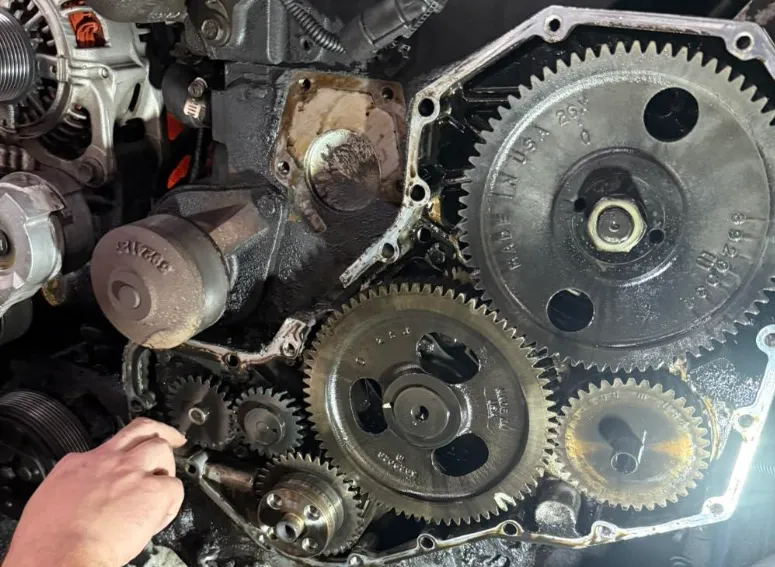
The KDP is a small steel alignment pin in the timing case that can vibrate loose.
Failure Impact:
- The pin falls directly into the spinning timing gears
- Shatters aluminum gear housing and bends valves
- Immediate, catastrophic engine destruction
Failure Rate Estimate:
- Affects a significant portion of high-mileage (200,000+ miles) engines if not proactively tabbed.
Front Gear Cover and Tappet Cover Oil Leaks
Oil leaks are inevitable on older blocks due to aging seals.
Causes:
- OEM rubber gasket material degradation
- 30+ years of extreme thermal expansion and contraction
Typical Leak Points:
- Timing cover seal (Front main)
- Tappet cover gasket (Side of block)
- Oil pan gasket
⚠️ Critical Technical Warning
Failure to secure the Killer Dowel Pin (KDP) with a $50 retainer tab will result in catastrophic engine damage.
Once dislodged, the solid steel pin enters timing gears, causing:
- Camshaft gear destruction
- Piston-to-valve collision damage
- Engine block and timing case structural failure
This failure is immediate, irreversible, and requires thousands of dollars in mechanical repair.
Maintenance Manual Insights
80%
of catastrophic failures in 12 valve engines are linked to unresolved KDP issues or top-end sealing failures under increased, unregulated boost pressure.
Key technical insights:
- Gasket blowout risk multiplies when boost exceeds 40 psi
- Oil leaks accelerate dirt accumulation and bearing wear
- Preventive sealing upgrades during a rebuild significantly extend engine life
What the Industry Experts Say
“This engine is nearly indestructible, but only if you address the KDP and upgrade the sealing materials. Old 1990s composite rubber gaskets cannot handle modern 50+ psi boost levels.”
Kevin Turner – Diesel Performance Specialist
This reflects a key reality: mechanical strength alone is not enough without proper sealing material science.
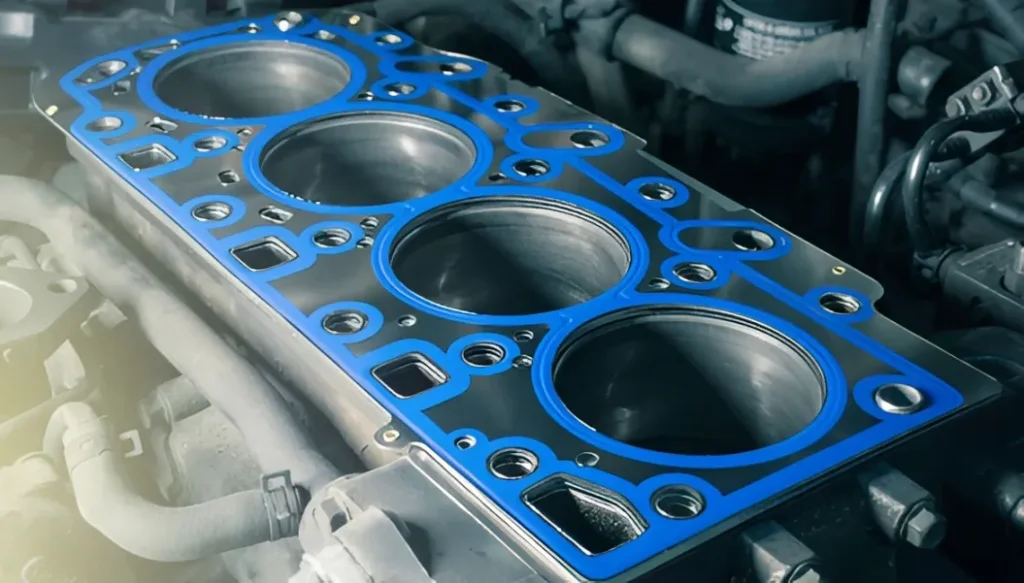
Why Sealing Material Dictates Your 12 Valve Cummins Rebuild Success
A 12 valve Cummins rebuild is not only about replacing pistons and injectors. It is heavily dependent on modern sealing technology.
Original gaskets from the 1980s and 1990s were not engineered for modern tuned performance levels.
Key Limitations of Old OEM Materials:
- Low heat resistance (Composite gaskets degrade above 250°C)
- Poor chemical stability (Rubber breaks down when exposed to modern synthetic oil additives)
- Limited pressure tolerance (Fails abruptly when cylinder pressures exceed 1,800 psi)
Modern Solution:
- MLS (Multi-Layer Steel) head gaskets with proprietary elastomer coatings
- FKM (Viton) coated sealing materials for oil pans and tappet covers (heat resistant up to 200°C)
Performance Improvement Data:
- Leak reduction: 30%–50% (Eliminates seepage entirely)
- Pressure tolerance increase: up to 2x (Capable of withstanding 3,500+ psi peak cylinder pressure)
This makes modern sealing materials essential for any serious high-performance rebuild.
Compatibility Data for 12 Valve Cummins Rebuild Kits
Engine Compatibility Table:
| Engine | Years | Vehicle / Application |
| 5.9L 12V Cummins (Automotive) | 1989–1998 | Dodge Ram 2500 / 3500 |
| Industrial 6BT | 1985–1998 | Heavy Equipment / Generators / Agriculture |
| Marine 6BTA | 1989–1999 | Commercial Marine Vessels |
Rebuild Kit Components Table:
| Component | Upgrade Option / Material Advantage |
| Head gasket | MLS reinforced (Multi-Layer Steel with FKM coating for high boost) |
| Oil seals | FKM material (Viton - Resists synthetic oil degradation and high heat) |
| Bearings | High-load rated (Tri-metal copper-lead construction for extreme torque) |
| Gasket kit | Full engine sealing set (Includes front/rear main seals, KDP fix kit, and tappet seal) |
Get Your Classic Engine Ready for Big Power (12 Valve Cummins)
Restoring a 12-valve Cummins engine is an opportunity to build something vastly stronger than the factory original.
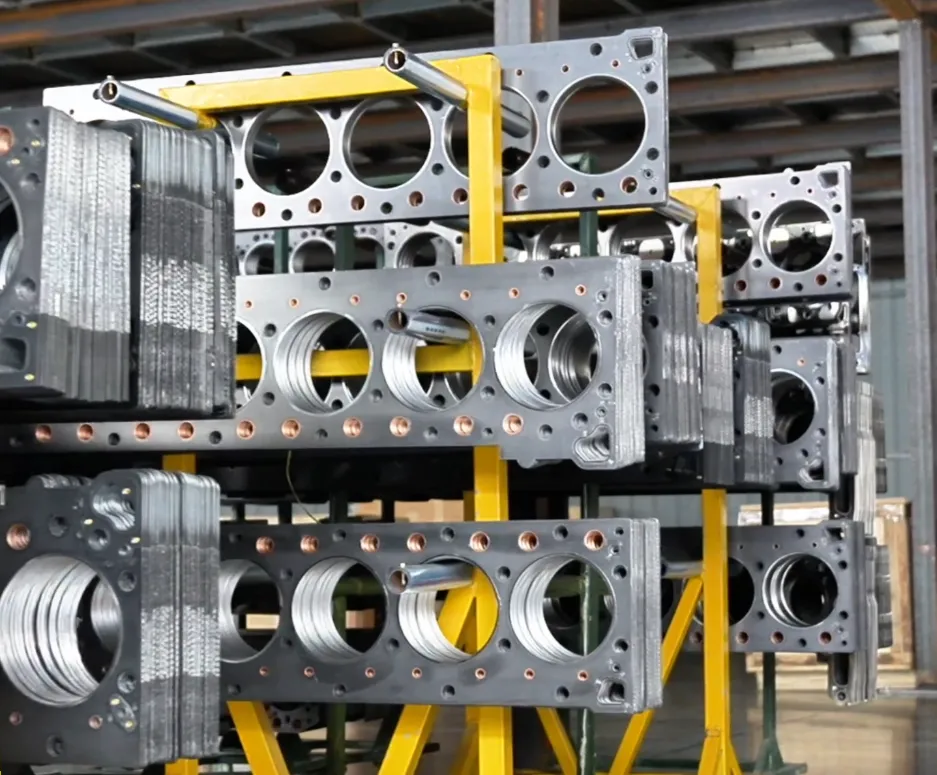
VP GASKET provides:
Product Advantages
- High-pressure MLS head gaskets tested for high-boost applications
- Full sealing kits perfectly calibrated for the 5.9L Cummins block
- Precision manufacturing ensures an exact-fit OEM replacement
Customer Results
- Permanently reduced oil leakage
- Improved compression stability and boosted reliability
- Extended engine lifespan past the 1,000,000-mile mark
Service Support
- Custom rebuild kits based on your specific horsepower goals
- Fast global delivery for fleet and restoration shops
- Expert technical consultation for 6BT applications
Contact Our Technical Sales Team
Planning a full 12 valve Cummins rebuild?
Upgrade your engine with 21st-century sealing technology and eliminate factory weak points.
FAQ
How much horsepower can a 12-valve Cummins handle?
With proper turbo and fueling upgrades, the stock bottom end can safely handle 600 hp and even reach 1,000+ hp in extreme performance builds, provided the head gasket is upgraded.
What is the KDP issue?
It is a loose steel alignment dowel pin in the timing case that can vibrate out and destroy the internal timing gears if not fixed with a retainer tab.
Is the 12 valve more reliable than the 24 valve?
Yes, primarily due to its mechanical simplicity, thicker cylinder head casting, and lack of fragile electronic components like the VP44 pump.
What is required for a proper rebuild?
A full rebuild kit containing upgraded MLS head gaskets, FKM oil seals, heavy-duty bearings, and replacement head studs.
Why upgrade the head gasket?
Factory composite gaskets stretch and blow out under high cylinder pressure. Higher boost levels require MLS steel sealing to prevent catastrophic coolant-to-oil cross-contamination.