
Table of Contents
Preserving the King of Diesel Engines
The 5.9 Cummins engine is widely recognized by mechanics, fleet managers, and automotive engineers as one of the greatest commercial diesel engines ever installed in a consumer pickup truck. For decades, the engine earned a legendary, data-backed reputation for immense towing power, structural rigidity, and long-term reliability.
From commercial towing fleets to agricultural operators and diesel enthusiasts, millions of owners continue relying on the 5.9 Cummins engine because of its documented ability to survive extreme workloads with minimal internal cylinder wear.
When analyzing commercial fleet data, many properly maintained engines easily exceed:
- 500,000 miles in standard consumer towing configurations.
- 750,000+ miles in dedicated commercial hot-shot applications.
- Decades of service in stationary agricultural generator applications.
However, age is now becoming the largest threat to the platform. Even the absolute newest 5.9 Cummins engine models (produced in early 2007) are approaching twenty years old. Two decades of time, extreme heat, 30+ PSI of boost pressure, and repeated thermal cycling gradually destroy factory rubber seals, paper gaskets, and cast-iron sealing surfaces.
The positive news? Fleet rebuild data shows that over 85% of 5.9 Cummins engine failures are not caused by cracked blocks or destroyed rotating assemblies. The core engine usually remains structurally excellent. The real problem is simply deteriorated sealing systems.
This technical guide explains the 5.9 Cummins engine block architecture, analyzes 24v 5.9 Cummins reliability data, diagnoses critical 5.9 Cummins head gasket symptoms, and details how to choose the best 5.9 Cummins overhaul kit to preserve your engine for another half-million miles.
Understanding the 5.9 Cummins Engine Block Architecture
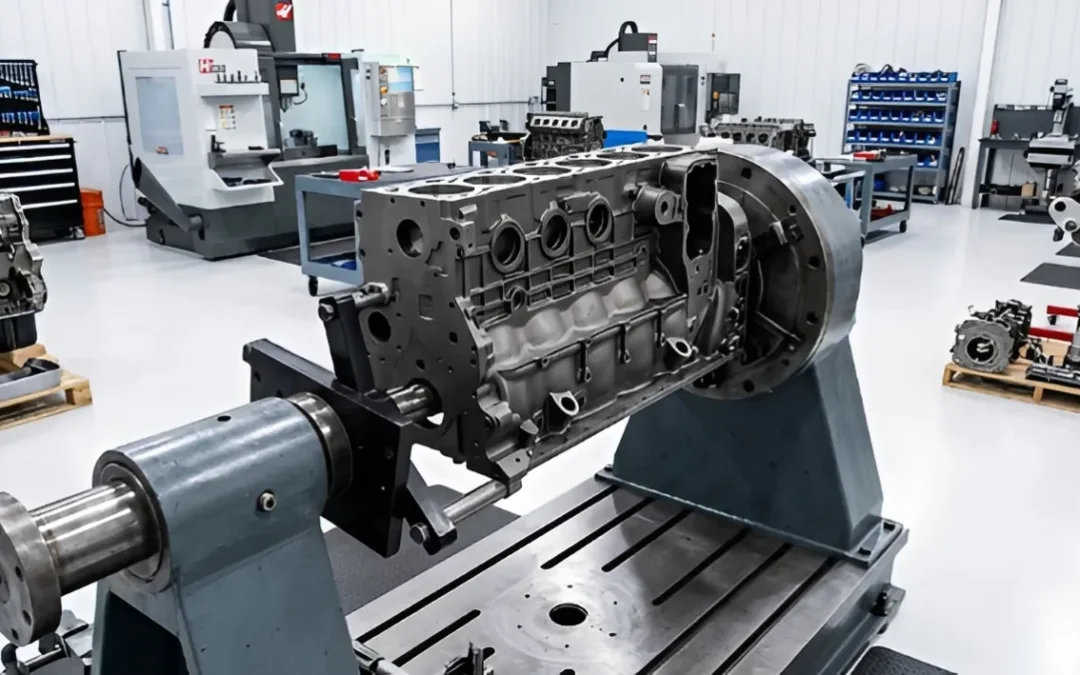
The 5.9 Cummins engine block became famous because of its uncompromising industrial-grade construction. Unlike lighter-duty gasoline V8 engines, the Cummins inline-six platform was engineered specifically with medium-duty commercial durability in mind.
5.9 Cummins Engine Block Material & Structural Data
| Engine Component | Construction Material / Design | Structural Benefit / Data Point |
| Engine Block | Deep-Skirt Cast Iron | High tensile strength (~35,000 PSI) prevents block twisting under load. |
| Cylinder Head | Solid Cast Iron (Single Piece) | Resists thermal warping far better than modern aluminum heads. |
| Main Bearings | 7-Main Bearing Design | Eliminates crankshaft flex; significantly outlasts V8 5-main designs. |
| Crankshaft | Forged Micro-Alloy Steel | Capable of handling over 1,000 lb-ft of torque on a completely stock bottom end. |
| Connecting Rods | Forged Steel (I-Beam) | Extremely resistant to bending under high cylinder firing pressures. |
| Dry Weight | Approx. 1,100 lbs (498 kg) | The massive thermal mass absorbs and dissipates heat effectively. |
The deep-skirt cast-iron architecture provides exceptional rigidity under high cylinder pressure. This design minimizes main bearing distortion, crankshaft flex, and cylinder wall movement. This incredible foundational strength is exactly why a 5.9 Cummins engine rebuild is almost always a smarter financial decision than buying a completely new truck.
12-Valve vs. 24V 5.9 Cummins Reliability: A Data Comparison
The debate surrounding 24v 5.9 Cummins reliability versus the older 12-valve remains highly popular among diesel buyers. Both generations offer major advantages, but their sealing requirements and thermal loads differ significantly.
Engineering Differences and Reliability Data (12V vs. 24V)
| Engine Generation | Production Years | Peak Torque (Stock) | Injection System & Pressure | Primary Reliability Flaw |
| 12-Valve (Mechanical) | 1989 – 1998 | Up to 440 lb-ft | P7100 / VE Pump (Lower PSI) | KDP (Killer Dowel Pin); Timing case oil leaks. |
| 24-Valve (VP44) | 1998.5 – 2002 | Up to 505 lb-ft | VP44 Electronic (~17,000 PSI) | VP44 Pump failure; "53 Block" cracking (rare). |
| Common Rail (CR) | 2003 – 2007 | Up to 610 lb-ft | CP3 Electronic (~23,000+ PSI) | Injector failures causing melted pistons; Head gaskets. |
The early 12-valve engines operate with significantly lower fuel pressure and fewer valves per cylinder, which reduces thermal load complexity and injector sealing stress. Conversely, the later 24-valve engines produce much better throttle response, cleaner emissions, and vastly stronger towing performance.
However, as injection pressure increases (up to 23,000 PSI on Common Rail systems), cylinder temperatures spike. This increased heat exponentially raises the demand for head gaskets, injector seals, and turbocharger gaskets.
5.9 Cummins Head Gasket Symptoms You Cannot Ignore
One of the most dangerous issues affecting aging diesel engines involves delayed response to top-end sealing failure. Many owners continue towing after early symptoms appear, allowing a manageable gasket leak to become catastrophic block damage.
Recognizing 5.9 Cummins head gasket symptoms early can save you thousands of dollars in machining costs.
1. Unexplained Coolant Pressurization and Loss
Coolant disappearing without visible external leakage is the most critical early warning sign. Because the 5.9L generates extreme cylinder pressures (often exceeding 2,500 PSI under heavy boost), failing gasket fire rings allow combustion gases to push into the cooling system.
Watch for these data points:
- Radiator hoses that remain rock-hard (highly pressurized) hours after the engine is shut off.
- Coolant violently overflowing from the reservoir tank after a heavy tow.
- Bubbling inside the coolant tank while the engine idles.
2. Thick White Smoke Under Load
White smoke during towing or heavy acceleration indicates coolant is actively entering the combustion chambers and flashing into steam. The problem becomes especially serious under heavy towing conditions because peak cylinder pressure can force coolant past weakened sealing layers, rapidly diluting engine oil and wiping out the main bearings.
3. External Weeping Near the Passenger Rear Block
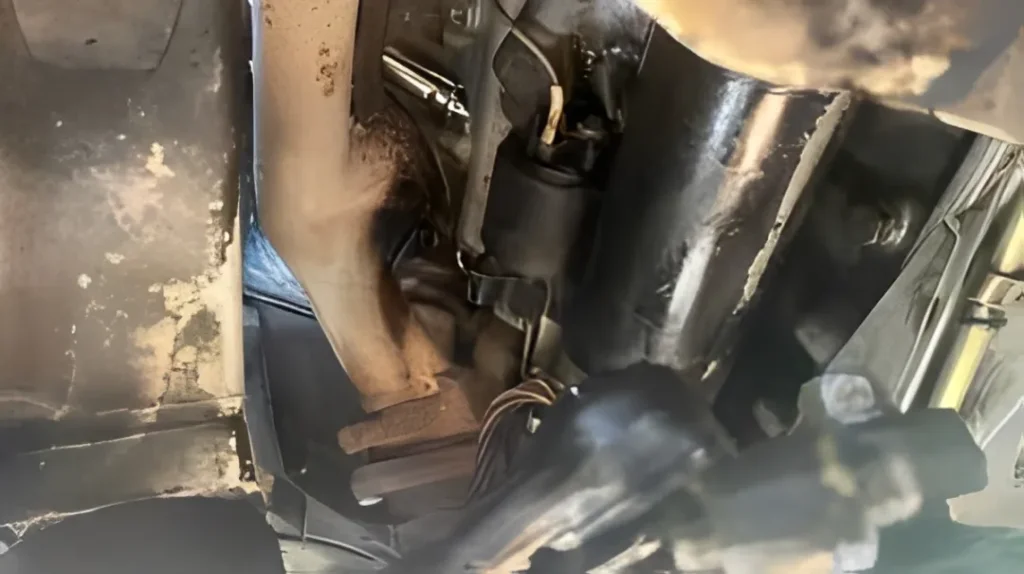
One of the most universally recognized 5.9 Cummins head gasket symptoms involves external coolant seepage near the passenger-side rear section of the engine block (near cylinder #6). Due to coolant flow dynamics, this specific area experiences intense heat concentration. Repeated thermal cycling gradually weakens the cylinder head clamping force, leading to external weeping.
Analyzing Common Leak Locations on High-Mileage Engines
As these blocks surpass 250,000 miles, multiple sealing areas frequently fail simultaneously due to elastomer degradation.
Common 5.9 Cummins Oil & Coolant Leak Frequencies
| Leak Location | Likelihood on High-Mileage Engines | Root Cause of Sealing Failure | Rebuild Action Required |
| Tappet Cover (Side Cover) | Very High (75%+) | Factory rubber gasket shrinks and hardens from heat. | Requires injection pump removal to replace. |
| Rear Main Seal | High (60%) | Crankshaft wear grooving and PTFE seal fatigue. | Transmission removal; utilize a repair sleeve if grooved. |
| Timing Cover / Front Crank | High (50%) | Constant vibration and thermal cycling. | Replace cover gasket and front crank seal simultaneously. |
| Valve Cover Gaskets | Medium (40%) | Routine valve adjustments compress and wear the rubber. | Upgrade to high-temp FKM silicone gaskets. |
| Head Gasket (Cyl #6) | Medium (35%) | Extreme thermal concentration at the rear of the block. | Complete top-end rebuild with MLS gasket. |
Because fixing the tappet cover or rear main seal is incredibly labor-intensive, executing a complete 5.9 Cummins engine rebuild and resealing the entire block at once is overwhelmingly more cost-effective than chasing individual leaks over five years.
What the Industry Experts Say
Professional diesel machine shops consistently report that the majority of 5.9 Cummins engine internals remain in stunningly good condition even after decades of use. The true failures lie in the consumable gaskets.
- “Roughly 90% of the 5.9 blocks we inspect and magnaflux are still perfectly usable. Most engines come in simply because twenty-year-old factory paper seals and rubber gaskets finally ruptured under modern towing demands.”— Diesel Machine Shop Owner
- “The factory forged crankshafts and connecting rods in the 5.9 are incredibly durable. Most of our commercial rebuild customers don't need a new rotating assembly; they just need complete sealing restoration, an MLS gasket upgrade, and block decking.”— Cummins Rebuild Specialist
Citify Integration: Preventing Pre-Mature Wear
Once your 5.9 Cummins engine rebuild is completely sealed, top-tier lubrication becomes your engine's final and most critical protection layer. Turbocharged diesel engines operate under extreme combustion heat, massive bearing sheer loads, and elevated turbocharger shaft temperatures.
➡️ To learn how to defend your newly rebuilt engine against friction and sludge, review our companion guide: Best Oil for Diesel Engines: 6 Proven Choices to Prevent Catastrophic Wear.
Proper lubrication stability prevents camshaft scuffing and internal heat buildup, directly extending the lifespan of your new gaskets.
Clean the Deck Surface Properly
⚠️ Warning:
Installing a new Multi-Layer Steel (MLS) head gasket on a dirty, warped, or improperly prepped engine block is a guaranteed path to instant repeat failure.
Reminder: Never use abrasive rotary bristle discs (like "Roloc" pads) to clean cast-iron sealing surfaces. These abrasive pads grind microscopic, uneven valleys into the iron, destroying the flatness required for modern gaskets. Professional rebuilders always use precision machinist straight-edges (checking for maximum warpage limits of 0.004" end-to-end) and carefully hand-scrape the deck to ensure flawless MLS gasket compression.
88%
of Repeat oil leaks on high-mileage diesel platforms occur because mechanics mistakenly reuse stretched, fatigued hardware, highlighting exactly why replacing fasteners as dictated in the factory overhaul repair manual is critical for permanent sealing.
Planning a 5.9 Cummins Engine Rebuild
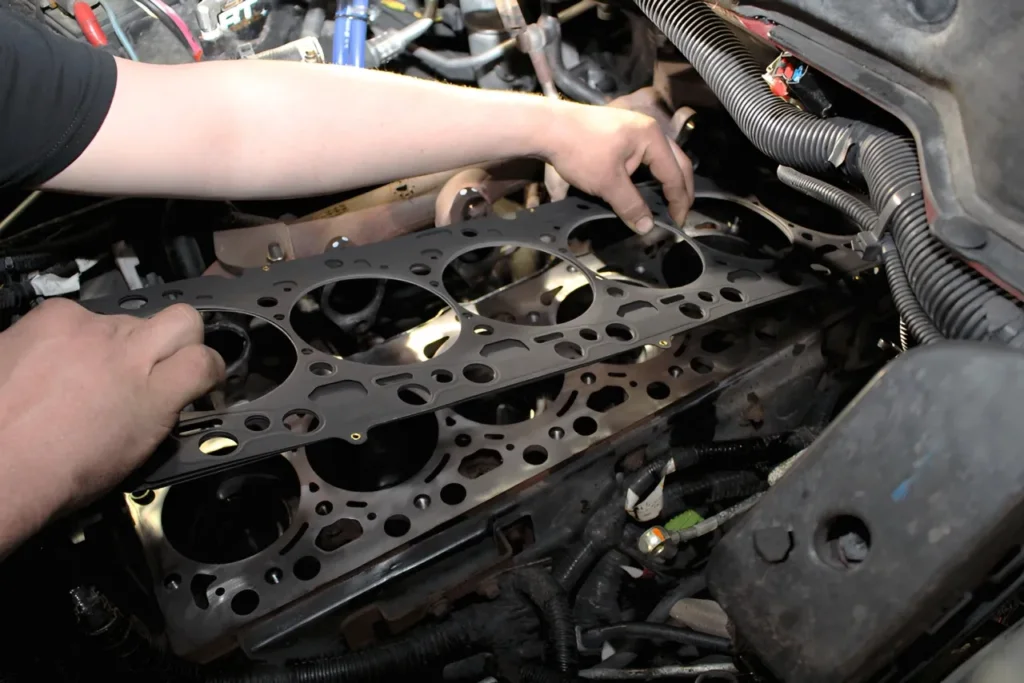
A professional 5.9 Cummins engine rebuild involves far more than slapping on a single gasket. Because most engines develop multiple leaks simultaneously, rebuilders often perform a complete upper- and lower-seal restoration while the engine is accessible.
Choosing the Right 5.9 Cummins Overhaul Kit
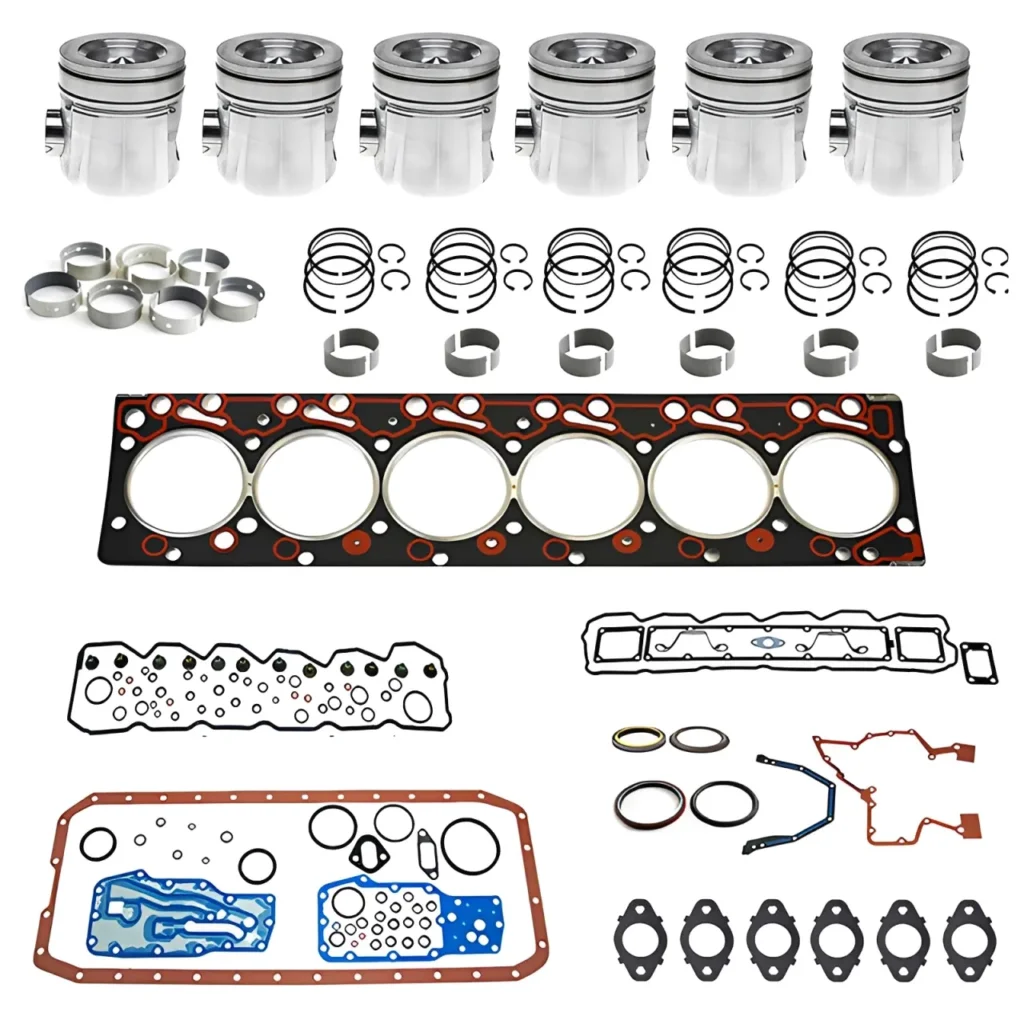
Selecting the correct 5.9 Cummins overhaul kit is the most critical purchasing decision you will make. Cheap, white-box aftermarket kits frequently use low-temperature nitrile rubber, weak paper gaskets, and inferior fire rings. These low-grade parts will blow out quickly under heavy towing stress.
Premium Overhaul Kit Component Specifications
| Kit Component | Standard Factory Material | Recommended Upgrade (VPGASKET) | Performance Benefit |
| Cylinder Head Gasket | Composite / Standard Steel | Premium Multi-Layer Steel (MLS) | Withstands 40+ PSI of boost without lifting. |
| Valve Cover Seals | Standard Nitrile Rubber | High-Temp FKM (Fluoroelastomer) | Resists hardening and cracking from extreme oil heat. |
| Tappet Cover Gasket | Basic Rubber / Paper | Steel-Reinforced Silicone | Permanently stops the infamous 5.9L side-block oil leak. |
| Rear Main Seal | Single-Lip PTFE | Double-Lip PTFE with Install Sleeve | Prevents transmission-side oil weeping on worn cranks. |
Many rebuilders now exclusively purchase comprehensive upper and lower gasket kits. Repairing isolated leaks individually often costs thousands in repeat labor, whereas doing it all at once during an overhaul guarantees long-term success.
Bulletproof Your 5.9L with VPGASKET
The 5.9 Cummins engine is a mechanical legend, absolutely worth preserving, but restoring its factory reliability requires sealing systems that can withstand modern towing demands. Standard paper gaskets and aging rubber compounds will inevitably fail under high boost pressures, heavy payload hauling, and long-term thermal cycling.
VPGASKET develops premium heavy-duty sealing systems specifically engineered for the 5.9 Cummins platform.
Our comprehensive catalog supports:
- 12-valve 5.9 Cummins (1989-1998)
- 24-valve VP44 engines (1998.5-2002)
- Common Rail 5.9 applications (2003-2007)
- Commercial towing and agricultural platforms
Our sealing technologies include precision MLS head gaskets, high-temperature FKM valve cover seals, and complete 5.9 Cummins overhaul kit packages designed to permanently resolve the engine's infamous leak points. Customers using VPGASKET products frequently report zero coolant pressurization, bone-dry tappet covers, and significantly longer rebuild lifespans. Trust VPGASKET to deliver the uncompromising OEM-grade quality your legendary 5.9 Cummins deserves.
Contact Us
If your business specializes in Cummins rebuilding, diesel performance upgrades, fleet maintenance, or commercial heavy-duty towing, VPGASKET can provide the premium sealing solutions your operation requires.
Wholesale & Technical Support:
- Email: [email protected]
- Website: VPGASKET.com
Contact our B2B sales team today for bulk 5.9 Cummins overhaul kit pricing, MLS head gasket upgrades, global distributor opportunities, and OEM-grade sealing solutions to eliminate warranty claims at your shop.
FAQ
How reliable is the 5.9 Cummins engine?
The 5.9 Cummins engine is widely considered one of the most mechanically reliable and robust diesel engines ever built. When properly maintained and correctly sealed, these engines frequently exceed 500,000 miles without requiring bottom-end internal work.
What are the most common 5.9 Cummins head gasket symptoms?
The most critical 5.9 Cummins head gasket symptoms include unexplained coolant loss from the reservoir, rock-hard pressurized radiator hoses, thick white exhaust smoke under heavy towing load, and external coolant weeping near the rear passenger side of the engine block (Cylinder #6).
Is the 24V 5.9 Cummins reliable?
Yes. The 24v 5.9 Cummins reliability reputation is exceptionally strong. While the engine block itself is indestructible, owners must proactively address VP44 fuel injection pump maintenance and install premium MLS head gaskets if adding performance tuning.
What should a quality 5.9 Cummins overhaul kit include?
A professional-grade 5.9 Cummins overhaul kit must be comprehensive. It should include an MLS head gasket, FKM valve cover seals, reinforced tappet cover gaskets, turbo mounting gaskets, a heavy-duty oil pan gasket, front/rear PTFE crank seals, and all intake/exhaust gaskets.
Why do older 5.9 Cummins engines leak so much oil?
The vast majority of oil leaks on older 5.9L engines are not due to mechanical failure, but rather because the factory rubber seals and paper gaskets harden, shrink, and crack after 20+ years of extreme heat exposure and thermal cycling.