
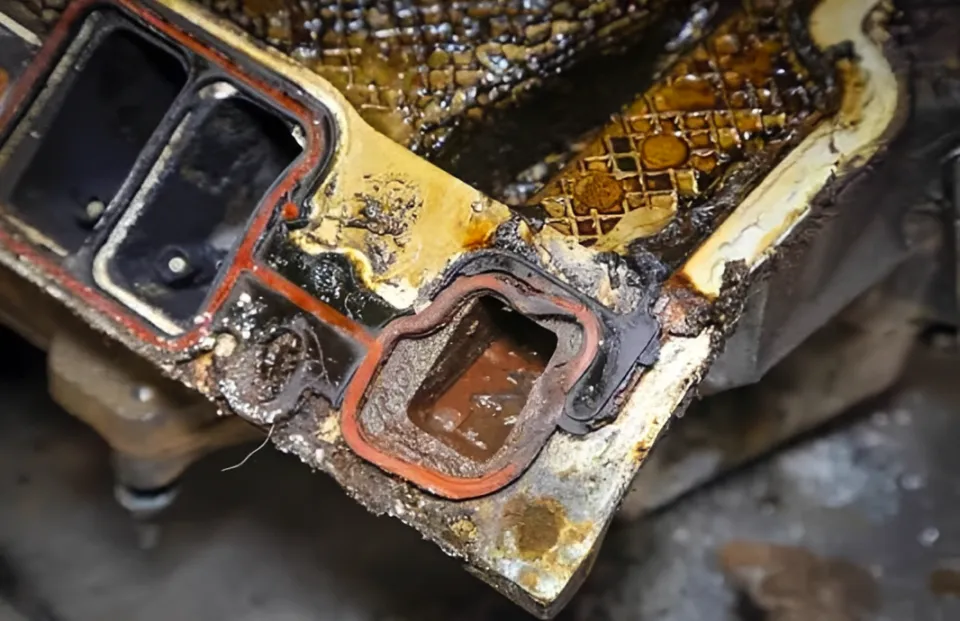
Can a bad throttle body gasket cause P0171, P0174, or a high idle? Yes. When the seal between the throttle body and the intake manifold fails, unmetered air bypasses the Mass Air Flow (MAF) sensor and enters the engine. The engine control module (ECM) detects this lean condition via the oxygen sensors and increases fuel delivery, triggering the P0171 (Bank 1) and P0174 (Bank 2) trouble codes.
Furthermore, this extra air slipping past a closed throttle plate forces the engine into an erratic, high idle. Before throwing expensive oxygen sensors at the problem, a structured diagnostic approach is necessary. Understanding the symptoms of a bad throttle body gasket is critical to differentiating a simple vacuum leak from complex fuel delivery issues. This guide will walk you through interpreting fuel trim data to pinpoint the true root cause of your lean codes.
Estimated reading time: 12–14 minutes.
Table of Contents
For broader planning context before this bad throttle body gasket decision, read our earlier blog, Throttle Body Gasket Replacement Symptoms. It provides related repair or fitment context without replacing the engine-specific service procedure.
For sourcing context, compare the repair scope against VPGASKET engine gasket sets, Cummins engine gasket options, Cummins B-series gasket kits, 4025107 upper engine gasket kit, 3800487 ISB 5.9L lower gasket kit. VPGASKET supplies gasket repair kits and seals only; hard parts must be sourced separately.
When the decision depends on the wider engine layout, use these external references for diesel engine parts and system layout, Cummins engine assemblies and spare-parts context, engine diagnostic context, then confirm the exact configuration with the applicable ESN, CPL, OE number, and service information.
Bad throttle body gasket selection should start with the real repair scope, the engine identification evidence, and the condition of every sealing surface—not with a model name or one isolated part number.
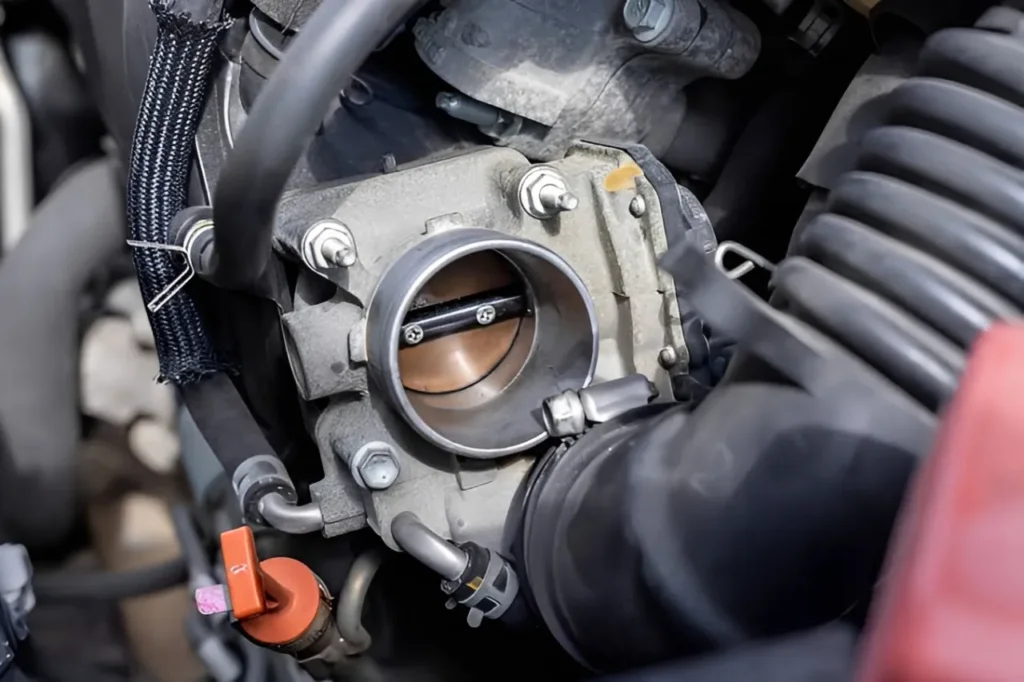
How unmetered air changes fuel trim
To understand why a throttle body seal failure triggers these specific codes, you must look at how the engine calculates its air-fuel mixture. The engine relies on the MAF sensor to measure incoming air. Based on this reading, the ECM injects a precise amount of fuel to achieve a stoichiometric ratio (usually 14.7:1 for gasoline).
When a gasket degrades, shrinks, or cracks, it creates a vacuum leak. Because the intake manifold operates under vacuum at idle, it physically sucks outside air in through the compromised gasket. This air is "unmetered" because it never passed through the MAF sensor. The upstream oxygen sensors detect excess oxygen in the exhaust, and the ECM responds by driving the Short Term Fuel Trim (STFT) and Long Term Fuel Trim (LTFT) positive to add fuel.
| System Condition | Air Source | Sensor Reading | ECM Action (Fuel Trim) |
|---|---|---|---|
| Normal Operation | Passes through MAF | Expected O2 levels | Trims hover near 0% (±5%) |
| Minor Gasket Leak | Bypasses MAF at flange | Slight excess O2 | Trims rise to +5% to +10% |
| Severe Gasket Failure | Bypasses MAF at flange | High excess O2 | Trims exceed +15%, triggering P0171/P0174 |
| Blocked Intake | Restricted at filter | Rich condition (low O2) | Trims go negative to pull fuel |
Warning: Ignoring a persistent lean condition (P0171/P0174) risks severe catalytic converter damage or engine misfires due to high combustion chamber temperatures. Do not simply clear the codes without repairing the underlying leak.
Codes and symptoms that may appear
A compromised throttle body seal rarely presents as a single symptom. The combination of diagnostic trouble codes (DTCs) and physical drivability issues provides the initial clues for your diagnosis.
The most common codes are P0171 (System Too Lean Bank 1) and P0174 (System Too Lean Bank 2). Because the throttle body is centrally located and feeds the entire intake manifold, a leak here typically affects both engine banks on a V6 or V8, setting both codes simultaneously. If you only have a P0171 on a V8, the leak might be localized to an intake runner gasket rather than the central throttle body.
Physical symptoms closely follow the unmetered air. High idle results directly from the extra air bypassing the closed throttle plate. The engine may also experience idle hunting (surging up and down) as the ECM desperately tries to control the idle speed by adjusting ignition timing and fuel delivery, fighting against the mechanical air leak.
| Symptom / Code | Gasket-Related Cause | Potential False Flag (Misdiagnosis) |
|---|---|---|
| P0171 & P0174 | Central vacuum leak at TB flange | Failing fuel pump or clogged fuel filter |
| High Idle (1000+ RPM) | Air bypassing closed throttle plate | Throttle body needs electronic relearn |
| Idle Hunting / Surging | ECM fighting unmetered airflow | Dirty MAF sensor reporting erratically |
| Stalling on Deceleration | Sudden lean spike when throttle snaps shut | Faulty idle air control (IAC) valve |
What scan data can and cannot prove
You do not need to guess if you have a vacuum leak; your scan tool can prove it. By observing live data, specifically STFT and LTFT, you can differentiate between a vacuum leak (like a bad gasket) and a fuel delivery problem.
The most reliable method is the 2500 RPM test. At idle, manifold vacuum is at its highest, meaning a gasket leak will suck in a maximum amount of unmetered air relative to the total airflow. This causes fuel trims to skyrocket. However, when you hold the engine at 2500 RPM, the throttle plate opens. A massive volume of metered air rushes in through the MAF, and manifold vacuum drops. The small amount of air leaking past the gasket becomes mathematically insignificant.
If your total fuel trim (STFT + LTFT) is high at idle (e.g., +20%) but normalizes or drops significantly at 2500 RPM, you have a vacuum leak. Ford service bulletin TSB 04-17-4 utilizes a similar diagnostic method, noting that a trim drop of more than 15 percentage points under load/RPM strongly supports a vacuum leak diagnosis.
| Total Fuel Trim at Idle | Total Fuel Trim at 2500 RPM | Diagnostic Conclusion |
|---|---|---|
| +20% (High Positive) | +3% (Drops to Normal) | Classic Vacuum Leak (Check gaskets/hoses) |
| +20% (High Positive) | +22% (Remains High) | Fuel Delivery Issue (Pump, injectors, pressure) |
| -15% (High Negative) | -14% (Remains Negative) | Rich Condition (Leaking injector, bad regulator) |
| +4% (Normal) | +3% (Normal) | No Current Fault (Intermittent issue or historical code) |
Interactive Diagnostic Tool: Fuel Trim Vacuum Leak Calculator
Use this tool to calculate your total fuel trims and determine if your scan data points toward a vacuum leak, like a failed throttle body gasket.
Fuel Trim Vacuum Leak Analyzer
Enter your Bank 1 STFT and LTFT percentages.
Other causes to rule out
While scan data can confirm a vacuum leak, it cannot isolate the throttle body gasket as the sole culprit. P0171 and P0174 are not "throttle body gasket codes"; they are bank-lean result codes.
Furthermore, a high idle might not be a physical leak at all. If the throttle body was recently cleaned without performing the OEM electronic throttle relearn procedure, the ECM will hold the plate open too far, expecting carbon buildup that is no longer there. Always check the OEM service manual for idle relearn procedures before assuming a hardware failure.
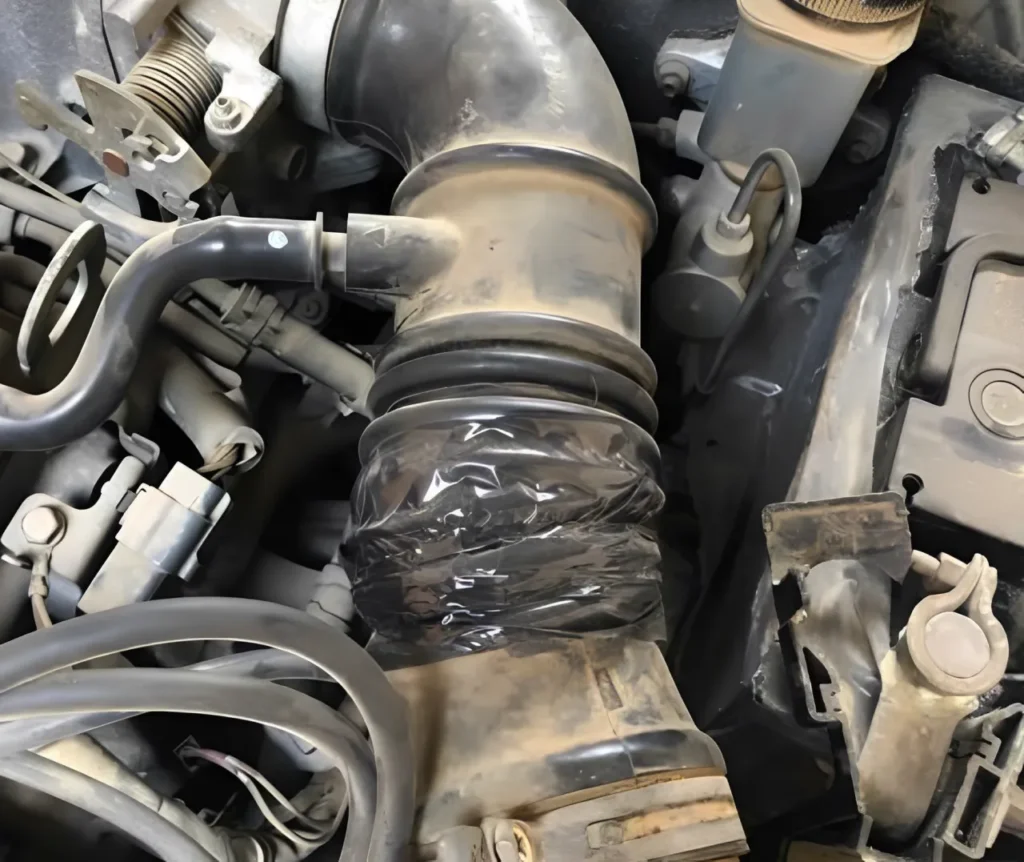
You must rule out other sources of unmetered air or lean conditions. PCV valves stuck open, cracked EVAP purge lines, and loose intake ducting will all mimic a bad throttle body seal. A dirty MAF sensor under-reporting airflow will also cause lean codes, though MAF issues generally skew fuel trims equally across all RPM ranges, rather than dropping at higher RPMs.
| Component | Shared Symptoms | Verification / Rule Out Method |
|---|---|---|
| PCV Valve/Hose | Lean codes, high idle | Clamp off PCV hose; if trims instantly drop, PCV is the source. |
| MAF Sensor | Lean codes, sluggish acceleration | Check grams/sec at idle and wide-open throttle against OEM specs. |
| Intake Ducting | Lean codes, whistling noise | Visually inspect for tears between the MAF and the throttle body. |
| Fuel Pressure | Lean codes, stalling under load | Attach mechanical gauge; fuel issues will not improve fuel trims at high RPM. |
Confirming the repair
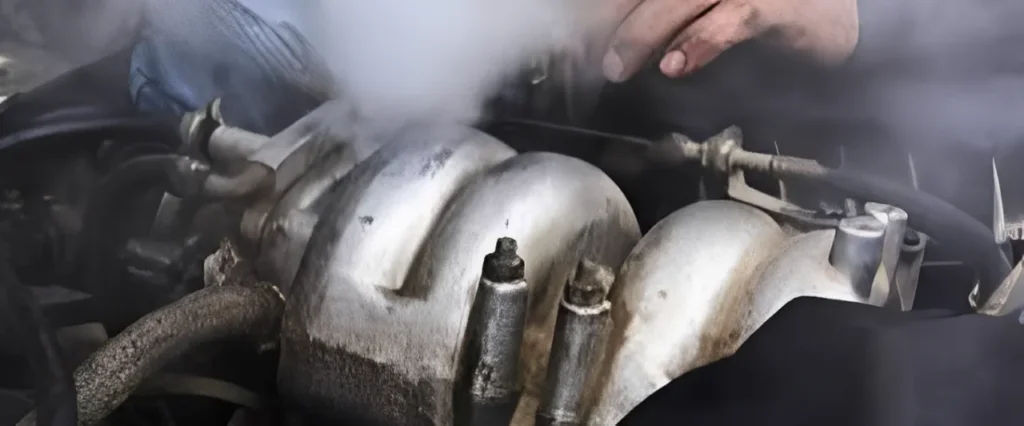
To confirm the throttle body gasket is the exact failure point, you must move beyond scan data to visual and physical confirmation. The gold standard for locating an intake leak is the smoke test. By sealing the intake and pumping pressurized, UV-dyed smoke into the system, you can visually observe smoke escaping from the gasket flange.
Once you dismantle the assembly, inspect the gasket. A failed rubber seal will often be permanently flattened (loss of crush), hardened, or cracked. A high-quality replacement seal from VPGASKET will restore this critical interference fit. After installation and torquing to OEM specifications, you must perform a post-repair verification.
| Evidence Level | Diagnostic Action | Reliability | Next Step Required |
|---|---|---|---|
| Weak | Reading P0171 / P0174 codes | Low (too many variables) | Hook up live data scanner |
| Medium | Idle vs. 2500 RPM fuel trim test | Moderate (proves vacuum leak) | Perform smoke test to isolate |
| Strong | Smoke escaping from TB flange | High (isolates location) | Remove TB and inspect gasket |
| Confirmation | Finding crushed seal; trims normalize post-fix | Repair confirmed | Clear codes, test drive |
Composite Expert Guidance: Lean Codes and Idle Hunts
"When chasing a high idle and lean codes, mechanics often jump to the most expensive sensor. Don't. Always start with the free tests. Look at your fuel trims. If they drop under load, get out the smoke machine. Also, remember that whenever you disturb an electronic throttle body to change a gasket, you must follow the OEM reset procedure. If you slap a new gasket on and ignore the relearn, your high idle won't go away, and you'll think the new gasket failed."
— Daniel Foster
Senior Sealing Application Engineer
Illustrative Customer Scenario: The F-150 Idle Hunt
A customer with a 2013 F-150 5.0L presented with a surging idle and both P0171 and P0174 codes. A previous shop had replaced the MAF sensor and all four oxygen sensors, costing over $600 with no resolution. By checking the live data, the technician noted fuel trims at +22% at idle, dropping to +4% at 2500 RPM. A quick smoke test revealed a thick plume of smoke billowing from the base of the throttle body. The factory O-ring seal had hardened into brittle plastic. After thoroughly cleaning the flange and installing a premium VPGASKET replacement seal, the fuel trims instantly normalized to +2%, and the surging idle vanished. The actual fix cost a fraction of the parts cannon approach.
— Michael Turner
Fleet Maintenance Supervisor
FAQs
Will the check-engine light always come on?
Not immediately. The ECM has thresholds for triggering the light. Usually, fuel trims must consistently exceed +15% or +20% (depending on the OEM) for a set duration before the light illuminates. You can have a minor gasket leak with a high idle long before the light activates.
What fuel-trim number suggests a leak?
While ideal trims are near 0%, normal operation allows for ±5% to ±10%. If your total fuel trim (STFT + LTFT) at idle exceeds +15%, and then drops by more than 15 percentage points when the engine is revved to 2500 RPM, it strongly suggests unmetered air from a vacuum leak.
Can a dirty throttle body mimic it?
Yes, but in reverse. A heavily carbon-fouled throttle body restricts air, usually causing a low or stalling idle rather than a high idle. However, if a dirty throttle body is cleaned but the electronic relearn is skipped, the ECM will incorrectly hold the plate open too far, causing a high idle that mimics a vacuum leak.
ESN, CPL, and OE Verification
Finding the root cause of a vacuum leak is only half the battle; sealing it properly requires the exact fit. Gasket dimensions, materials, and crush tolerances vary wildly between engine models, even within the same manufacturer. VPGASKET is dedicated exclusively to manufacturing high-quality gasket repair kits and seals. We do not sell hard parts like pistons, bearings, or liners—our focus is entirely on providing the ultimate seal for your engine.
Because throttle body designs change frequently, relying purely on the year, make, and model can lead to ordering the wrong profile seal. Always verify your required gasket using your Engine Serial Number (ESN), Control Parts List (CPL), or the original equipment (OE) part number found in your service manual. A gasket that looks "close enough" will not hold manifold vacuum under thermal cycling.
For more information on what happens when these seals degrade, check out our guide on throttle body gasket replacement symptoms.
Ready to fix your lean codes? Submit your fault codes, engine ESN, and vehicle details to our support team to get perfectly matched VPGASKET recommendations for your intake repair.
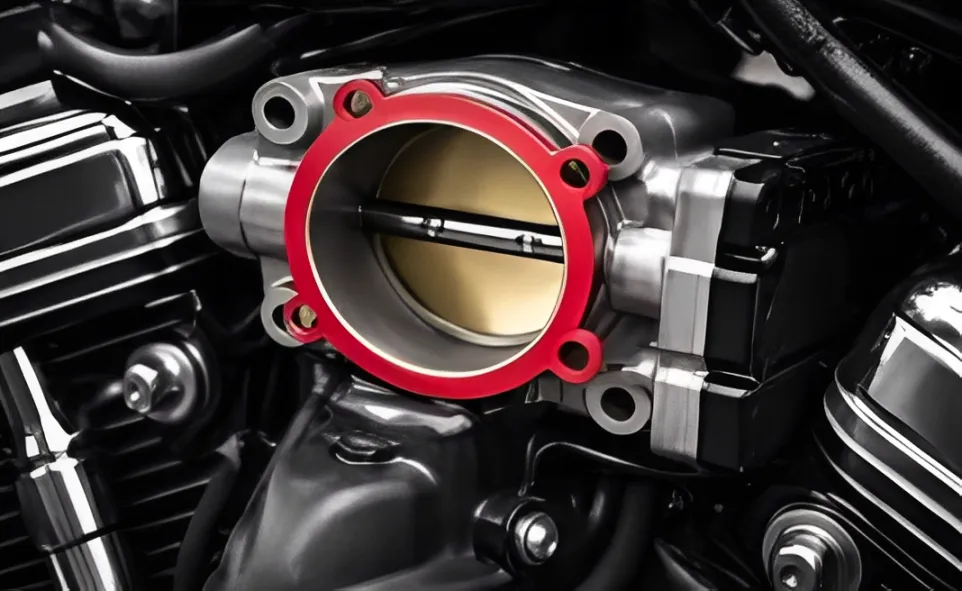
Illustrative Customer Scenario
We stopped ordering by model name alone and used the verification sequence in this bad throttle body gasket review. The receiving team found the scope mismatch before the engine was opened, which protected the repair schedule.
— Michael Turner
Fleet Maintenance Supervisor