
To audit a Cummins overhaul gasket kit for missing seals and O-rings, you must perform a structured verification against a pre-approved Bill of Materials (BOM) mapped to your specific Engine Serial Number (ESN) and Control Parts List (CPL). Receiving inspection failure often stems from relying on generic kit contents labels rather than individual component validation. By cross-referencing the kit against official Cummins QuickServe data and your verified purchase order (PO) specifications, you can isolate discrepancies before they escalate into costly downtime. This article provides a comprehensive framework to ensure your Cummins overhaul gasket kit contents are complete, verified, and ready for installation.
Estimated reading time: 8–10 minutes.
Table of Contents
For broader planning context before this Cummins overhaul gasket kit decision, read our earlier blog, How Much Is an Intake Manifold Gasket Replacement? B2B Cost Guide. It provides related repair or fitment context without replacing the engine-specific service procedure.
For sourcing context, compare the repair scope against VPGASKET engine gasket sets, Cummins engine gasket options, Cummins B-series gasket kits, 4025107 upper engine gasket kit, 3800487 ISB 5.9L lower gasket kit. VPGASKET supplies gasket repair kits and seals only; hard parts must be sourced separately.
When the decision depends on the wider engine layout, use these external references for diesel engine parts and system layout, Cummins engine assemblies and spare-parts context, engine diagnostic context, then confirm the exact configuration with the applicable ESN, CPL, OE number and service information.
Cummins overhaul gasket kit selection should start with the real repair scope, the engine identification evidence and the condition of every sealing surface—not with a model name or one isolated part number.
Approve a BOM before shipment
The foundation of a successful gasket audit is the pre-approval of the Bill of Materials. Before the kit even leaves the supplier, you must confirm that the kit number corresponds to the latest supersession for your specific engine configuration.
Actionable Standard: Never accept a kit based on a "model year" alone. Always map the kit number to a specific CPL/ESN.
Warning: Relying on legacy kit numbers without checking for supersessions often leads to "almost right" components—where an O-ring diameter is off by a fraction of a millimeter, causing long-term oil seepage.
Check package labels and quantities
Upon arrival, your intake process should prioritize high-level documentation verification.
Match PO to Manifest: Verify the received part numbers against your original purchase order.
Verify ESN/CPL Compatibility: Ensure the OE kit number aligns with the required ESN range.
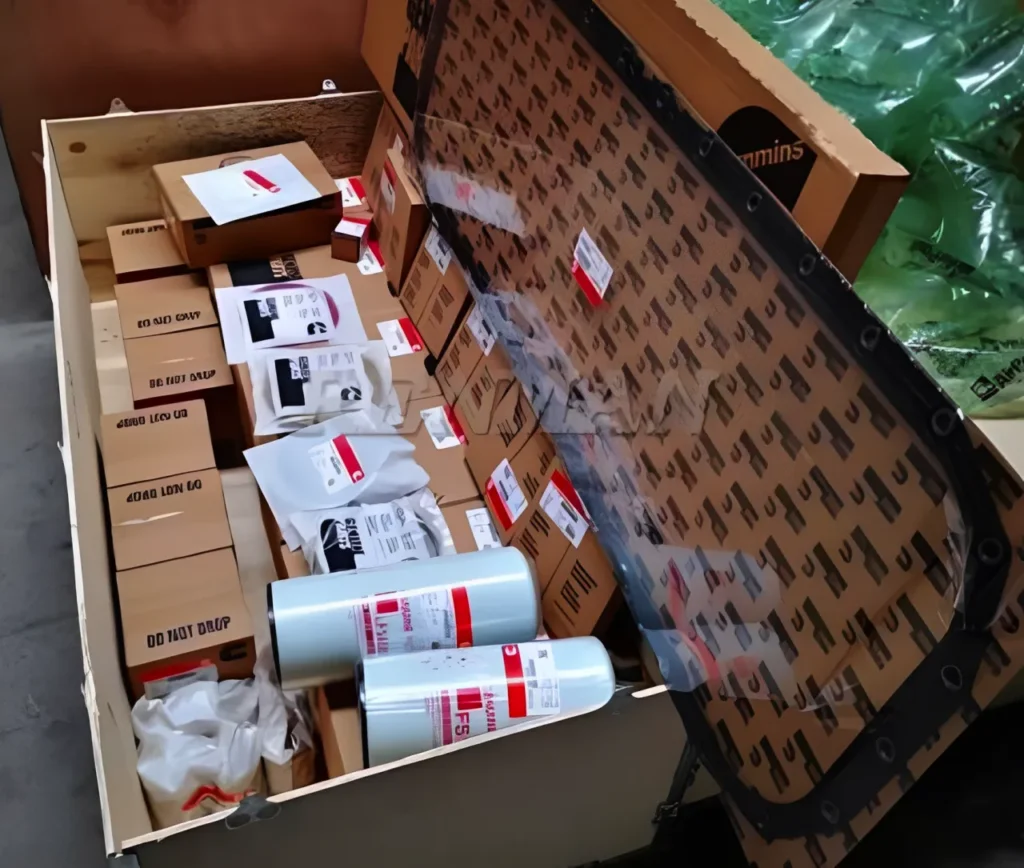
Inspect Packaging Integrity: Check for evidence of re-taping or torn poly-bags, which are common indicators of missing components during transit.
| Input | What to Record | Why It Matters |
|---|---|---|
| Cummins overhaul gasket kit | Application and repair scope | Prevents an incomplete or mismatched decision |
| Engine identity | ESN, CPL, model and OE reference | Connects the part to the actual configuration |
| Observed condition | Leak path, wear, damage and surface state | Separates a sealing fault from a system fault |
Find small seals most often missed
Small-parts scarcity is the primary driver of engine rebuild delays. Even if the main head gasket is present, the absence of a single injector O-ring or turbo-mounting seal can halt assembly for days.
Component Category Typical Components at Risk Why They Are Missed
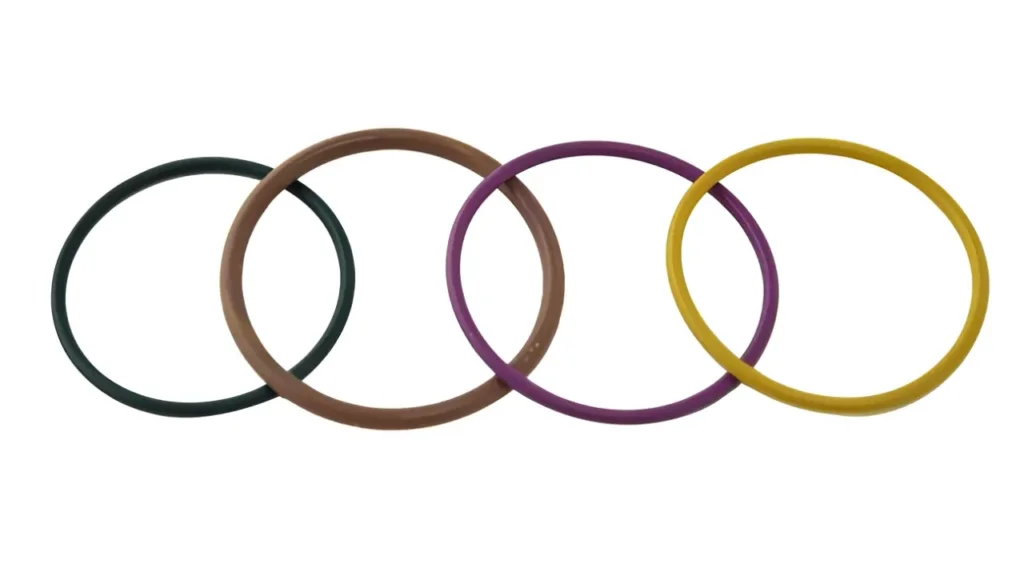
Fuel System Injector O-rings Small, often transparent or black, lost in packaging
Air Induction Turbo Mounting Gaskets Easily crushed or overlooked in outer box flaps
Cooling Thermostat Seals Similar in size to other generic O-rings
Lubrication Oil Pan/Main Seal Heavy, often shift and tear through plastic bags
Fasteners Copper Washers Tiny, often stick to the inside of the main carton
Inspect damage and material mix-ups
Physical inspection requires checking for material degradation or chemical coating failures.
Step 1: Verify the head gasket bore size and coating type.
Step 2: Check main oil seal lips for any deformation; a nick in the seal lip is an automatic rejection.
Step 3: Perform a "Touch Test"—ensure silicone or fluoroelastomer seals are pliable and not "tacky" (indicating chemical breakdown).
| Evidence Level | Example | Required Follow-Up |
|---|---|---|
| Initial | Model or marketing description | Obtain engine-specific identification |
| Supporting | OE number, drawing or supplier list | Check revision and supersession |
| Approval | Verified packing list and inspection result | Release only the confirmed scope |
Record nonconformities
When a discrepancy is found, document it immediately before continuing the audit.
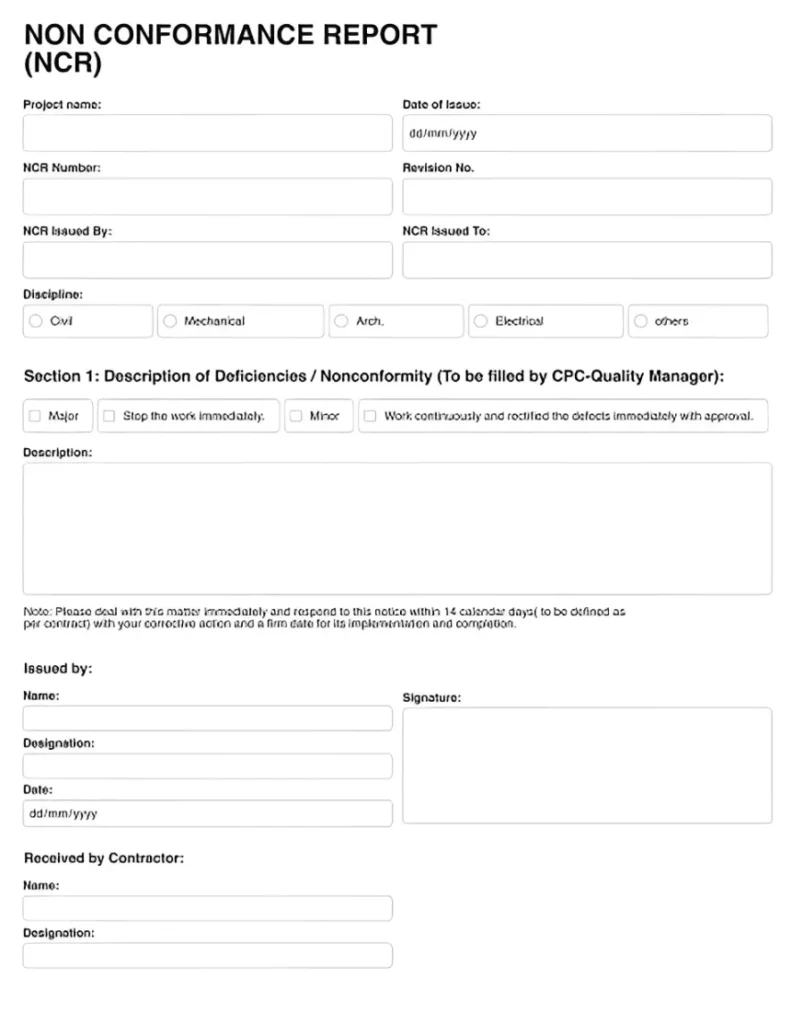
Standard: Use a Nonconformance Report (NCR) template.
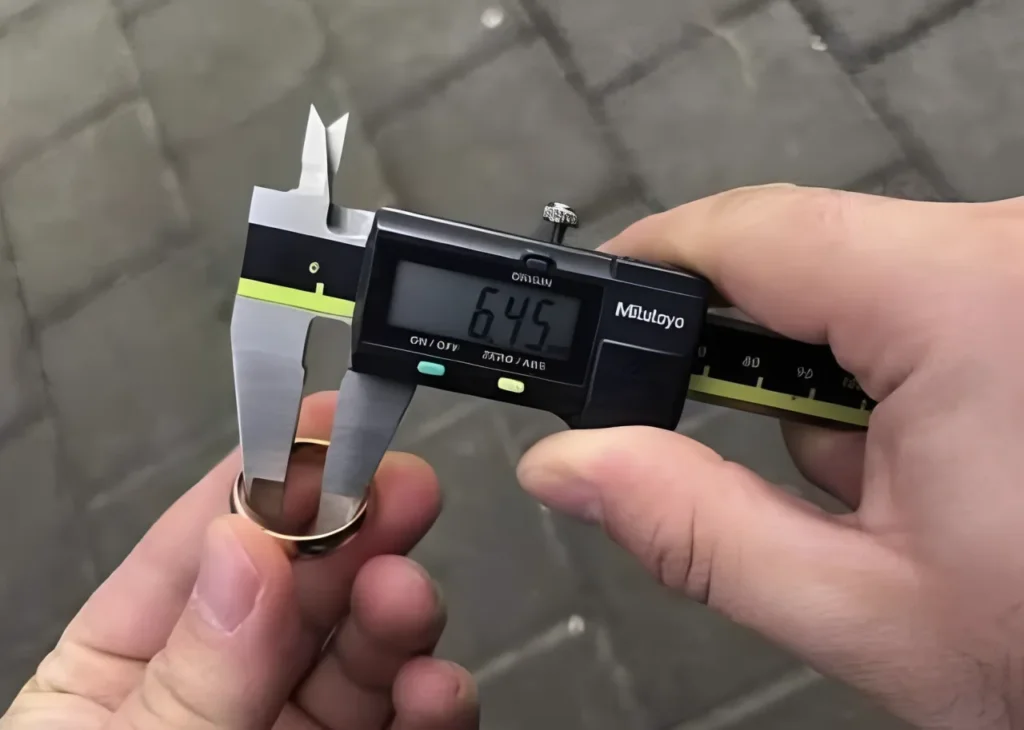
Evidence: Take high-resolution photos of the missing or damaged items next to the printed BOM and the kit's serial number label.
Warning: Do not attempt to source individual O-rings from a local hardware store. Non-automotive grade materials will fail under thermal cycling. Always require the supplier to provide the specific part from the approved kit contents.
Close the loop with supplier QA
Once a nonconformity is logged, initiate the corrective action process immediately.
Guidance: Do not accept verbal assurances. Require a corrected pack-list or a replacement kit that has been double-checked by the supplier’s QA manager.
Traceability: Ensure the batch number of the replacement kit is recorded in your engine build file for long-term maintenance tracking.
Composite Expert Guidance: The "100% Criticality" Rule
As a rule of thumb for VPGASKET clients: while you may use AQL (Acceptable Quality Limit) sampling for non-critical, high-volume items like common fasteners, all gasket sets must undergo 100% inspection. Specifically, the cylinder head gasket, rear main oil seal, and exhaust manifold seals must be verified against the physical dimensions in your specific CPL manual. Missing a single, critical O-ring during an overhaul is a high-cost failure; the cost of the time taken to verify every seal is negligible compared to the cost of a teardown caused by an oil leak.
— Daniel Foster
Senior Sealing Application Engineer
| Scope Item | Include in Review | Boundary |
|---|---|---|
| Primary gasket | Geometry, material and condition | Core sealing item |
| Companion seals | O-rings, grommets and washers | Include when disturbed by the repair |
| Hard parts | Cover, piston, bearing, liner or housing | Not supplied by VPGASKET |
Illustrative Customer Scenario
John, a fleet manager for a regional trucking company, received three overhaul kits for his Cummins ISX15 engines. He performed a cursory count and found the "main items." However, during the build, the technician realized the injector O-ring kit was missing three units. Because John had verified the boxes upon arrival and documented the kit contents using a systematic checklist, he was able to provide the supplier with a photo-verified claim. The supplier shipped the missing seals overnight, preventing a total project stall. "If I hadn't checked against the BOM during intake, we would have blamed the technician for losing them," John noted.
— Michael Turner
Fleet Maintenance Supervisor
| Risk | Typical Clue | Verification |
|---|---|---|
| Wrong fitment | Hole, port or profile mismatch | Compare ESN and current OE reference |
| Surface problem | Leak returns at the same location | Inspect flatness, damage and cleanliness |
| System cause | Pressure or heat pattern continues | Test the connected engine system |
Frequently Asked Questions
1. Should sealed bags be opened at receiving?
Yes. You cannot confirm the presence or integrity of internal components, especially small O-rings and crush washers, without opening the sub-bags.
2. How are missing O-rings documented?
Use a formal NCR form, include high-res photos, the kit serial number, and a copy of the PO/BOM.
3. What is an acceptable sample size for these kits?
For overhaul gasket kits, 100% inspection is the industry standard for all seals, gaskets, and O-rings. Do not use AQL for these critical components.
4. Where can I find the latest kit contents?
Always check the official Parts.cummins.com portal using your engine ESN to ensure you have the correct, current BOM.
5. Can I use local hardware store O-rings as temporary replacements?
Absolutely not. Automotive engine seal materials (like Viton/FKM) are designed for specific thermal, chemical, and pressure ranges that standard hardware store items cannot meet.
| Receiving Check | Acceptance Record | Action if Different |
|---|---|---|
| Label | Part number and revision match | Quarantine and clarify |
| Quantity | Count agrees with packing list | Document shortage before teardown |
| Condition | Seals are clean, protected and undamaged | Photograph and request disposition |
Illustrative Customer Scenario
We stopped ordering by model name alone and used the verification sequence in this Cummins overhaul gasket kit review. The receiving team found the scope mismatch before the engine was opened, which protected the repair schedule.
— Michael Turner
Fleet Maintenance Supervisor