
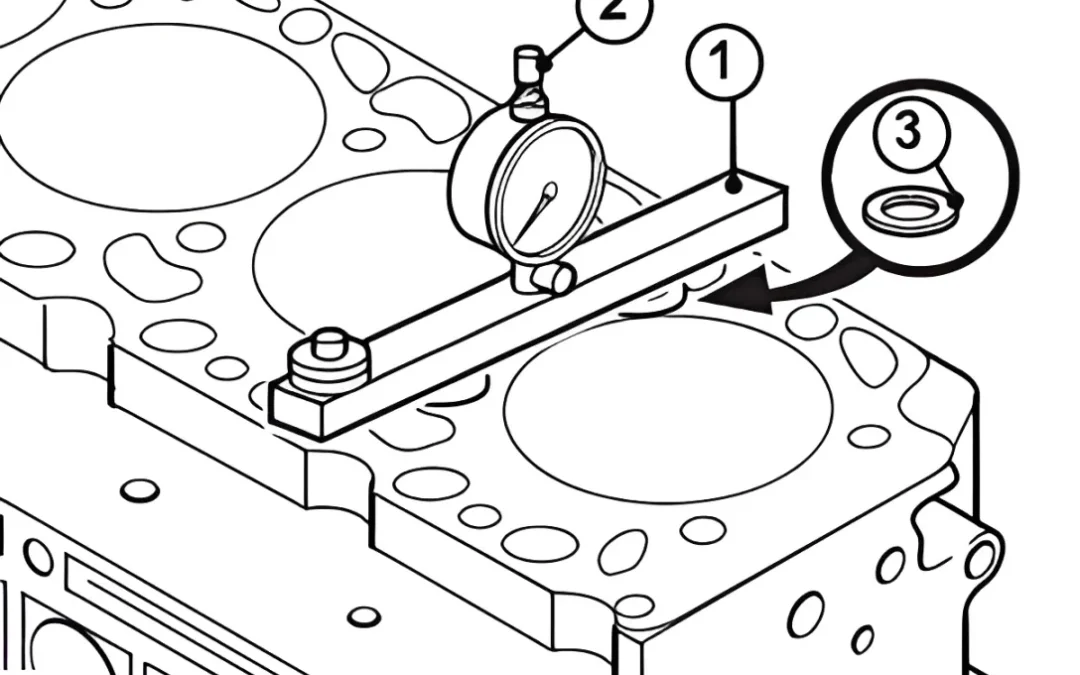
The Problem: Miscalibrating the overhead valve train assembly on a commercial heavy-duty engine frequently ends in dropped valves, scored camshafts, and catastrophic road failures. For fleet managers and owner-operators, a snapped fastener or warped rocker shaft can cost thousands of dollars in emergency towing and mechanical repairs.
The Value: This guide strips away the guesswork. As an experienced diesel technician, I will walk you through the factory-approved sequence for torquing fasteners, explaining exactly why these specific angles and pressures are required to keep your engine running smoothly.
The Reader Benefits: By mastering this guide, you will learn how to preserve your Volvo Engine Brake (VEB) efficiency, maintain peak horsepower across millions of ton-miles, decode fastener compatibility, and protect your engine compression with high-quality VPGASKET elastomeric seals.
Estimated Reading Time: 8 minutes.
Table of Contents
The Mechanical Foundation of the Volvo D13 Rocker Arm Torque Specs
Securing the overhead rocker shaft assembly on a heavy-duty diesel block requires a meticulous, multi-stage tightening process. Because the camshaft drives both the combustion valves and the ultra-high-pressure unit injectors, the structural forces acting upon this assembly are immense.
Why Accuracy Matters
Failing to lower the shaft evenly onto the camshaft bearing caps introduces severe twisting stresses. If you rush the process, you risk warping the shaft or snapping localized mounting hardware mid-journey. To counteract this, expert fleet mechanics rely on a structured, progressive fastening layout. Bringing the rocker arm shaft down in staggered, calibrated torque loads guarantees that the camshaft bearing caps and bearing saddles seat perfectly without localized distortion.
Step-by-Step Sequence
Below is the definitive multi-stage matrix required to safely seat the assembly. Following this exact procedure ensures the structural integrity of your cylinder head.
Multi-Stage Rocker Shaft Tightening Matrix
| Fastening Sequence Step | Targeted Fasteners / Bolt Groups | Torque Specification | Angular Turn / Mechanical Procedure |
| Phase 1: Initial Seating | Shaft Bolts 14 through 20 | Bring to clean contact | Snug evenly in numerical sequence |
| Phase 2: Base Torque | Shaft Bolts 14 through 20 | 60 ± 5 Nm (44 ± 4 lbf-ft) | Sequence: 17, 16, 18, 15, 19, 14, 20 |
| Phase 3: Cam Caps Secure | Cam Bearing Caps 1 through 7 | 15 ± 3 Nm (11 ± 2 lbf-ft) | Execute additional 90° ± 5° angle rotation |
| Phase 4: Intermediate Draw | Intermediate Bolts 8 through 13 | 40 ± 3 Nm (30 ± 2 lbf-ft) | Sequence: 11, 10, 12, 9, 13, 8 + 120° ± 5° |
| Phase 5: Final Calibration | Shaft Bolts 14 through 19 | Loosen fully, retorque 40 Nm | Final 120° ± 5° angle rotation to lock |
Valve Lash Adjustments Linked to Volvo D13 Rocker Arm Torque Specs
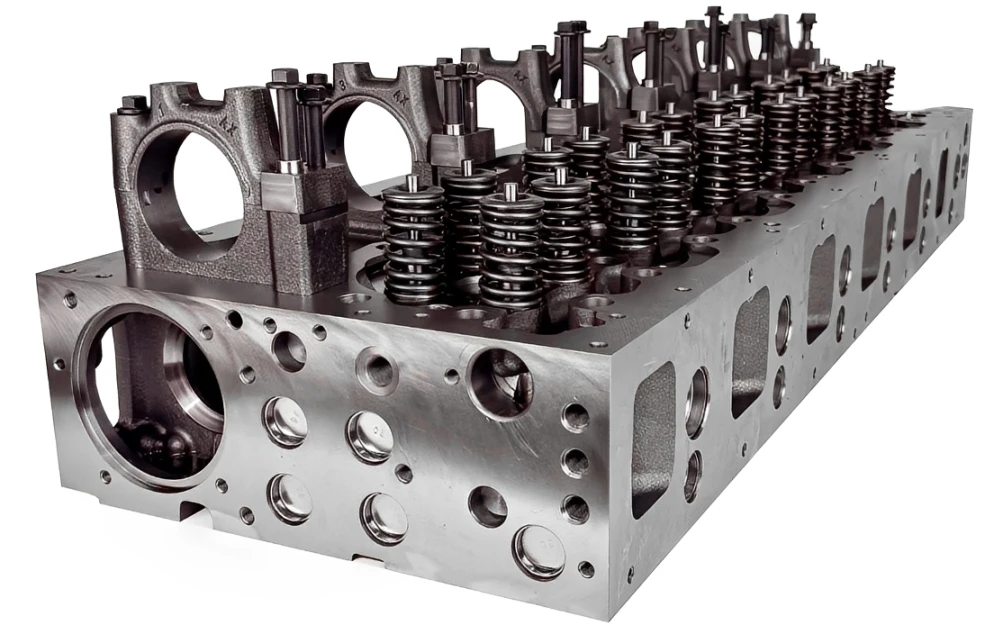
Performing a comprehensive top-end tune-up requires integrating your physical valve lash adjustments directly with the structural installation of the rocker assembly.
Integrating VEB Clearances with Volvo D13 Rocker Arm Torque Specs
Whenever the overhead cam profile requires checking, the internal mechanical clearances of the intake valves, exhaust valves, and specialized injector rockers must match precise dimensional tolerances. If the underlying rocker shaft is improperly clamped due to flawed execution, the entire top-end clearance geometry shifts the moment the engine builds operational oil pressure.
Engine Valve Lash and Hydraulic Adjuster Specifications
| Component Valve Mechanism | Mechanical Clearance Spec | Lock Nut Base Torque | Additional Mechanical Adjustments |
| Intake Valve Assembly | 0.008 inches (0.20 mm) | 38 ± 4 Nm (28 ± 3 lbf-ft) | Check the clearance with the engine cold |
| Standard Unit Injector | Hand-tight to base seat | 52 ± 4 Nm (38 ± 3 lbf-ft) | Advance adjusting screw exactly 4 flats (240°) |
| Exhaust Valve (With Shims) | 2.50 mm (0.098 inches) | 38 ± 4 Nm (28 ± 3 lbf-ft) | Measure using specialized VEB shim gauges |
| Exhaust Valve (No Shims) | 3.50 mm (0.138 inches) | 38 ± 4 Nm (28 ± 3 lbf-ft) | Ensure engine brake piston is fully collapsed |
Preventing Hydraulic Lock During Volvo D13 Rocker Arm Torque Specs Execution
⚠️ Critical Usage Warning
Before inserting any fastener into the block, ensure all blind bolt holes within the cylinder deck are fully cleared of engine oil, old sealant, or moisture. Tightening a bolt into a fluid-filled cavity creates a powerful hydraulic lock. This will give you a false reading on your torque wrench and can easily crack the expensive cylinder head casting.
Fastener Metallurgy and Volvo D13 Rocker Arm Torque Specs
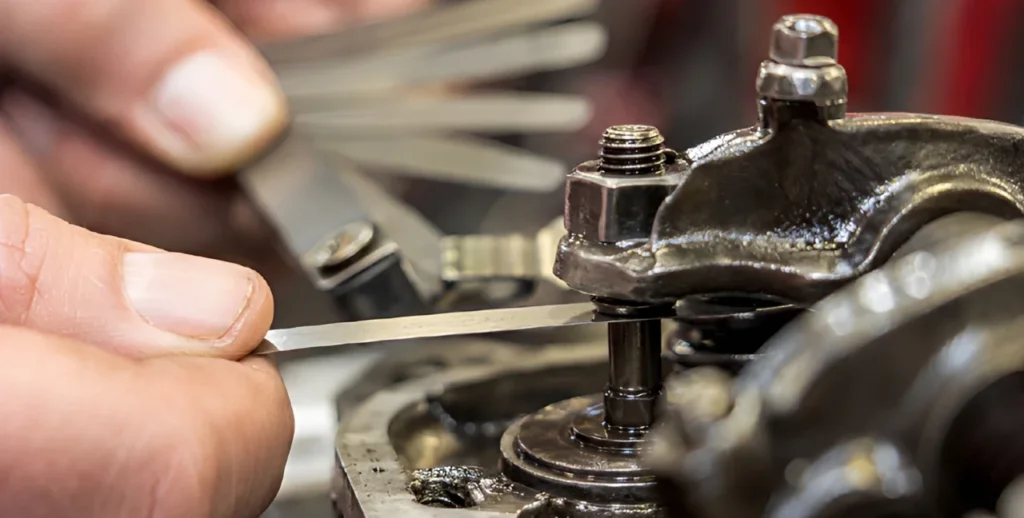
Understanding the metallurgy and design limitations of your engine's fasteners helps you avoid premature top-end failure. The overhead camshaft setup places continuous, brutal cyclic loads onto the rocker shaft.
Torque-to-Yield Bolts Required for Volvo D13 Rocker Arm Torque Specs
Each time a unit injector compresses fuel to over 30,000 PSI, an equal and opposite reaction tries to lift the rocker shaft completely off its seat. The precise clamping force generated by following the manual neutralizes these extreme dynamic loads.
⚠️ Critical Usage Warning
Never attempt to reuse stretched, fatigued, or corroded rocker shaft fasteners during top-end servicing. The main bolts are engineered as torque-to-yield components. This means they permanently stretch to generate maximum clamping pressure. Reinstalling a fatigued bolt compromises its structural yield limit, threatening a catastrophic bolt snap while you are hauling a loaded trailer.
Top-End Fastener Dimensions and Engineering Properties
| Fastener Location | Thread Diameter & Pitch | Property Class Rating | Recommended Replacement Lifecycle |
| Main Rocker Shaft Bolt | M14 x 2.0 mm | Class 12.9 High-Tensile | Mandatory Replacement on every disassembly |
| Cam Bearing Cap Bolt | M10 x 1.5 mm | Class 10.9 Carbon Steel | Replace if stretching or thread damage is visible |
| Valve Cover Stud | M8 x 1.25 mm | Class 8.8 Standard Steel | Reusable if flat mounting faces are clean |
| Leaf Spring Screw | M6 x 1.0 mm | Class 8.8 Standard Steel | Clean threads and inspect for cracks before reuse |
Servicing a mixed commercial fleet?
If you are rebuilding heavy-duty engines beyond the Volvo D13 platform, mastering exact clamping forces is universally critical across all brands. For mechanics also working on major Cummins platforms, be sure to bookmark our comprehensive, step-by-step guide on [Cummins ISX15 Torque Specs: 10 Essential Torque Values for Flawless Engine Rebuilds] to ensure every engine leaving your shop is locked down strictly to factory standards.
Engine Compatibility Data for Volvo D13 Rocker Arm Torque Specs
This heavy-duty architecture is shared across several commercial platforms. Knowing cross-model compatibility simplifies parts procurement and ensures you are applying the correct data to your specific rig.
Cross-Model Vehicle and Engine Architecture Compatibility
| Truck Manufacturer | Vehicle Model Line | Engine Displacement / Series | Valve Train Component Interchangeability |
| Volvo Trucks | VNL 64T / 760 / 860 | 12.8L D13 / D13F / D13J | 100% compatible with standard SOHC setups |
| Volvo Trucks | VNM / VNR / VNX | 12.8L D13 Eco-Torque | Fully matches standard internal torque specs |
| Mack Trucks | Granite / Pinnacle / Titan | 13.1L MP8 (Twin of D13) | Shared rocker shaft profiles and hardware specs |
| Volvo Construction | A40F / A45G Haulers | D13 Tier 4 Final Industrial | Requires heavy-duty industrial configurations |
High-Performance Sealing After Applying Volvo D13 Rocker Arm Torque Specs
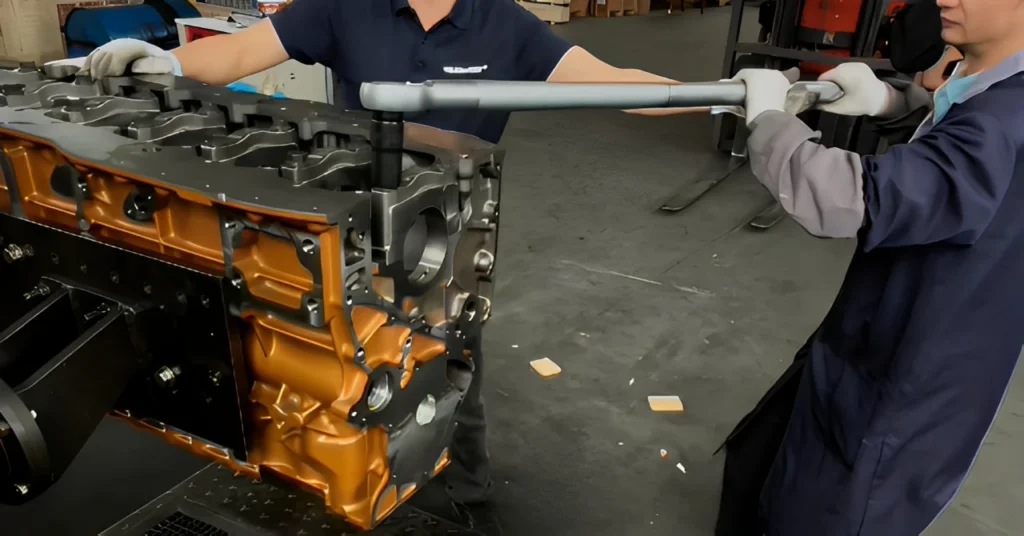
Maintaining hydraulic sealing integrity within the upper valve environment is paramount during an overhead rebuild. Once your mechanical clearances are set, you must protect that environment from leaks.
VPGASKET Upgrades Post-Volvo D13 Rocker Arm Torque Specs
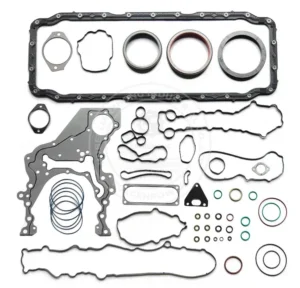
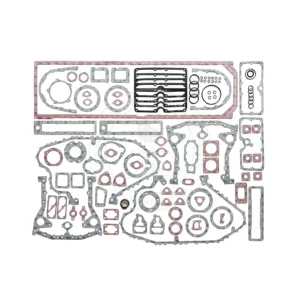
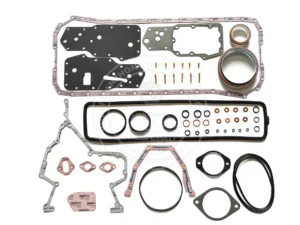
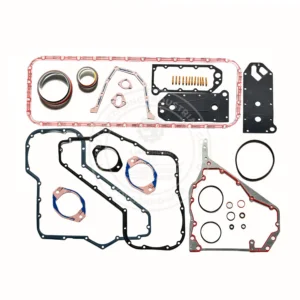
This is where VPGASKET's advanced engineering offers a significant advantage. Service history shows that pairing proper assembly torque with high-performance aftermarket gaskets significantly extends the cylinder head's operating lifespan. VPGASKET components are engineered to exactly match original equipment manufacturer dimensions, ensuring an airtight seal that eliminates top-end blow-by and messy oil weeping.
Our premium top-end gasket sets use specialized fluorocarbon and ACM (Polyacrylate) compounds that retain structural flexibility under severe heat cycles, preventing pressurized oil from bypassing the valve mechanism.
VPGASKET High-Durability Replacement Seals and Cross-References
| VPGASKET Product Kit | Primary Base Material | OEM Cross-Reference Part Numbers | Specific Design Edge & Competitive Advantage |
| Valve Cover Gasket Profile | Premium ACM Elastomer | 21350106 / 20513958 / 21095556 | Multi-lipped seal profile prevents hot oil seepage |
| Injector Cup O-Ring Kit | High-Fluorocarbon Viton | 21464453 / 85124276 | Withstands extreme engine temperatures up to 250°C |
| Control Valve Seal Pack | Nitrile/Viton Blend | 21541289 / 22340532 | Prevents crucial pressure loss within the engine brake circuit |
Related Products
Expert and User Reviews on Volvo D13 Rocker Arm Torque Specs
Don't just take our word for it. Here is how rigorous maintenance protocols and premium VPGASKET components are saving operators money in the real world.
Expert Insight:
"When executing the final angular phases of the rebuild, never rely on guesswork or simple manual estimation," notes a senior commercial fleet technician specializing in heavy-duty Class 8 diesel engines. "Using a precision-calibrated digital angle wrench is absolutely mandatory. An extra 10 degrees of over-rotation will yield the metal fasteners past their structural limit, while under-torquing allows the rocker shaft to flex under load, immediately destroying your Engine Brake efficiency and accelerating camshaft lobe wear."
Owner-Operator Testimonial:
"Tackling a full valve lash tune-up on my engine was intimidating because of how complex the torque-to-yield angle sequences are. I bought a full top-end seal kit from VPGASKET to finish the job right. The gaskets dropped into the cylinder head grooves perfectly with zero stretching or binding. After torquing everything down, my truck runs incredibly quietly, delivers excellent fuel economy, and has a completely dry engine bay after months on the highway."
Frequently Asked Questions About Volvo D13 Rocker Arm Torque Specs
Can I reuse the main rocker arm shaft bolts during a standard valve lash adjustment?
No, you cannot safely reuse the main rocker arm shaft bolts. These are specialized torque-to-yield fasteners engineered to stretch permanently during their final 120-degree angle rotation phase. Reusing old bolts compromises their internal metal structure, leading to thread stripping or sudden fastener snapping under heavy loads.
What are the operational symptoms of over-torqued or under-torqued rocker shaft assemblies?
Undertorquing allows the rocker shaft to lift slightly under high injection loads, causing top-end ticking noises, gear train lash, and a noticeable drop in engine braking efficiency. Conversely, over-torquing overstresses the internal cylinder head threads, distorts the camshaft bearing saddles, and causes severe camshaft scoring due to localized metal binding.

Final Thoughts:
Achieving lasting reliability from your commercial engine requires a steadfast commitment to precise mechanical execution. By thoroughly cleaning all component threads, adhering strictly to the staggered multi-stage sequences, utilizing mandatory new torque-to-yield fasteners, and installing premium VPGASKET sealing components, you protect your engine from premature wear. Keep your fleet operating cleanly, efficiently, and leak-free for millions of miles ahead.