
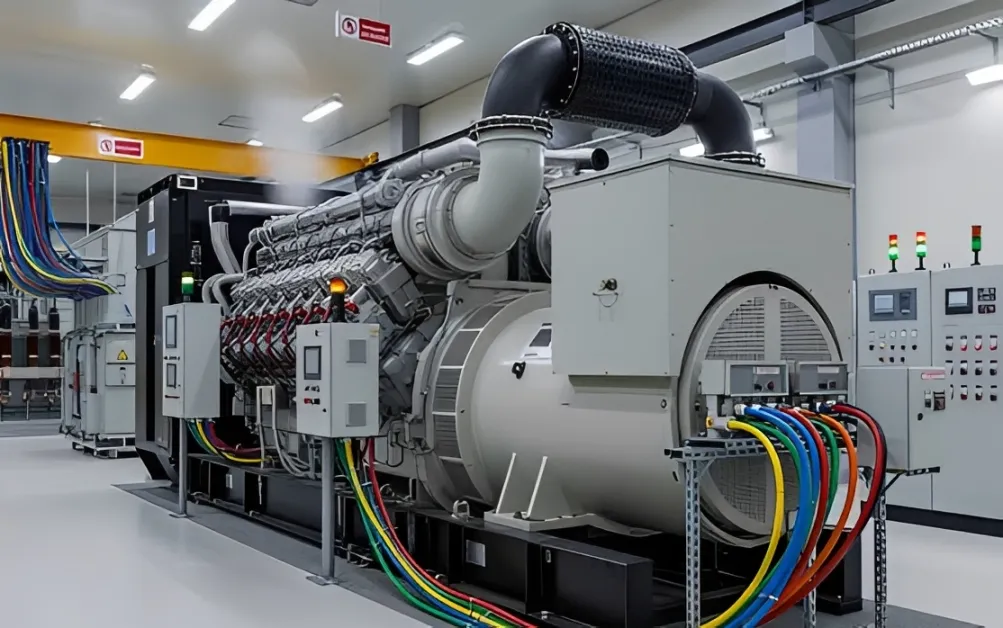
Problem Introduction: Many fleet operators and plant managers mistakenly believe that running a heavy-duty diesel engine at light capacity is a safe way to minimize wear and extend equipment life. In reality, operating an internal combustion engine far below its intended thermal design parameters initiates a destructive, slow-motion mechanical failure loop.
Value Teaser: This technical guide breaks down the precise thermodynamics, component-level degradation, and fluid-dynamic failures that occur when an engine is starved of its optimal operating heat.
Benefits of Reading: By understanding these hidden failure mechanisms, you will learn how to accurately diagnose early warning signs, protect your vital sealing components, and implement proven preventative strategies to safeguard your high-value powertrain assets.
Estimated Reading Time: 8 minutes
Table of Contents
The Hidden Trap of Low Load Engine Operation in Standby Generators
In critical backup applications, engines are frequently oversized to handle sudden, massive peak electrical surges. Consequently, during routine automated testing or off-peak periods, these systems are forced into prolonged periods of under-utilization.
Most major engine manufacturers define a low-load state as running an engine at 30% to 50% of its rated power output. The most severe engine damage occurs when loads consistently drop below 30%. When a massive power plant operates in this diminished state, it cannot generate the necessary internal cylinder pressures and temperatures required for optimal component expansion and clean fuel combustion.
Why Backup Systems Suffer from Low Load Engine Operation
Data centers, hospitals, and industrial emergency pumps are the primary victims here. Because these systems are designed for worst-case scenarios, their regular weekly or monthly test runs rarely reach the capacity needed to generate proper combustion heat. In fact, many standby diesel generators spend over 80% of their runtime in a low- or no-load state.
Load Thresholds and Mechanical Risks
| Operational State | Load Percentage | Combustion Efficiency | Primary Mechanical Risks |
| Optimal Operation | 50% – 85% Rated Load | Maximum Efficiency | Standard Wear Patterns; Minimal Soot |
| Light Load | 30% – 50% Rated Load | Degraded Efficiency | Moderate Carbon Buildup |
| Severe Low Load | < 30% Rated Load | Incomplete Combustion | Wet Stacking, Bore Glazing, Seal Blowouts |
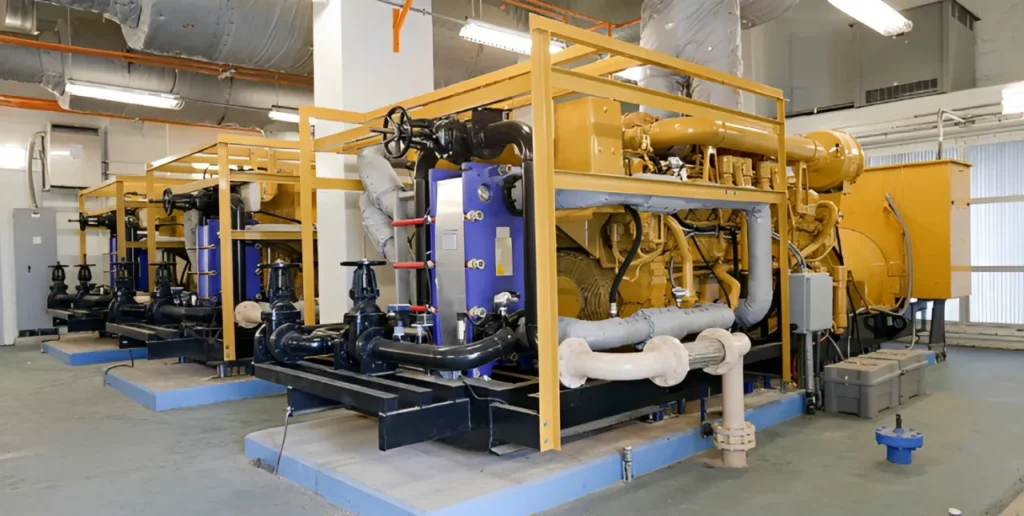
What the Experts Say: The Silent Killer of Low Load Engine Operation
Leading global power generation and engine manufacturing authorities consistently warn against the compounding penalties of running engines cold. Low-load operation does not reduce engine wear; instead, it changes the wear mechanism from high-load stress to contamination, carbon buildup, and lubrication failure.
- Cummins explicitly warns: "Diesel generator sets should not be operated for extended periods at low load because this can result in incomplete combustion, carbon buildup, and wet stacking."
- Caterpillar officially notes: "Wet stacking occurs when unburned fuel, oil, and carbon deposits accumulate in the exhaust system due to prolonged operation at low load."
Official Industry Warnings on Low Load Engine Operation
Engineers note that when an engine operates below a 25% to 30% threshold, internal cylinder pressures drop sharply. This drop prevents the piston rings from sealing tightly against the cylinder walls. This rapidly accelerates a condition known as bore glazing, permanently damaging the cylinder.
Low Load Engine Operation Damage to Engine Seals and Components
When an engine runs cold 24/7, component degradation follows a predictable, highly destructive multi-system domino effect. Below is the verified engineering progression of how prolonged light-loading systematically dismantles critical engine components—and what breaks first.
Piston Ring Failure During Low Load Engine Operation
Diesel engine piston rings do not establish a secure seal against the cylinder liner through mechanical spring tension alone. They rely fundamentally on high combustion gas pressures to force them downward into their grooves and outward against the cylinder wall.
During light running conditions, this vital combustion pressure drops significantly. Lacking the force needed to expand, the piston rings float within the cylinder bores. This structural failure triggers severe blow-by, allowing high-pressure combustion gases, acidic soot, and unburned fuel droplets to force their way past the rings and directly into the crankcase.
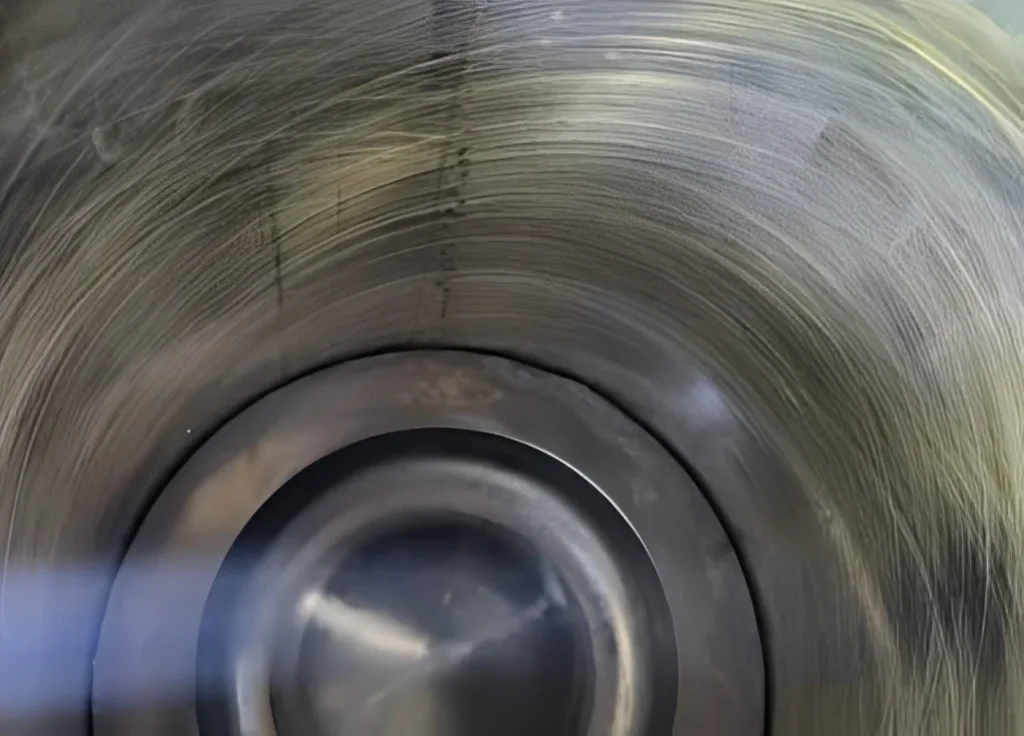
Cylinder Liner Glazing Caused by Low Load Engine Operation
As unburned, liquid diesel fuel continuously blows past the floating piston rings, it washes away the vital micron-thin lubrication oil film cross-hatched onto the cylinder liner walls. This fuel-induced washing action causes bore glazing. The once-textured liner walls are friction-polished to an ultra-smooth, mirror-like finish, resulting in permanent power loss and oil burning.
Turbocharger Carbon Deposits from Low Load Engine Operation
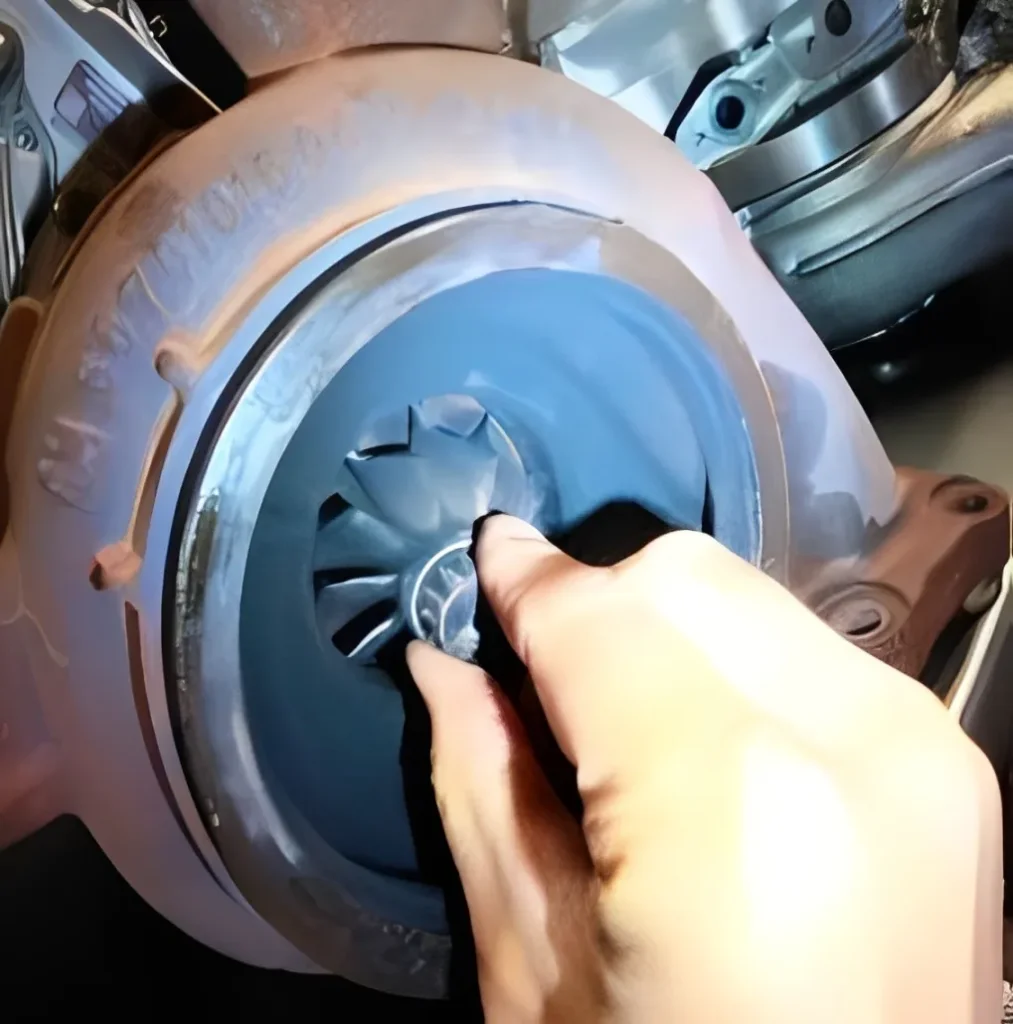
Turbochargers rely heavily on a high-velocity, high-temperature exhaust gas stream. Because the turbocharger shaft rotates below its optimal aerodynamic design speed during light loads, oil seals within the bearing housing fail to seal completely. Lubrication oil seeps past the turbine shaft and directly into both the compressor inlet and the exhaust stream.
Is your turbocharger already showing signs of damage? The sticky carbon paste caused by prolonged low-load operation is a leading cause of Variable Geometry Turbo (VGT) lockup. If your engine is struggling to build boost or throwing actuator codes, read our expert diagnostic guide on [Turbo Actuators: 7 Critical Problems and Powerful Performance Solutions for Better Engine Efficiency] to learn how to unbind your turbo components before a complete replacement is required.
Exhaust System Wet Stacking and Low Load Engine Operation
The direct mechanical consequence of low exhaust gas temperatures (EGT) combined with oil migration is a phenomenon known as wet stacking. Exhaust temperatures below approximately 250°C are widely recognized in diesel maintenance practice as a warning sign for incomplete combustion and wet-stacking risk.
Exhaust Gas Temperature (EGT) vs. System Failure Risk
| Exhaust Gas Temperature (EGT) | Mechanical Carbon & Fuel State | Operational Risk Level |
| > 350°C | Complete Vaporization & Efficient Combustion | Safe / Self-Cleaning Zone |
| 250°C – 350°C | Marginal Vaporization; Minor Soot Accumulation | Transitional Alert Zone |
| < 250°C | High Soot Synthesis; Hydrocarbon Condensation | Active Wet Stacking |
| < 200°C | Liquid Fuel & Oil Slurry Precipitation | Critical System Fouling |
Seal and Gasket Degradation Under Low Load Engine Operation
Low-load operation contributes to thermal imbalance and combustion-related stress, which can accelerate gasket deterioration. The cylinder head expands and contracts at a completely different rate from the underlying engine block.
This constant dimensional mismatch applies intense, repeating lateral shear stresses directly across the combustion seal zones. Concurrently, diesel fuel thins the engine oil, making it highly acidic. This degraded oil aggressively attacks standard elastomer compounds, causing valve cover gaskets and crankshaft seals to harden and crack.
Primary Sealing Failure Mechanisms
| Engine Sealing Component | Primary Failure Mechanism | Operational Consequence |
| Cylinder Head Gasket | Structural shear stress from uneven thermal cycling | Combustion gas leakage; micro coolant leaks |
| Crankshaft Oil Seals | Hardening from fuel-diluted oil | Severe external oil leaks from front/rear mains |
| Exhaust Manifold Gaskets | Chemical erosion by acidic wet stacking slurry | Corrosive external soot tracking |
| Valve Cover Gaskets | Elastomer degradation from acidic vapors | Top-end oil weeping |
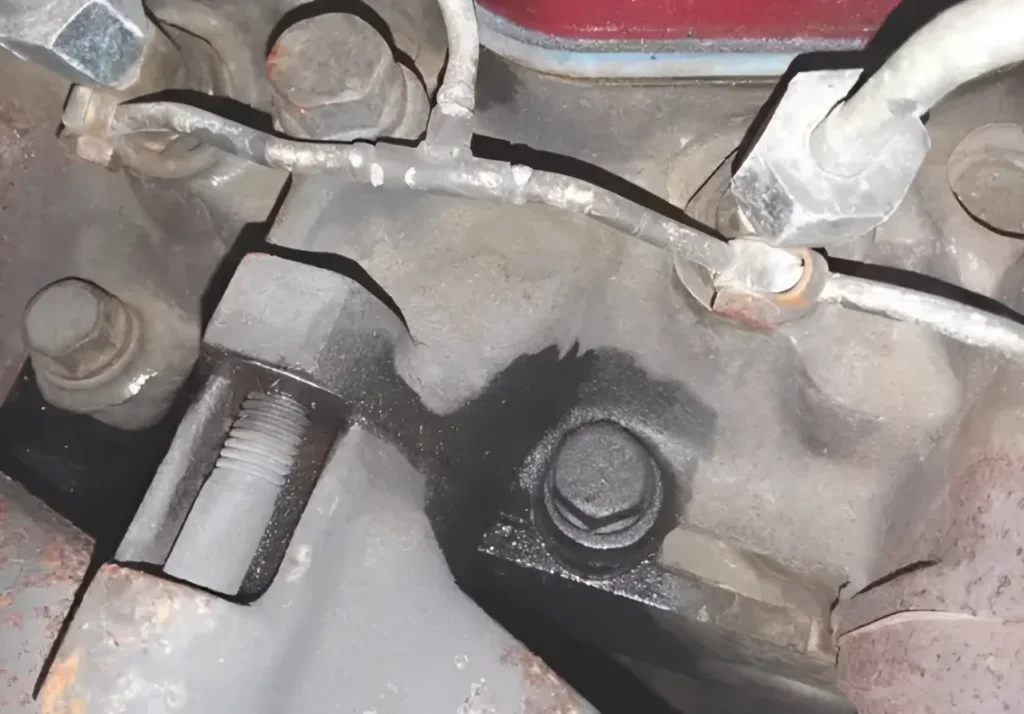
Critical Warnings: What NOT to Do During Low Load Engine Operation
When an engine is suffering from cold-running damage, traditional maintenance tricks will not save it.
Avoiding Common Mistakes with Low Load Engine Operation
⚠️ Warning :
Premium Oil Won't Fix Physics. Do not rely on shortened oil change intervals or premium lubricants to solve combustion failures. Upgrading to a premium, high-synthetic oil cannot overcome the physical laws of low cylinder pressure. Fuel dilution will continue to break down the lubricant's chemistry.
⚠️ Warning :
Limit Your Idle Time. Never allow a continuous-duty or backup diesel generator to idle completely unloaded for more than 15 to 20 minutes. Testing under zero-load conditions should be strictly limited to 10–15 minutes, or just until battery charge rates normalize.
Real-World Case
The practical field consequences are well-documented across critical infrastructure sectors worldwide. Some units may develop wet-stacking symptoms within months under severe low-load operation.
Field Feedback on Low Load Engine Operation Failures
The Technical Director at Genesal Energy documented a stark real-world example of this degradation:
"We saw engines working continuously for 24 hours at a tenth of their load and exhaust manifolds with six centimetre holes reduced to one centimetre by the accumulated cinder and oil."
This severe restriction in exhaust flow dramatically increases engine backpressure, forcing temperatures up within the cylinder head and quickly causing standard gaskets to fail. For stationary, constant-RPM diesel platforms, the most common service calls stem from external oil leakage past the front and rear crankshaft seals due to high internal crankcase pressure.
How to Prevent Low Load Engine Operation Issues
If your operational parameters require a heavy-duty diesel engine to run for extended periods at low output, you must implement specialized hardware and operational countermeasures.
Load Bank Testing to Counter Low Load Engine Operation
Generator manufacturers commonly recommend periodic load bank testing at 50%-70% rated capacity to restore proper combustion temperature and prevent wet stacking.
Recommended Load Bank Testing Parameters
| Testing Parameter | Manufacturer Recommendation | Mechanical Benefit |
| Minimum Load Capacity | 50% to 70% of Maximum Rating | Generates necessary EGTs over 350°C |
| Testing Duration | At least 30 minutes continuously | Ensures full thermal expansion of block |
| Primary Goal | Burn off accumulated carbon | Restores piston ring sealing pressure |
Upgrading Seals to Survive Low Load Engine Operation
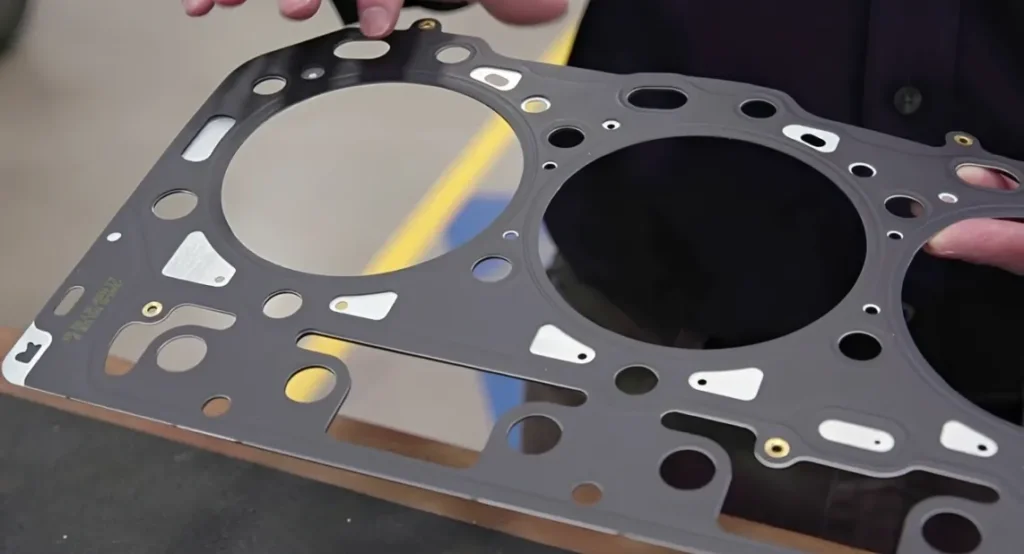
To counter the unavoidable thermal cycling and fuel dilution caused by cold environments, fleets must upgrade their hardware. VPGASKET specializes in high-performance Multi-Layer Steel (MLS) gaskets that significantly break the failure chain.
Advanced MLS gaskets feature 3-5 layers of stainless steel coated with specialized fluoroelastomers. These layers act like a mechanical spring, constantly flexing to maintain a tight seal against the uneven thermal expansion caused by light loads. They resist chemical breakdown from fuel-diluted oil, keeping your powertrain secure until proper load testing can be performed.
VPGASKET MLS Cross-Reference Matrix
| Engine Manufacturer | Engine Family / Model | Common Industrial Applications | VPGASKET Advanced MLS Upgrade Part No. |
| Cummins | QSK60 / KTA50 | Data Center Backup, High-Output Power | VP-QSK60-MLS |
| Caterpillar | 3512C / 3516B | Marine Propulsion, Critical Hospital Power | VP-CAT3516-HD |
| Perkins | 4006 / 4008 Series | Industrial Co-Generation, Prime Power | VP-PERK4000-MLS |
| MTU | Series 4000 G83 | Rail Traction, Standby Grid Generation | VP-MTU4000-MLS |
FAQ
Why does this running condition cause wet stacking?
When an engine runs below its recommended load threshold, the volume of fuel injected drops, resulting in a cooler combustion chamber. Because cylinder temperatures are insufficient, the heavy hydrocarbon molecules in diesel fuel fail to burn completely. This unburned fuel condenses within the cool exhaust system, mixing with carbon soot and escaping engine oil to form a thick, black, tar-like liquid known as wet stacking.
Can upgrading to a high-performance cylinder head gasket stop the damage entirely?
No gasket can alter internal engine thermodynamics or prevent carbon buildup from incomplete combustion. However, upgrading to a high-performance VPGASKET Multi-Layer Steel (MLS) cylinder head gasket prevents secondary catastrophic failures. While standard gaskets yield to the uneven thermal cycling and fuel-diluted oil common in cold states, an advanced MLS gasket maintains its spring-like tension and seal integrity, preventing deadly coolant leaks and giving you time to schedule corrective load-bank testing.