

Problem Introduction: Modern diesel engines operate at massive internal pressures—often exceeding 30,000 psi. Because of this extreme force, even a microscopic leak in your fuel seals can cause severe hard starting, massive power loss, and dangerous diesel fuel leaking directly into your engine oil.
Value Teaser: As a heavy-duty diesel expert, I am going to strip away the complicated engineering jargon and show you exactly how these high-pressure seals work, why they fail, and how to fix them for good.
Benefits of Reading: By reading this guide, you will learn how to spot hidden fuel bypasses early, decode exact engine and part compatibility, and discover how upgrading to a premium sealing solution protects your bottom line and keeps your truck on the road.
Estimated Reading Time: 9 minutes.
Table of Contents
What Is a Fuel System Gasket Kit for Diesel Engines?
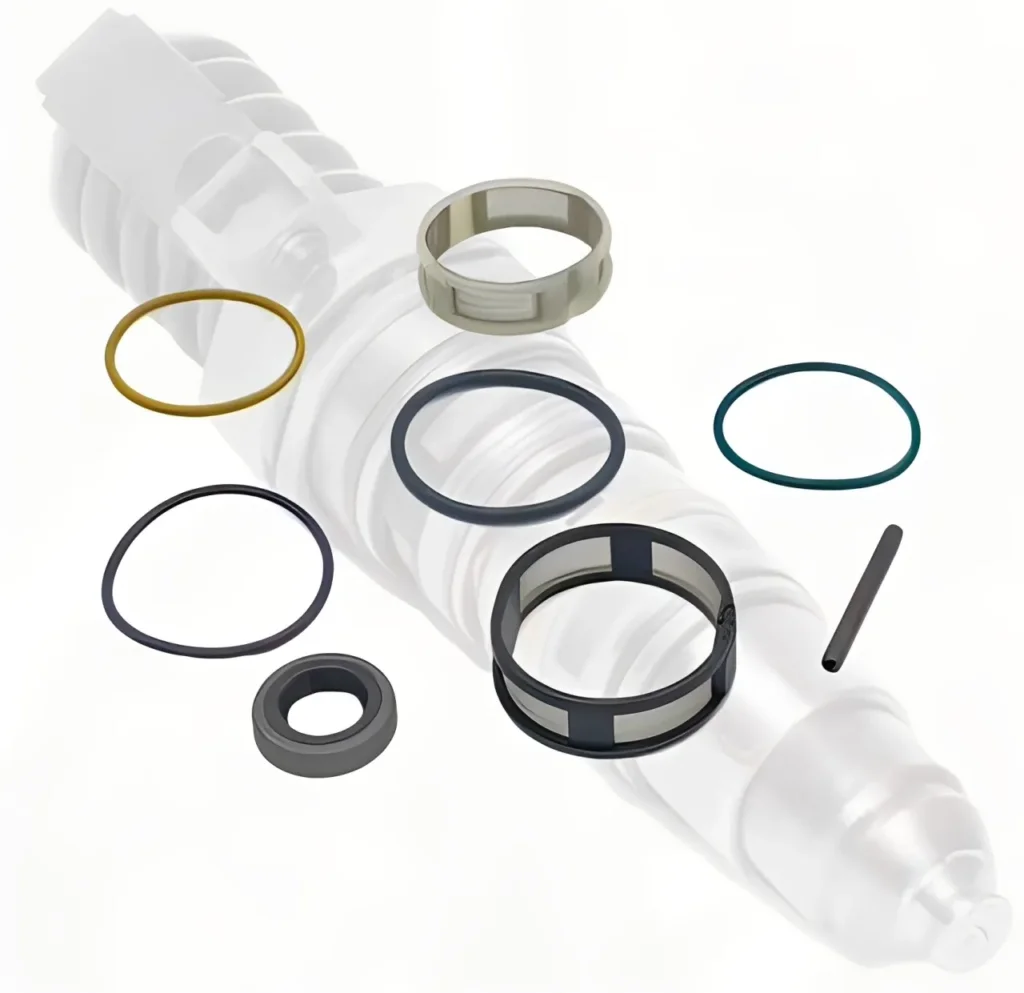
In high-pressure diesel setups, a Fuel System Gasket Kit is not just a random bag of rubber rings. It is a highly engineered, multi-piece sealing system built to contain hydraulic pressure and handle highly corrosive fluids like ultra-low sulfur diesel (ULSD) and biodiesel blends.
The Essential Parts Inside a Fuel System Gasket Kit
Whether you are running a modern High-Pressure Common Rail (HPCR) or an older Unit Injector System, you need a flawless mechanical seal to keep your fuel where it belongs. A complete Fuel System Gasket Kit bundles every vital O-ring, copper washer, and molded seal required to rebuild your fuel pump, injectors, and delivery lines. If even one of these seals is cheap or installed incorrectly, air bleeds into your supply line, and your engine will struggle to run.
Component Checklist for a Complete Fuel System Gasket Kit
| Component Inside Kit | Where It Goes | What It Does to Protect Your Engine | Standard Material |
| Injector Body O-Rings | Middle/Lower Injector | Stops raw diesel from leaking into engine oil channels. | FKM (Viton) |
| Nozzle Crush Washers | Injector Tip | Blocks hot combustion gas from blowing past the injector. | Dead-Soft Copper |
| High-Pressure Gaskets | Fuel Pump Flange | Isolate the injection pump from the engine timing cover. | HNBR / Steel |
| Banjo Bolt Packings | Fuel Return Lines | Prevents leaks at the low-pressure fuel return connections. | Copper / Rubber |
| Filter Housing Seals | Fuel Filter Bowl | Seals the filter housing to stop air from getting sucked in. | Nitrile (NBR) |
Why High Fuel Pressure Requires a Premium Fuel System Gasket Kit
Modern diesel fuel acts less like a liquid and more like a high-pressure water jet. If you use a cheap, low-grade Fuel System Gasket Kit, the intense pressure will literally cut through the rubber in a matter of hours. Furthermore, modern biodiesel blends (like B20) contain chemicals that eat away at standard rubber, making premium materials an absolute necessity for commercial longevity.
5 Critical Signs It Is Time to Replace Your Fuel System Gasket Kit
Running a commercial truck or heavy equipment with compromised fuel seals is a guaranteed way to end up with an expensive repair bill. Knowing the warning signs means you can swap out your Fuel System Gasket Kit before you get stranded on the highway.
Diagnosing Hard Starts and Leaks for Your Fuel System Gasket Kit
Here is how you can tell your seals are actively failing:
- Visible Fuel Pooling: If you see diesel fuel collecting in the valley of your engine block, your injection pump seals have degraded.
- Hard Starting (Loss of Prime): If you have to crank the engine forever in the morning, air is likely sucking past a bad fuel return O-ring, allowing fuel to drain backward into the tank.
- Rough Idling and Misfires: When copper tip seals fail, combustion gas blows backward into the fuel system, causing the engine to stumble and blow smoke.
- Strong Diesel Odors: A sharp smell of raw diesel while driving usually points to a micro-leak spraying fuel onto a hot engine part.
How a Bad Fuel System Gasket Kit Causes Oil Dilution
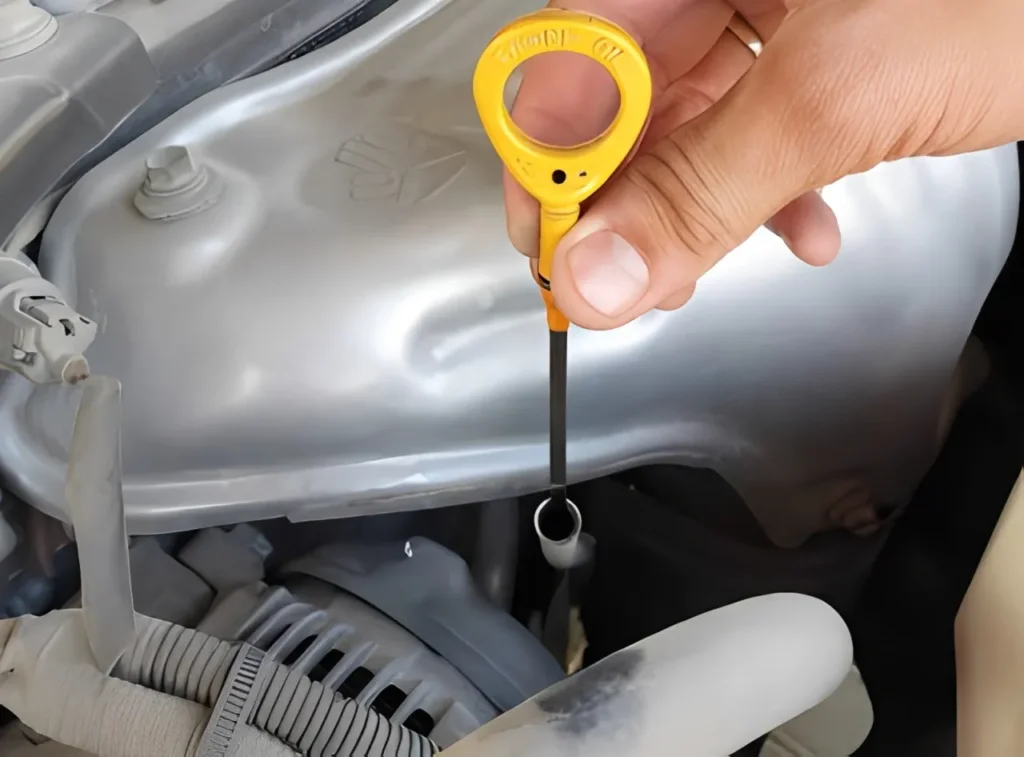
The fifth and most dangerous sign is Oil Dilution. If the internal O-rings on your injectors fail, high-pressure diesel sprays directly inside the cylinder head and drains down into your oil pan. This thins out your motor oil, destroying its ability to lubricate your bearings.
Is your dashboard oil light flashing? When bad injector seals let diesel leak into your oil pan, it severely thins out your oil and destroys your lubrication. If you suspect fuel dilution, read our urgent diagnostic guide: [Low Oil Pressure Warning: 7 Dangerous Causes You Must Fix Immediately] to save your engine bearings from catastrophic metal-on-metal failure.
Diagnostic Symptoms Fixed by a Fuel System Gasket Kit
| The Symptom You Notice | What It Means Mechanically | The Fix Using the Kit |
| Long cranking times / Air in lines | Fuel is draining back to the tank overnight. | Replace injector return line O-rings and clips. |
| The oil level is magically rising | Diesel is leaking past the injector body. | Pull injectors, clean wells, install new Viton O-rings. |
| Engine loses power pulling hills | High-pressure pump is leaking internally. | Rebuild the fuel pump using new flange and shaft seals. |
| Hissing sound from the cylinder head | Copper tip washer is completely burned through. | Replace tip seals with dead-soft copper washers. |
Expert Guide to Choosing the Best Fuel System Gasket Kit
When you are buying replacement parts, choosing the right Fuel System Gasket Kit requires looking past the cheapest price tag. Investing in the right materials prevents you from doing the same difficult repair job twice.
Material Science Behind a Reliable Fuel System Gasket Kit
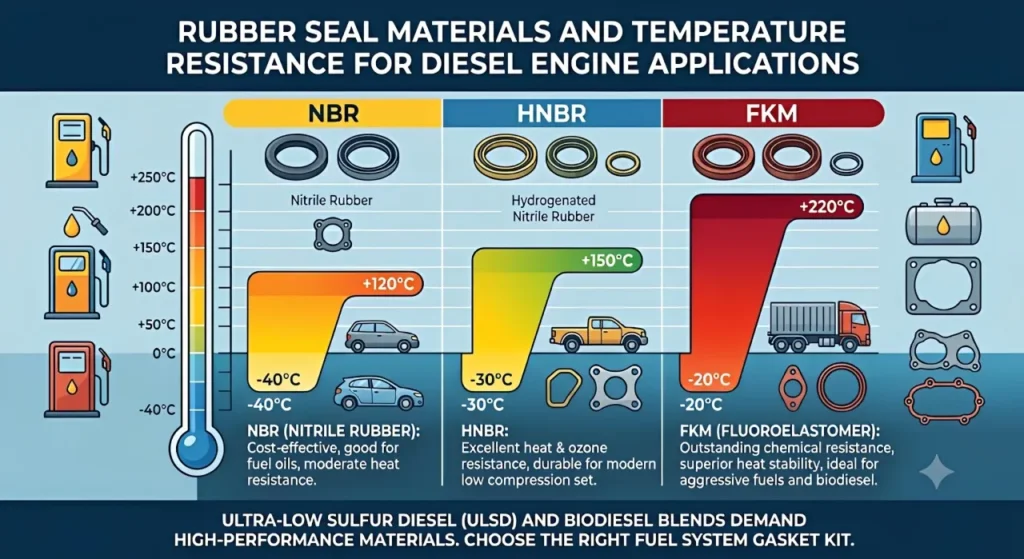
The chemical makeup of the rubber determines how long it will survive in a hot diesel engine. Standard Nitrile rubber is fine for cold fuel lines, but the seals sitting directly on your fuel injectors see temperatures well over 300°F. For those high-heat zones, your Fuel System Gasket Kit must feature FKM (Fluoroelastomer/Viton) materials.
Material Compatibility for a Fuel System Gasket Kit
| Rubber Material Type | Heat & Chemical Resistance | Where It Should Be Used |
| Nitrile (NBR) | Good for standard diesel; poor for biodiesel. | Low-pressure fuel lines and fuel tank sending units. |
| HNBR | Better heat resistance; handles engine oil well. | Fuel pump shaft seals and supply block seals. |
| FKM (Viton) | Outstanding resistance to extreme heat, ULSD, and Biodiesel. | Injector body O-rings and high-pressure fuel rail connections. |
Engine Compatibility Data for Your Fuel System Gasket Kit
Engine manufacturers update their fuel systems constantly. A 2010 Cummins ISX uses different seals than a 2018 Cummins X15. You must always cross-reference your exact engine serial number to ensure your Fuel System Gasket Kit fits perfectly.
Vehicle & Engine Compatibility for a Fuel System Gasket Kit
| Target Engine Family | Common Vehicle / Equipment | Injection System Type | Service Interval Recommendation |
| Cummins ISX15 / QSX15 | Peterbilt & Kenworth Heavy Trucks | XPI High-Pressure Common Rail | Replace seals every 250,000 Miles |
| Caterpillar C15 | Freightliners, Dump Trucks | MEUI-C (Mechanical Electronic) | Replace seals every 200,000 Miles |
| Detroit Diesel DD15 | Freightliner Cascadia | ACRS (Amplified Common Rail) | Replace seals every 300,000 Miles |
| Ford Powerstroke 6.7L | F-250 to F-550 Super Duty | Bosch CP4.2 Common Rail | Replace seals every 150,000 Miles |
Installation Mistakes That Can Ruin a Fuel System Gasket Kit
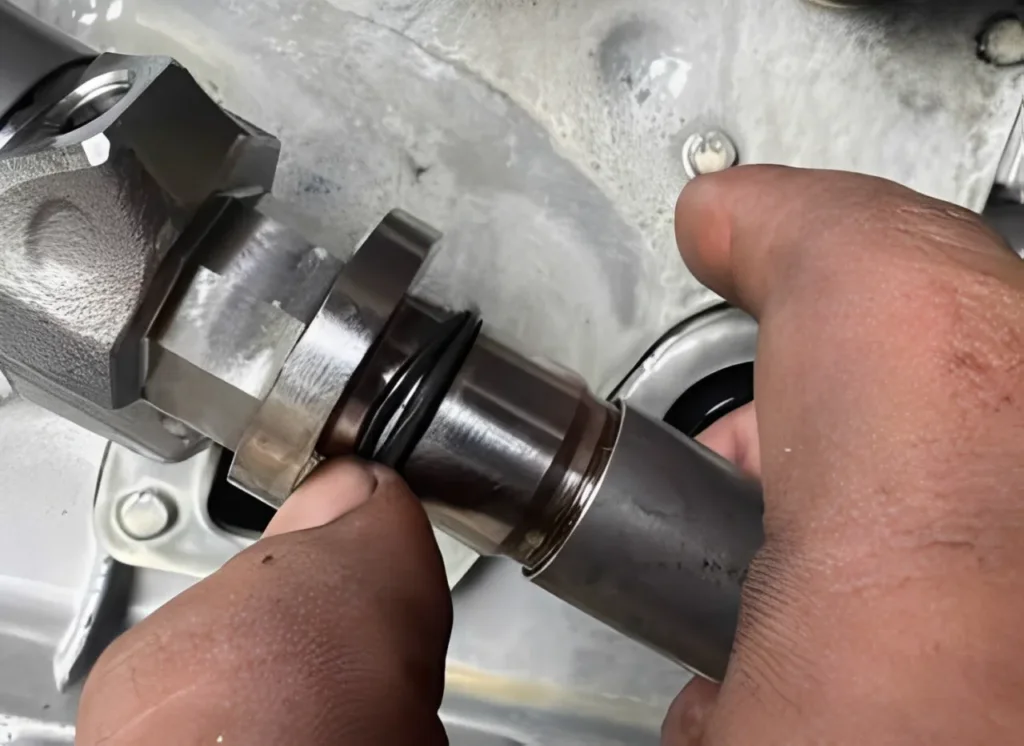
Even the most expensive parts will fail immediately if you install them incorrectly. Fuel systems are highly sensitive. Proper installation technique is just as important as the quality of your Fuel System Gasket Kit.
The Cleanliness Rule for Your Fuel System Gasket Kit
- Never reuse old seals: Once a copper washer is crushed, it hardens and will never seal properly again.
- Keep it clean: Even a single speck of dirt can jam a high-pressure injector nozzle. Clean the injector bores down to bare metal before dropping in your new Fuel System Gasket Kit.
- Lubricate before installing: Never install a rubber O-ring dry. Coat the new seals with clean diesel fuel so they slide into place smoothly without tearing.
Torque Specs and Prep for a Successful Fuel System Gasket Kit Install
Overtightening bolts will distort the metal housings and crush your new rubber seals, causing them to split. Always use a calibrated torque wrench.
Torque & Installation Rules for a Fuel System Gasket Kit
| Sealing Location | Surface Prep Required | The Right Way to Install |
| Injector Cylinder Bore | Remove all carbon using soft brass wire brushes. | Drop the injector straight down; never rock it side to side. |
| High-Pressure Pump Flange | Wipe away old gasket residue; ensure metal is flat. | Tighten bolts in a crisscross pattern for even pressure. |
| Banjo Bolt Connectors | Wipe faces perfectly dry; check for metal burrs. | Use a fresh copper washer on both sides; use a torque wrench. |
Why Mechanics Trust the VPGASKET Fuel System Gasket Kit
When an over-the-road freight truck is sidelined due to a fuel leak, the financial loss extends far beyond the cost of parts. Fleet operators and engine builders need components that fit right the first time. That is exactly why professionals choose the VPGASKET Fuel System Gasket Kit.
At VPGASKET, we combine high-purity FKM polymers with precision CNC tooling to deliver exact OEM-level fitment. Whether you are rebuilding a Cummins, Caterpillar, Detroit Diesel, or Ford Power Stroke, our complete sealing solutions ensure your heavy-duty engine withstands extreme rail pressures without a single drop of fuel leaking.
Real Customer Reviews of the VPGASKET Fuel System Gasket Kit
Don't just take our word for it—here is what industry professionals have to say about our sealing products:
"Efficiency is everything in our diesel shop. Using a complete VPGASKET Fuel System Gasket Kit saves us hours. Instead of hunting down ten different part numbers for a Cummins rebuild, we open one box and have exactly what we need. The parts fit perfectly, and we never worry about comebacks."
— Mark T., Certified Heavy-Duty Diesel Technician
"We manage a fleet of 80 Class-8 trucks. By switching our preventive maintenance program to utilize VPGASKET's premium Viton seal kits, we have virtually eliminated on-road fuel leaks and fuel-in-oil dilution issues. It is the most cost-effective upgrade we've made this year."
— Sarah L., Commercial Fleet Maintenance Director
Upgrade Your Rig Today with a VPGASKET Fuel System Gasket Kit
Your engine's power and efficiency rely on a matrix of tiny, precise seals working perfectly together. Don't risk catastrophic fuel system failures with cheap, inferior rubber. Protect your injectors, stop oil dilution in its tracks, and maximize your uptime. Browse our catalog and upgrade to a premium VPGASKET Fuel System Gasket Kit today to ensure your rig stays on the road for miles to come.