
Locating unmetered air entering an intake system requires a logical diagnostic approach. Modern vehicles utilize sensitive electronic components and complex intake manifolds that demand safe and controlled inspection methods. Utilizing outdated practices like spraying flammable cleaners around a running engine presents severe fire hazards and can damage electrical sensors. This guide details throttle body gasket leak testing by comparing three lower-risk evidence methods, helping qualified personnel interpret diagnostic data accurately and perform repairs according to established service procedures.
Estimated reading time: 7–9 minutes.
Table of Contents
For parts-planning context after diagnosis, see the engine gasket range. A confirmed single-joint repair does not automatically require a complete engine kit.
1. Throttle Body Gasket Leak Testing: Visual Evidence
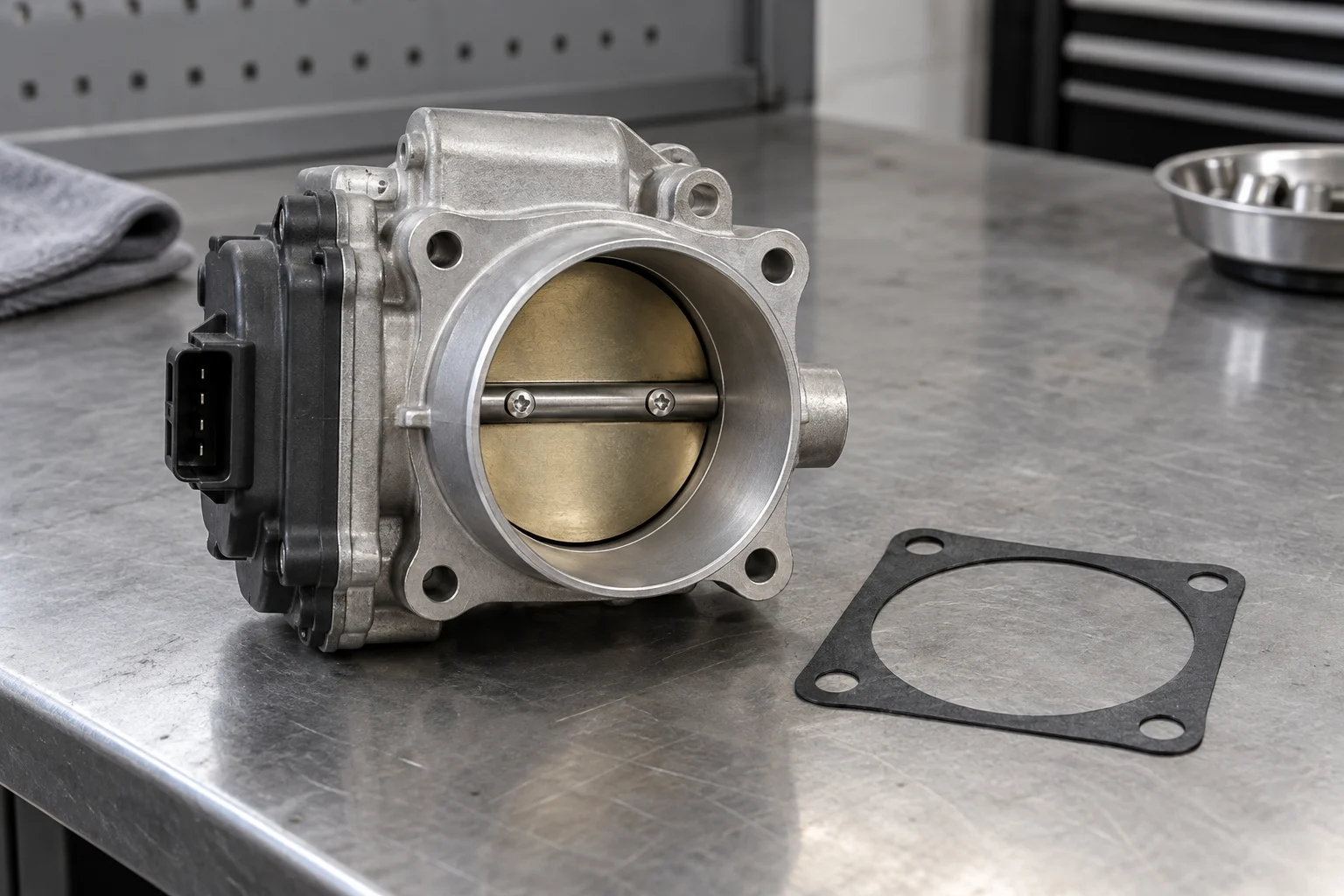
Start throttle body gasket leak testing with the vehicle safely secured and the engine off, following the manufacturer’s precautions against unexpected starting or component movement. Inspect accessible flange edges, fasteners, ducts and connectors for visible displacement or damage. Do not force an electronic throttle plate open or treat a visual check as proof that a joint is airtight.
During this visual check, personnel must also examine the surrounding positive crankcase ventilation hoses, vacuum lines, and intake boots. Cracks in adjacent rubber components often mimic the symptoms of a failing flange seal. This baseline inspection provides valuable initial evidence without exposing the technician to moving parts or running engine hazards.
| Inspection Area | What to Look For | Method Limitation |
|---|---|---|
| Throttle Body Flange | Visible gaps or pinched sealing material | Cannot detect microscopic air leaks |
| Vacuum Hoses | Cracks, hardening, or loose connections | Internal hose degradation may be hidden |
| Mounting Hardware | Missing or improperly seated bolts | Does not confirm actual sealing integrity |
Approved Low-Pressure Smoke Leak Test
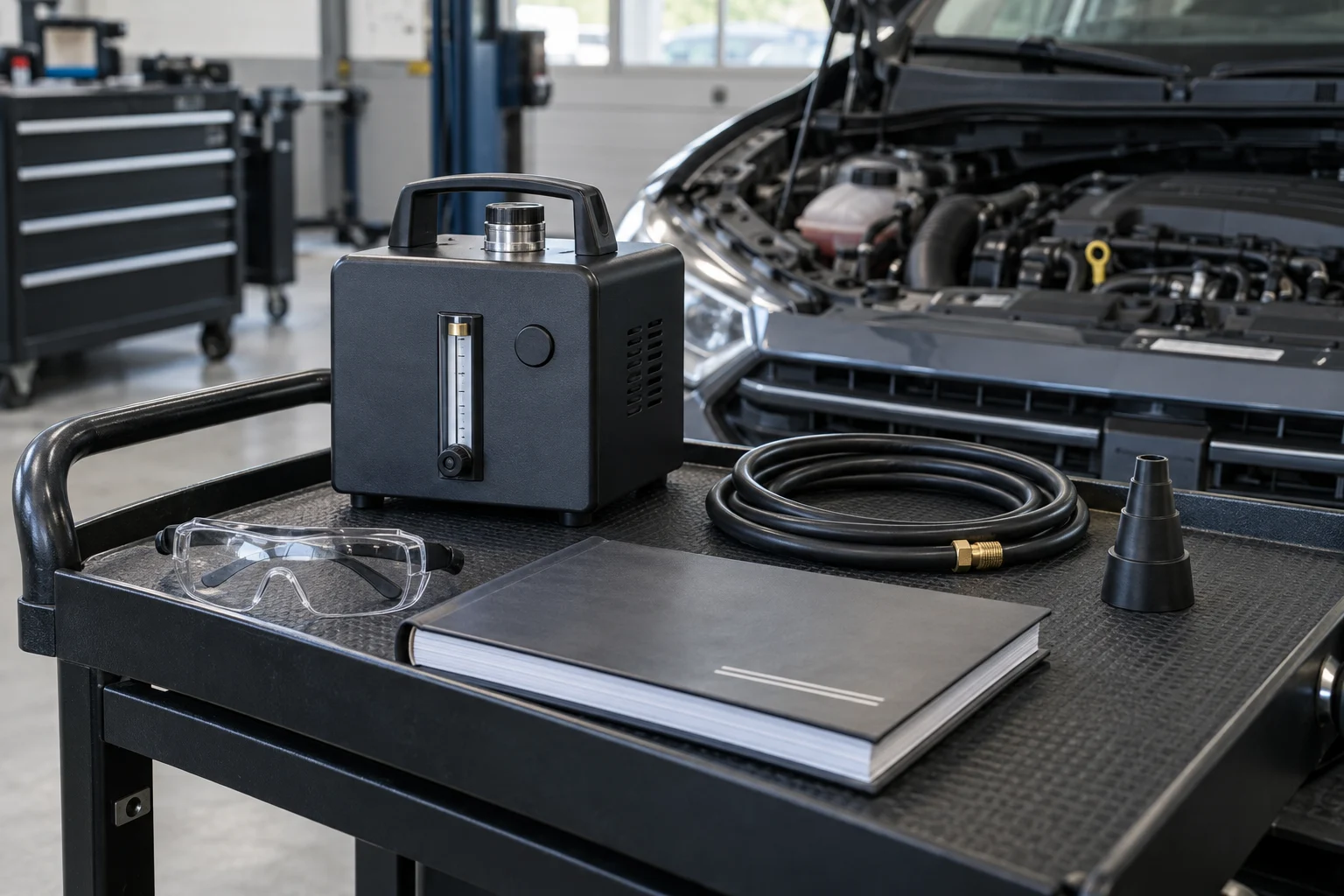
An approved automotive smoke test can help localize a suspected intake leak. Qualified personnel should use equipment, fluid, connections and pressure settings permitted for the vehicle and the tester, with the engine off as specified. Do not improvise a pressure source or assume that any setting called “low pressure” is harmless to every component. The Bosch SMT500 operating instructions illustrate why equipment-specific safety instructions matter.
For throttle body gasket leak testing, distinguish smoke emerging at the flange from smoke traveling from another connection. Record the observed location and test conditions. No visible smoke means no leak was detected under that setup; it does not prove that a small, inaccessible or intermittent leak is absent.
| Smoke-test requirement | Evidence value | Limitation |
|---|---|---|
| Approved setup and pressure | Makes the observation interpretable | Wrong setup may miss leaks or damage components |
| Observed exit location | Helps localize a leak path | Smoke elsewhere does not condemn the flange |
| Documented conditions | Supports comparison after repair | Engine-off conditions may not reproduce an intermittent fault |
Scan-Tool Fuel Trim Analysis
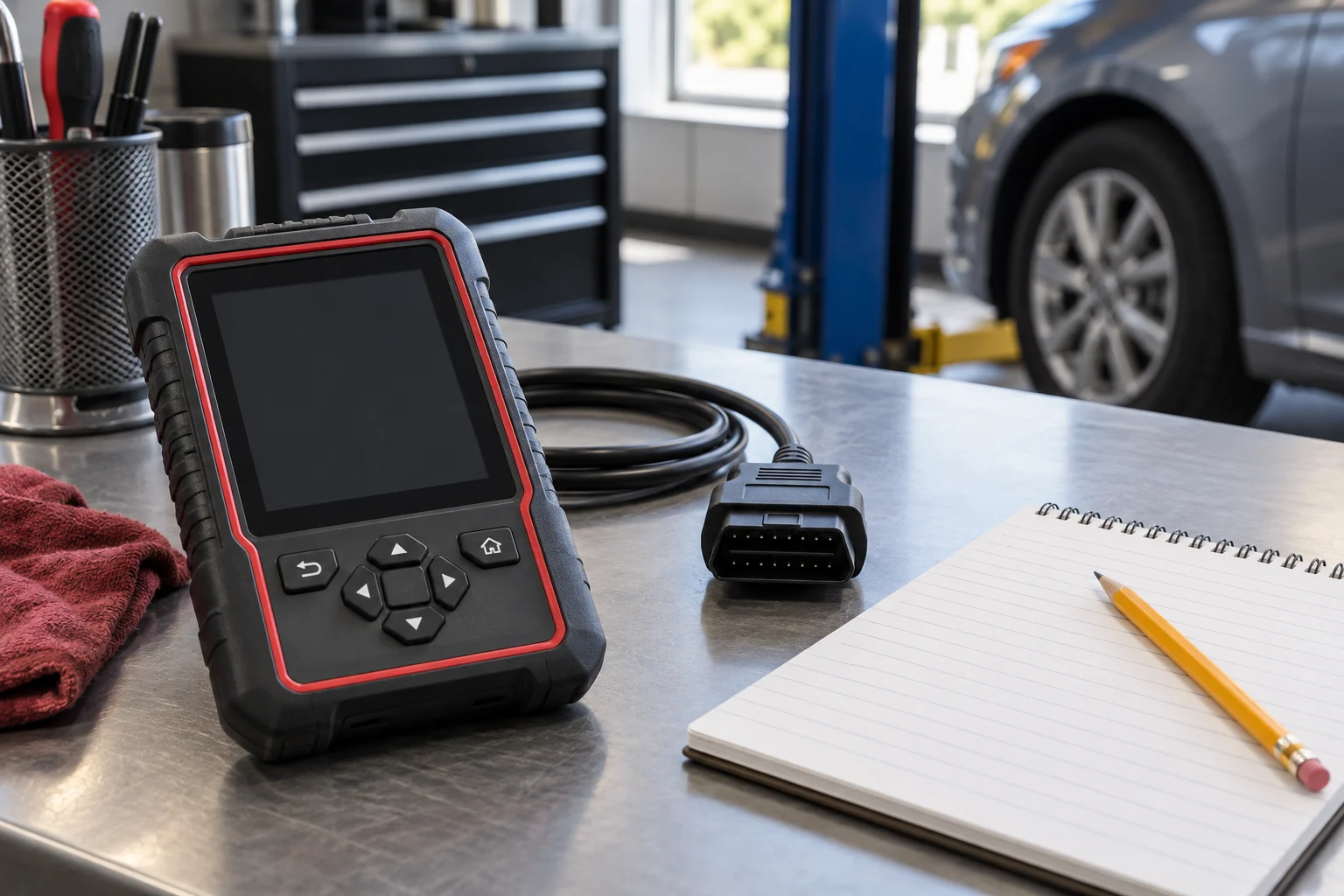
Where gasoline closed-loop fuel control and the relevant data are available, compare recorded short- and long-term fuel trims under the vehicle’s specified diagnostic conditions. Unmetered air can produce positive correction that changes with airflow or load. The significance depends on the engine strategy and operating state; this is not a universal diesel test or a fixed percentage threshold.
Fuel-trim data reports controller correction, not a leak location. A pattern that supports an air-leak hypothesis still needs corroborating evidence at the suspected joint. Record temperature, load, control-loop state and relevant codes, and assess other plausible causes. Do not prescribe a generic revving test or diagnose a gasket solely because a trim value is positive. See Snap-on’s fuel-trim explanation for general control-system context.
| Data feature | Possible value | What it cannot prove |
|---|---|---|
| Positive correction | Supports investigation of the mixture-control cause | A specific gasket is leaking |
| Change with operating state | Helps compare competing explanations | One universal fault pattern |
| Post-repair comparison | Shows response under comparable conditions | All other faults or intermittent leaks are absent |
Evidence Interpretation and Other Causes
Interpreting the collected diagnostic evidence requires recognizing that a specific data pattern does not prove a flange leak independently. Fuel pressure drops, degraded mass airflow sensors, exhaust leaks, or stuck purge valves can all confound fuel trim readings and mimic intake tract breaches. Throttle body gasket leak testing must systematically eliminate these other variables.
Before clearing any diagnostic trouble codes, technicians should preserve the freeze-frame data to understand the exact engine conditions when the fault occurred. Identifying whether the lean condition happened at idle or highway speeds guides the investigation. A thorough interpretation assesses the entire air and fuel system rather than jumping directly to a sealing repair.
| Confounding Factor | Effect on Engine Data | Diagnostic Action |
|---|---|---|
| Exhaust Leak | Introduces oxygen before the sensor, skewing trims | Inspect exhaust manifolds and upstream joints |
| Mass Airflow Sensor | Under-reports incoming air volume | Verify sensor output against expected parameters |
| Fuel Pressure Issue | Causes a lean condition lacking unmetered air | Use the applicable vehicle diagnostic procedure; do not improvise fuel-system connections |
Replacement and Relearn Procedures
Replace the gasket when required by the applicable service instructions or when the diagnosis and inspection establish a sealing fault or damage. Inspect the mating surfaces and nearby hoses as separate potential problems. Follow the prescribed part, orientation, fastener and sealant requirements; additional sealant or tightening is not a universal cure.
Perform a throttle or idle relearn only when the vehicle procedure calls for it, using the required method and prerequisites. Relearn requirements differ across vehicles. A completed relearn does not repair a physical leak, and a changed idle after cleaning is not by itself proof that the gasket has failed.

Retest and Final Verification
Retest using the applicable procedure and compare findings under meaningful, recorded conditions. Any running checks belong with qualified personnel using proper ventilation and precautions around moving or hot components. Preserve the original codes and freeze-frame information before any authorized clearing, and record the post-repair results separately.
A satisfactory retest supports the repair conclusion within the conditions checked; it is not proof of unlimited future reliability. If symptoms or codes remain, continue diagnosis rather than declaring the gasket fixed from one reading. Throttle body gasket leak testing is strongest when visual evidence, localized leak testing and relevant scan data agree.
| Review item | Record | Boundary |
|---|---|---|
| Original diagnostic evidence | Codes, freeze frame and symptoms | Preserve before authorized clearing |
| Repeat relevant checks | Conditions and observed results | Compare like conditions where possible |
| Relearn if required | Procedure and completion status | Does not substitute for leak diagnosis |
Leak-Test Evidence Review
Leak-Test Evidence Review
This checklist records evidence. It does not diagnose a leak, select a repair or approve road use.
Frequently Asked Questions
Is spraying flammable brake cleaner a safe way to find an intake leak?
No. Spraying flammable aerosols around a running engine poses a severe fire hazard and can damage sensitive electronic components. Qualified personnel should use safer alternatives like low-pressure smoke testing.
Does a positive fuel trim always indicate a leaking flange gasket?
No. Positive correction can have several air, fuel or sensor-related causes, and its meaning depends on operating conditions. It cannot identify the throttle-body flange by itself.
Why should I avoid moving an electronic throttle plate by hand?
Forcing the throttle plate manually can strip the internal plastic gearing or damage the sensitive position sensors inside the electronic throttle body. Always follow the specific vehicle service procedure for cleaning or replacement.
If I do not see smoke during a leak test, is the gasket perfectly fine?
No visible smoke means no leak was detected with that setup and under those conditions. It does not establish that the gasket is perfect or rule out small, inaccessible or intermittent leaks.
Make the Next Decision on Evidence
Replacing outdated and hazardous diagnostic habits with controlled inspection methods protects both the technician and the vehicle. Throttle body gasket leak testing requires interpreting visual inspections, low-pressure smoke tests, and scan-tool data collectively. By evaluating the entire intake and fuel system systematically, qualified personnel can accurately identify the source of unmetered air, execute the repair safely, and verify the vehicle's performance without relying on dangerous shortcuts.
Once the fault and replacement requirement are confirmed, send the vehicle or engine identification and required gasket reference for a parts inquiry. Do not select a gasket from an illustrative photograph alone.
Watch Bosch’s diagnostic example for loss of power and a check-engine light. It provides scan-tool and air-management context, not a universal throttle-gasket diagnosis or procedure for every vehicle.