
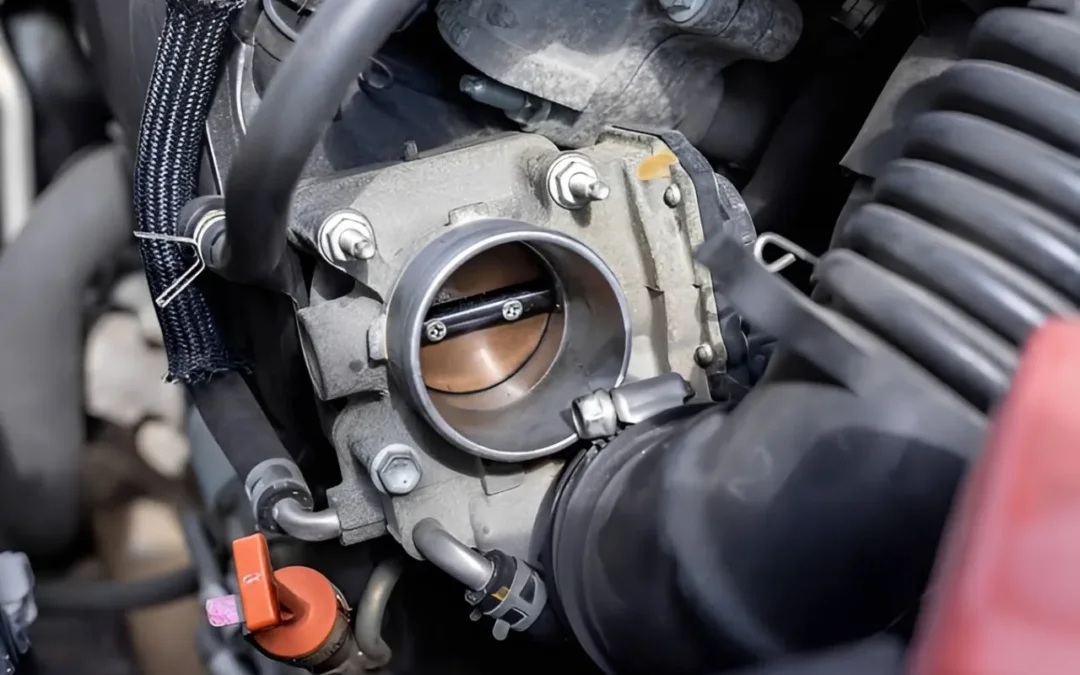
Where Each Leak Occurs
While both failures introduce unmetered air into the engine, their locations and physical characteristics are distinct. Vacuum hoses branch out across the engine bay to supply vacuum to components like the brake booster, PCV system, EVAP purge valve, and intake resonators. A leak here can happen at any brittle rubber bend, loose fitting, or cracked T-junction.
Estimated reading time: 12–14 minutes.
Table of Contents
For broader planning context before this throttle body gasket leak decision, read our earlier blog, Gaskets for Cars: Types, Materials and Selection. It provides related repair or fitment context without replacing the engine-specific service procedure.
For sourcing context, compare the repair scope against VPGASKET engine gasket sets, Cummins engine gasket options, Cummins B-series gasket kits, 4025107 upper engine gasket kit, 3800487 ISB 5.9L lower gasket kit. VPGASKET supplies gasket repair kits and seals only; hard parts must be sourced separately.
When the decision depends on the wider engine layout, use these external references for diesel engine parts and system layout, Cummins engine assemblies and spare-parts context, and engine diagnostic context, then confirm the exact configuration with the applicable ESN, CPL, OE number, and service information.
Throttle body gasket leak selection should start with the real repair scope, the engine identification evidence, and the condition of every sealing surface—not with a model name or one isolated part number.
Conversely, a throttle body gasket leak is entirely localized to the mounting flange where the throttle body meets the intake manifold. This seal degrades over time due to thermal cycling, chemical exposure from PCV blow-by, or improper torque during a previous service.
[IMAGE RECOMMENDATION: Placement: Underneath the first paragraph in "Where Each Leak Occurs" section. Alt Text: Diagram showing engine intake system with throttle body flange and vacuum hose routing. Description: An overhead diagram highlighting the central location of the throttle body gasket versus the sprawling network of vacuum hoses like PCV and EVAP lines.]
Distinct Characteristics and Misjudgments
A common misjudgment is assuming that a loud hiss always points to a hose. If the throttle body gasket blows out at a specific edge, it can create a sharp, high-pitched whistle that bounces off the firewall, mimicking a vacuum line leak at the rear of the engine.
| Feature | Throttle Body Gasket Leak | Vacuum Hose Leak |
|---|---|---|
| Leak Location | Localized strictly at the throttle body-to-intake flange. | Spread across engine bay, hoses, check valves, or T-fittings. |
| Common Causes | Thermal warping, old crushed gaskets, improper torque. | Brittle rubber, heat rot, disconnected lines after repairs. |
| Visual Evidence | Oil weeping at the flange base; degraded gasket edge. | Cracked rubber, loose connections, collapsed hoses. |
| Acoustic Profile | Sharp, consistent whistle or hiss at the throttle base. | Hissing that varies depending on the specific hose affected. |
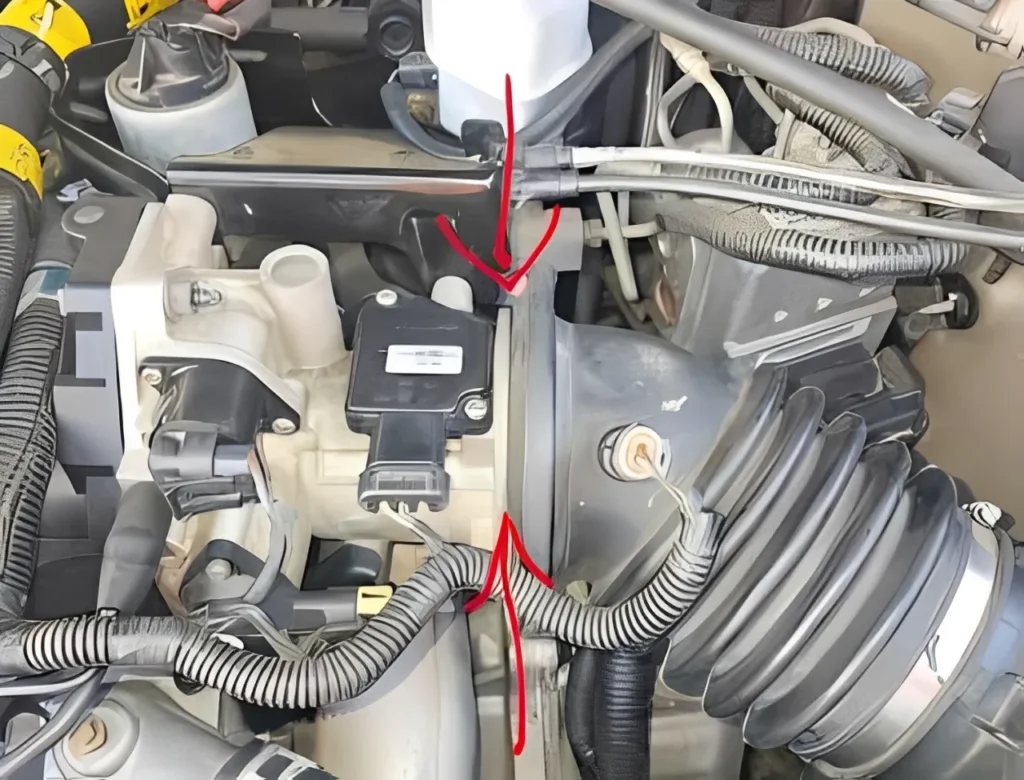
Shared Symptoms and Misleading Clues
Both a leaking throttle body gasket and a compromised vacuum line allow air into the engine after the Mass Airflow (MAF) sensor. Because this air is unmeasured, the engine runs lean, leading to a cluster of shared symptoms.
You will likely experience a high or hunting idle, hesitation upon acceleration, and the illumination of the Check Engine Light with codes P0171 (Bank 1 System Too Lean) and P0174 (Bank 2 System Too Lean). Because the symptoms overlap perfectly, many technicians mistakenly buy a replacement gasket simply because they see a lean code, only to find the problem was a cracked PCV hose.
[IMAGE RECOMMENDATION: Placement: Within the "Shared Symptoms and Misleading Clues" section. Alt Text: OBD2 scanner showing P0171 and P0174 engine codes. Description: A mechanic holding a diagnostic scanner displaying System Too Lean codes to illustrate shared symptoms.]
WARNING: Do not confuse pre-MAF duct leaks with post-MAF vacuum leaks. A crack in the intake snorkel before the MAF sensor allows unmetered air in, but it will not respond to traditional vacuum leak testing. Furthermore, using highly flammable sprays (like brake cleaner) to locate leaks is a serious fire hazard; safer methods must be prioritized.
— Brian Walker
Heavy-Duty Service Advisor
| Symptom | Throttle Body Gasket | Vacuum Hose | Misleading Alternative Causes |
|---|---|---|---|
| High/Erratic Idle | Yes (Constant unmetered air at plenum) | Yes (Unmetered air via specific system) | Dirty Idle Air Control (IAC) valve, electronic throttle fault. |
| P0171/P0174 Codes | Yes (Affects all cylinders uniformly) | Yes (May affect one bank more if hose is localized) | Low fuel pressure, faulty oxygen sensor, exhaust leak. |
| Stalling at Stops | Yes (Severe leak disrupts idle vacuum) | Yes (Especially if brake booster line is leaking) | Torque converter clutch stuck on, severe spark issue. |
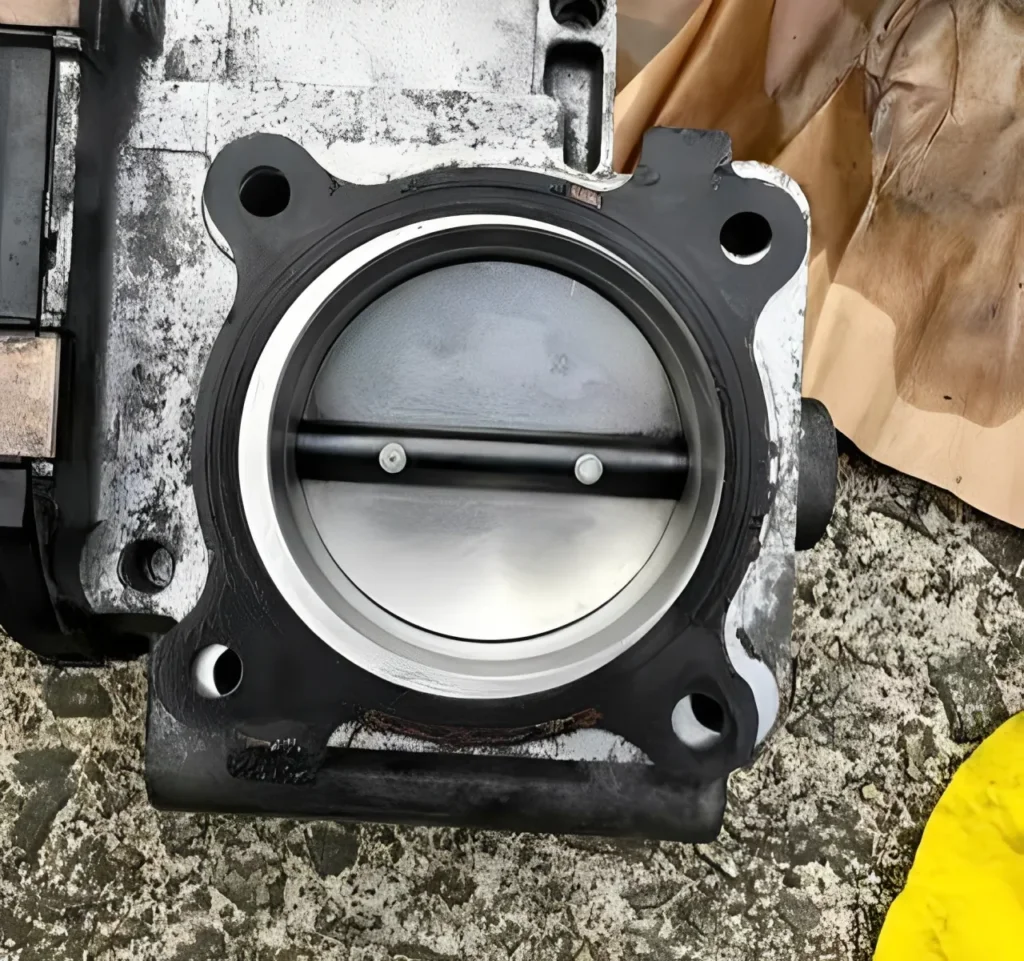
Fuel-Trim and Smoke-Test Differences
To definitively tell the two apart, you must rely on advanced diagnostics rather than guesswork. The most effective methods are Short Term Fuel Trim (STFT) analysis using the "pinch-off" method and visual smoke testing.
The Pinch-Off Test
According to diagnostic strategies similar to Ford TSB 04-17-4, you can isolate vacuum hose leaks by pinching off individual branches while monitoring live STFT data. If you pinch the brake booster hose and the STFT suddenly drops by 15% toward the negative (indicating the computer is pulling fuel away because the extra air stopped), that specific hose is your leak. If you pinch every vacuum line and the STFT remains elevated, the leak is structural—pointing heavily toward an intake or throttle body gasket.
[IMAGE RECOMMENDATION: Placement: Beside the "Pinch-Off Test" paragraph. Alt Text: Mechanic using hose pinch-off pliers on a brake booster vacuum line. Description: Close-up of specialized pinch pliers clamping a rubber vacuum hose to block airflow during fuel trim diagnosis.]
The Smoke Test
A smoke machine introduces low-pressure mineral oil smoke into the intake system while the engine is off. This is the gold standard for visual confirmation. Smoke billowing from the base of the throttle body confirms a gasket failure. Smoke rising from the firewall or valve cover indicates a hose or PCV failure.
Composite Expert Guidance:
"When diagnosing P0171/P0174 codes, never guess. Hook up your scan tool and monitor STFT at idle. If trims are at +20%, gently pinch the EVAP and PCV hoses one by one. If trims immediately normalize, you've found the compromised circuit. If trims remain high, transition to a smoke test. A throttle body gasket leak cannot be isolated by pinching a hose; only smoke or ultrasonic leak detectors will confirm the exact flange breach. Always verify base gasket sizes against the Engine Serial Number (ESN) or OE part number before ordering replacements."
— Brian Walker
Heavy-Duty Service Advisor
| Diagnostic Metric | Points to Throttle Body Gasket | Points to Vacuum Hose |
|---|---|---|
| Idle vs. High RPM | Trims very high at idle, normalizes at 2500 RPM. | Trims high at idle, may persist if leak is large. |
| Pinch-Off Response | No change in STFT when hoses are pinched. | STFT drops rapidly negative when specific hose is pinched. |
| Smoke Exit Location | Smoke clearly visible at the throttle body mating flange. | Smoke escapes from rubber lines, joints, or plastic fittings. |
| Bank 1 vs. Bank 2 | Usually affects both banks equally (centralized leak). | Can affect one bank if the hose taps into one side of the runner. |
| Final Conclusion | Flange seal compromised; requires gasket replacement. | Line/fitting compromised; requires hose routing repair. |
Inspection Order That Avoids Parts Swapping
To avoid throwing parts at the vehicle, follow a logical testing sequence. Start with the least invasive methods and work toward conclusive visual proof.
Visual and Auditory Inspection: Listen for hissing. Check for obviously disconnected hoses, especially if the vehicle was recently serviced.
Scan Tool Live Data: Warm up the engine. Look at STFT and Long Term Fuel Trim (LTFT). A combined trim over +15% indicates a leak.
The Pinch-Off Test: Using hose pinch pliers, gently clamp the PCV line, brake booster line, and EVAP purge line one at a time. Watch the STFT.
Smoke Testing: If pinching hoses yields no result, seal the intake with a rubber cone and inject smoke. Observe where the smoke exits the system.
| Symptom / Test Result | Possible Cause | Next Action Step |
|---|---|---|
| Hissing sound, but no obvious hose disconnected. | Cracked hard plastic vacuum line OR throttle gasket. | Connect scan tool, monitor live STFT data. |
| STFT drops by 15%+ when PCV hose is pinched. | PCV hose is torn or PCV valve is stuck open. | Inspect PCV hose for tears; replace hose/valve. |
| STFT remains +20% after pinching all hoses. | Throttle body gasket, intake gasket, or intake crack. | Perform engine-off smoke test to visualize leak. |
| Smoke exits directly from throttle body flange. | Throttle body gasket has failed, or bolts are loose. | Replace gasket; learn throttle body gasket replacement symptoms. |
[IMAGE RECOMMENDATION: Placement: After the diagnostic inspection order. Alt Text: Automotive smoke machine pumping smoke into a sealed engine air intake. Description: A standard automotive EVAP/Intake smoke machine hooked up to the intake tube with a rubber adapter cone.]
Interactive Diagnostic Decision Tool
Use this interactive tool to evaluate your test results and determine your next steps.
Vacuum Leak Isolator Tool
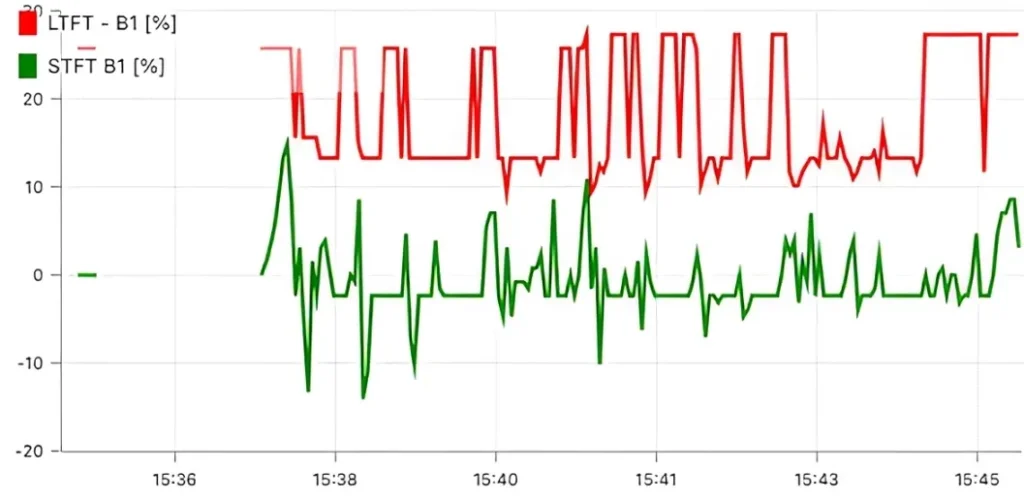
Repair and Verification
Once you have definitively identified the source of the leak, repairing it requires adherence to best practices. If you determine the hose is the issue, replace the length of the vacuum line with the correct inner diameter (ID) and material (usually fuel/emission rated rubber or silicone).
If the diagnosis points to the throttle body gasket, the mating surfaces must be meticulously cleaned. Never use abrasive metal wheels that can gouge the aluminum manifold. Always verify the new gasket's compatibility using the Engine Serial Number (ESN), Control Parts List (CPL), or OE service manual cross-reference. VPGASKET provides premium replacement seals engineered to match OE specifications precisely, ensuring a lasting fix without the guesswork.
Illustrative Customer Scenario
A fleet maintenance manager brought in a service van with an erratic idle and a P0171 code. The technician initially heard a hiss near the intake and assumed it was the throttle body gasket. However, before ordering parts, they clamped the brake booster vacuum line. Instantly, the STFT dropped from +24% to +3%, and the idle smoothed out. The culprit was a split on the underside of the booster hose, completely invisible from above. By testing first, they avoided three hours of unnecessary teardown and gasket replacement.
— Sarah Bennett
Fleet Parts Coordinator
[IMAGE RECOMMENDATION: Placement: Within the "Repair and Verification" section. Alt Text: Clean throttle body mating surface with a new blue silicone gasket installed. Description: A pristine throttle body flange being prepared with a brand new OE-spec gasket, demonstrating proper surface preparation.]
After replacing the gasket or hose, clear the diagnostic trouble codes (DTCs) and reset the fuel trims. Start the vehicle and monitor the live data to ensure trims stay within ±5%.
| Repair Step | Best Practice Standard | Verification Metric |
|---|---|---|
| Surface Prep (Gasket) | Use plastic scrapers and solvent; no metal wheels. | Flange is completely smooth, dry, and oil-free. |
| Gasket Selection | Verify part number via ESN/CPL or OE catalog. | Gasket aligns perfectly with bolt holes and air ports. |
| Installation Torque | Tighten bolts in a crisscross pattern to OEM specs. | Flange sits flush; no warping of the throttle body. |
| System Verification | Clear fuel trims with a scan tool and road test. | STFT and LTFT remain between -5% and +5% at idle. |
If you need high-quality replacements tailored strictly to factory dimensions, ensure you match your throttle body flange gaskets with proven suppliers like VPGASKET, your dedicated source for specialized gaskets and seals.
FAQs
Can both leaks occur together?
Yes. In older vehicles with severely degraded under-hood plastics and rubbers, it is entirely possible to have a hardened, leaking throttle body gasket simultaneously with a cracked PCV or EVAP vacuum hose. This is why smoke testing is highly recommended, as it will reveal multiple leak points at once.
Will either leak set a code?
Yes. Both leaks introduce unmetered air, which throws off the air-fuel ratio. The engine computer will attempt to compensate by adding fuel. If the compensation exceeds a certain threshold (usually around 15-25%), it will trigger a Check Engine Light with P0171 and/or P0174 (System Too Lean) codes.
Can soapy water find an intake leak?
Soapy water is excellent for finding pressurized leaks (like tire punctures or boost leaks in turbo plumbing), but it is generally ineffective for vacuum leaks. A vacuum leak pulls air inward, meaning the soapy water will simply be sucked into the engine rather than forming bubbles. Smoke testing is the correct visual method for vacuum leaks.
Illustrative Customer Scenario
We stopped ordering by model name alone and used the verification sequence in this throttle body gasket leak review. The receiving team found the scope mismatch before the engine was opened, which protected the repair schedule.
— Sarah Bennett
Fleet Parts Coordinator