
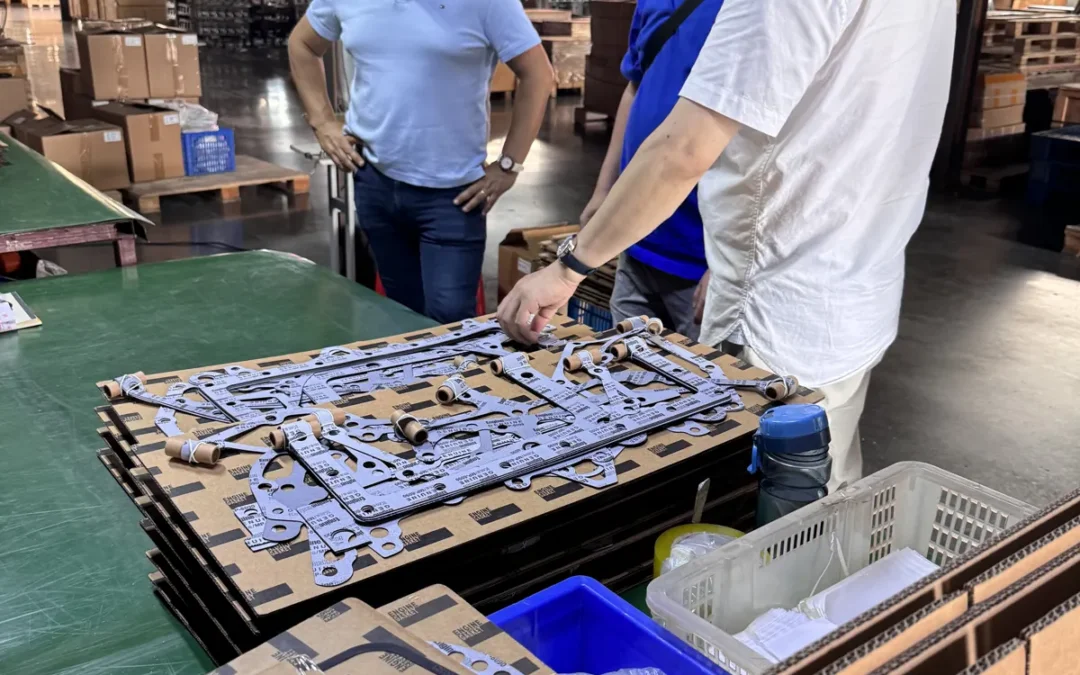
A regional parts distributor is ready to add a new Cummins gasket kit supplier. The quotation looks competitive and the sales response is fast, but the buyer receives only a certificate, several product photographs and a broad promise that every kit “fits Cummins.” Without a controlled packing list, traceability record or application-review process, the first mixed order can create shortages, wrong-kit returns and workshop delays. This guide gives procurement teams nine practical checks for approving a supplier on evidence rather than price alone.
Estimated reading time: 10-12 minutes.
Table of Contents
What Cummins Gasket Kit Supplier Approval Should Prove
Supplier approval is not a search for one perfect certificate. It is a controlled decision about whether a factory can understand an application, build the agreed kit, preserve its identity, ship it safely and respond when evidence shows a problem. Cummins publishes customer-specific requirements for its own direct supply base and aligns those requirements with recognized quality-management systems. A distributor is not required to copy that program, but the underlying disciplines—documented requirements, change control, performance measurement and corrective action—are useful benchmarks for any engine-parts sourcing process.
| Approval question | Useful evidence | Risk if unanswered |
|---|---|---|
| Can the supplier identify the application? | Part reference, engine model, ESN review and cross-reference source | Wrong geometry or incomplete repair scope |
| Can it define the kit? | Revision-controlled packing list and layout image | Offers with the same name but different contents |
| Can it reproduce the result? | Inspection plan, lot records and approved samples | Unstable quality between orders |
| Can it manage a problem? | Complaint workflow, containment and corrective-action records | Repeated defects and disputed responsibility |
Before starting a new approval, review our earlier article, Aftermarket Cummins Gaskets: 8 Critical Quality Checks. It explains the product-level inspection points; this guide concentrates on the supplier system behind those products.
9 Critical Cummins Gasket Kit Supplier Checks
1. Test the Application-Review Process
Send a realistic inquiry with a part number, engine model, repair scope and one deliberately missing detail. A capable Cummins gasket kit supplier should identify the missing evidence instead of approving fitment immediately. For engine-specific information, buyers can compare available records with Cummins QuickServe Online or another authorized service source. A supplier should also distinguish an upper set, lower set and complete overhaul scope rather than treating those descriptions as interchangeable.
2. Require a Revision-Controlled Packing List
A sales photograph can support identification, but it cannot control production. Request a list that records the kit reference, component description, quantity, revision and approval date. Ask how substitutions are evaluated and how buyers are notified before a component or material changes. The answer reveals whether the Cummins gasket kit supplier builds from controlled information or from an informal visual sample.
| RFQ field | Minimum entry | Better evidence |
|---|---|---|
| Engine identity | Model and displacement | Readable dataplate and ESN when available |
| Part reference | Buyer-supplied number | Source, old label and cross-reference trail |
| Repair boundary | Upper, lower or overhaul | Assemblies being removed and interfaces being resealed |
| Kit definition | Product name | Dated packing list, quantities and exclusions |
| Order requirement | Quantity and destination | Packaging, label, delivery and inspection requirements |
3. Ask How Critical Materials Are Controlled
A mixed gasket set may contain coated metal, fiber, elastomer, molded rubber and small sealing rings. One generic material statement cannot describe every interface. Ask which components have controlled material specifications, how incoming material is identified and what happens when a vendor or formulation changes. ISO explains that quality-system conformity can support supplier selection, but it is not a substitute for product conformity. Product-specific evidence still matters.
4. Review Inspection Records, Not Only Equipment Photos
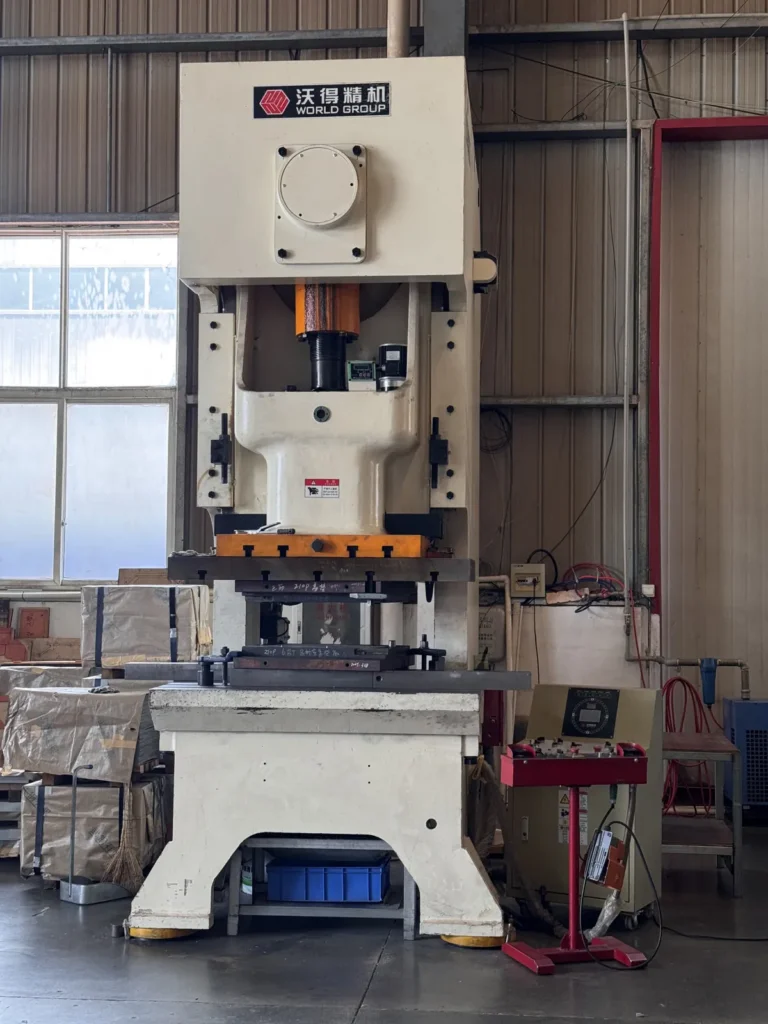
Machines show capacity; records show control. Ask the Cummins gasket kit supplier to explain incoming, in-process and final checks for several representative components. The inspection method should match the risk: visual checks for surface damage, dimensional checks for critical geometry, quantity verification for packing, and label comparison for identity.
| Control stage | Example record | Buyer review point |
|---|---|---|
| Incoming material | Lot identity and acceptance result | Specification, status and rejected-material separation |
| Cutting or forming | First-piece and periodic inspection | Measuring method and reaction to a failed check |
| Surface and coating | Visual standard or process record | Defect examples and handling limits |
| Kit assembly | Packing checklist or scan record | Quantity, revision and operator verification |
| Final release | Lot-release record | Authorized release and traceable shipment identity |
5. Trace One Finished Kit Back to Its Records
Select a sample carton and ask what the lot or date code can retrieve. A practical trace should connect the finished kit with its packing revision, inspection status and relevant material or production records. The goal is not paperwork volume. It is the ability to isolate affected stock quickly instead of treating every shipment as suspect.
6. Verify Product and Process Change Control
Ask for examples of changes that require customer notice: material source, tooling, manufacturing location, sub-supplier, construction or packing-list revision. Cummins' public supplier information emphasizes controlled supplier requirements and change management. Your approval agreement should likewise state which changes need written review before the next shipment.
| Possible change | Evidence to request | Approval decision |
|---|---|---|
| Material or coating | Specification comparison and validation result | Approve, test further or reject |
| Tooling or process | First-piece evidence and capability review | Define sample and inspection level |
| Packing-list revision | Old/new comparison and reason | Confirm repair-scope impact |
| Manufacturing location | Site capability and control-transfer plan | Re-audit or sample approval where needed |
| Label or packaging | Artwork, trace code and transit validation | Check legal, warehouse and damage risks |
7. Inspect Packaging and Kit-Assembly Controls
Thin metal gaskets can crease, coated surfaces can rub and small seals can migrate between compartments. Ask how the Cummins gasket kit supplier protects flatness, separates small components and prevents label mix-ups. For a trial order, photograph unopened cartons and compare each kit with the approved layout before distributing stock.
8. Test the Complaint and Corrective-Action Workflow
Ask what evidence the supplier needs when a kit appears incomplete or damaged. A useful process separates immediate containment, root-cause investigation, corrective action and effectiveness review. It should also define who communicates with the buyer and how potentially affected stock is identified. A fast replacement may solve one shipment, but it does not prove the underlying cause was controlled.
“Our first trial order looked acceptable, but the approval became useful only after we traced one carton to its packing record and agreed on the evidence required for a shortage claim. That exercise made both teams faster when a warehouse question appeared later.”
Illustrative buyer scenario
Michael Turner, Regional Parts Manager
9. Confirm Capacity, Lead Time and Communication Rules
Quality approval can still fail commercially if lead times, minimum quantities or mixed-order rules are unclear. Ask for the production lead time, capacity assumption, sample timeline, label options and escalation contact. Compare promises with a small trial order before committing critical fleet or distributor stock to one source.
Interactive Cummins Gasket Kit Supplier Scorecard
Use this scorecard to organize an approval discussion. It does not certify a supplier; it highlights missing evidence that deserves follow-up.
Supplier Approval Readiness
Select each item supported by current evidence:
| Score area | Suggested weight | Approval evidence |
|---|---|---|
| Application and kit definition | 25% | Fitment review and controlled packing list |
| Material and process control | 25% | Specifications, inspection plan and records |
| Traceability and change control | 20% | Lot trace and notification workflow |
| Packaging and problem response | 20% | Trial shipment and corrective-action example |
| Commercial support | 10% | Capacity, lead time and escalation contacts |
How to Approve a Cummins Gasket Kit Supplier with a Trial Order
Choose a small but representative range: one common upper set, one lower set and one kit with many small seals. Freeze the approved packing lists, labeling and packaging before shipment. On receipt, compare the unopened cartons, component quantities and trace codes with the agreed records. Document both conforming and nonconforming results. The trial should test the complete information flow, not merely whether one gasket looks correct.
Buyers evaluating VPGASKET can review the engine gasket product range, learn about the manufacturing background, or send a controlled RFQ through the contact page. Include the target references, engine applications, quantities, destination and required evidence so the discussion starts with a defined scope.
For a visual look at gasket products, packaging and factory activity, visit the VPGASKET YouTube channel. Use video as supporting context and confirm every quoted kit against the written packing list.
Cummins Gasket Kit Supplier FAQs
Is an ISO certificate enough to approve a supplier?
No. It can support confidence in the management system, but buyers should still verify product conformity, kit definition, traceability, inspection and trial-order performance.
Should the lowest quotation receive the first trial order?
Not automatically. Compare the total approved scope, documentation, packaging, lead time and risk response. An incomplete packing list can make a low unit price expensive.
What is the best first sample?
Select a kit your team understands well and can compare with reliable engine and packing information. Avoid judging an unfamiliar application only by appearance.
How often should a Cummins gasket kit supplier be reviewed?
Use a risk-based interval and review performance after significant changes, repeated complaints or delivery instability. Track measurable results instead of relying only on an annual questionnaire.
What should happen after a successful trial order?
Record the approved references, packing revisions, labels, inspection plan, communication contacts and change-notification rules. Then monitor actual quality and delivery performance as regular orders begin.
Final Supplier Approval Decision
A reliable Cummins gasket kit supplier should make verification easier, not hide uncertainty behind a broad catalog. Approve the source only when the application process, kit definition, records, traceability, change control, packaging and problem response work together. That evidence gives purchasing teams a defensible decision and gives workshops a better chance of receiving the right sealing scope at the right time.