
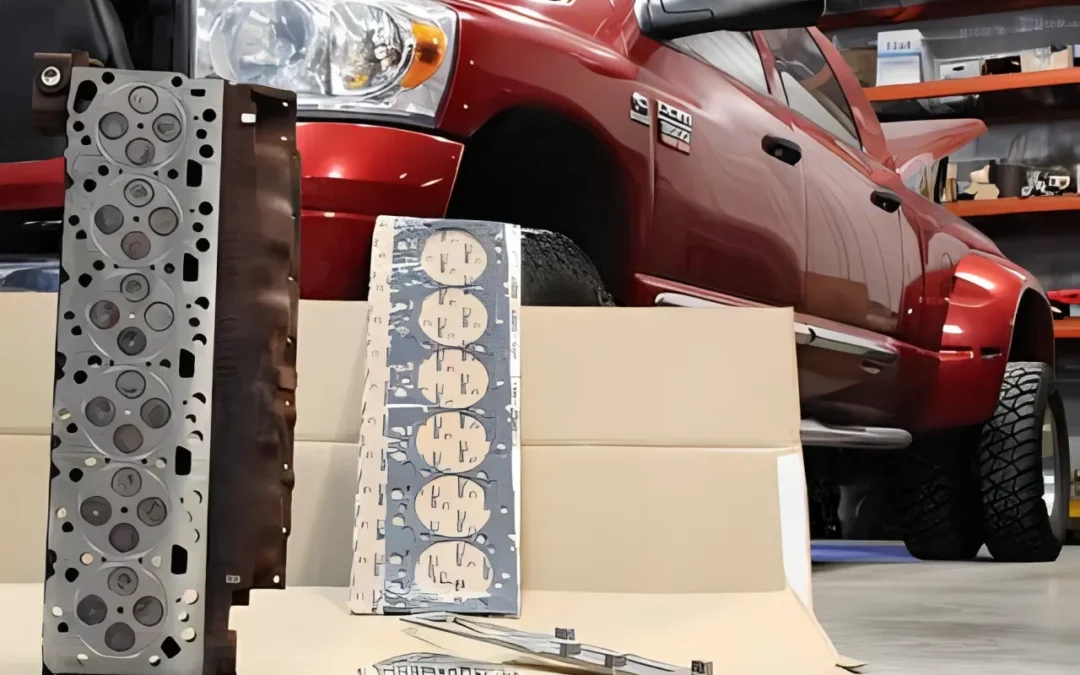
What quality evidence should buyers request for aftermarket Cummins gaskets? When sourcing for heavy-duty commercial fleets or engine rebuilders, buyers often face a critical dilemma: relying solely on visual similarities or the lowest price can lead to catastrophic internal leaks or combustion seal failures. To mitigate these risks, purchasing managers must request objective quality evidence before approving a vendor. This includes reviewing dimensional drawings, material certificates, first-article inspection (FAI) reports, and batch traceability logs. This guide provides a comprehensive evaluation framework to help you assess aftermarket Cummins gaskets accurately, ensuring your procurement decisions are driven by strict engineering data, exact ESN/CPL fitment, and robust supplier quality management.
Estimated reading time: 13–15 minutes.
Table of Contents
For broader planning context before this aftermarket Cummins gaskets decision, read our earlier blog, Best Ram 2500 Diesel Years: Cummins Guide. It provides related repair or fitment context without replacing the engine-specific service procedure.
For sourcing context, compare the repair scope against VPGASKET engine gasket sets, Cummins engine gasket options, Cummins B-series gasket kits, 4025107 upper engine gasket kit, 3800487 ISB 5.9L lower gasket kit. VPGASKET supplies gasket repair kits and seals only; hard parts must be sourced separately.
When the decision depends on the wider engine layout, use these external references for diesel engine parts and system layout, Cummins engine assemblies and spare-parts context, and engine diagnostic context, then confirm the exact configuration with the applicable ESN, CPL, OE number, and service information.
Aftermarket Cummins gasket selection should start with the real repair scope, the engine identification evidence, and the condition of every sealing surface—not with a model name or one isolated part number.
Drawing and dimensional control
Directly assessing a supplier’s drawing and dimensional control is the first critical quality check. Buyers must ask: Does the supplier manufacture based on reverse-engineered guesswork, or do they possess stringent dimensional tolerances that mirror exact OE specifications? The actionable standard here is the dimensional accuracy of fluid passages, bolt holes, and overall thickness under compression.
A reliable supplier should provide drawing versions and tolerance limits for critical areas. You cannot simply use a single OE cross-reference number or claim "looks the same" to prove equivalence. The supplier must demonstrate how they control the embossment height on Multi-Layer Steel (MLS) head gaskets and the exact profile of elastomeric sealing beads.
Executable Standard: Dimensional Tolerance Verification
When auditing a supplier, request the dimensional control plan for a specific gasket. Verify that they measure uncompressed thickness, bore diameter, and the concentricity of coolant and oil ports.
| Check # | Feature / Parameter | Measurement Method | Acceptable Evidence | Non-Negotiable Standard |
|---|---|---|---|---|
| 1 | MLS Uncompressed Thickness | Micrometer / CMM | Inspection Report | Must align with OE specs for specific ESN. |
| 2 | Cylinder Bore Diameter | Coordinate Measuring | FAI Dimensional Log | Cannot encroach on the combustion chamber. |
| 3 | Fluid Passage Alignment | Optical Comparator | Overlap Analysis | Minimum 98% alignment with engine block ports. |
| 4 | Embossment Profile Height | Laser Profilometer | Topography Report | Consistent spring-back (recovery) geometry. |
| 5 | Bolt Hole Concentricity | Go/No-Go Gauges | SPC Charting | Zero interference during installation. |

Material certificates and traceability
Material integrity dictates whether a gasket will survive the extreme thermal and pressure cycles of a diesel engine. When evaluating material certificates and traceability, selection criteria must center entirely on the target engine's operating conditions (temperature, fluid exposure, and pressure).
Selection Criteria and Limitations
You cannot substitute materials to cut costs. For instance, using cheaper elastomers (like standard NBR) in high-temperature oil environments where Fluorocarbon (FKM/Viton) is required will result in premature hardening and catastrophic oil leaks.
Operating Conditions: High-heat areas (exhaust manifolds, turbocharger gaskets) require high-grade graphite or specialized multi-layer steel with high-temperature coatings. Lower-temperature coolant areas might utilize specific fiber composite materials or EPDM O-rings.
Limitations & Non-Applicable Scenarios: Standard silicone should not be used in areas exposed to continuous diesel fuel, as it will swell and degrade. Similarly, quoting an OEM’s "expected lifespan percentage" to claim performance for an untested aftermarket product is invalid. Buyers must demand actual torque-retention and compression-set data for the specific material lot.
| Check # | Gasket / Seal Type | Typical OE Material | High-Risk Cheaper Alternative (Avoid) | Traceability Evidence Required |
|---|---|---|---|---|
| 6 | Head Gaskets (MLS) | Stainless Steel + FKM Coating | Carbon Steel + Nitrile Coating | Mill test certificate (MTC) for steel grade. |
| 7 | High-Temp Oil Seals | FKM (Fluorocarbon) | NBR (Nitrile Butadiene Rubber) | Polymer batch formulation record. |
| 8 | Exhaust Manifold | Graphite over Steel Core | Asbestos or Low-Grade Fiber | Heat resistance/thermal cycling test data. |
| 9 | Coolant O-Rings | EPDM or Specific FKM | Generic Neoprene | Cure date and batch lot number. |
First-article samples
The First-Article Inspection (FAI) sample is the ultimate proof of concept before mass production. Buyers must ask: Does this sample mathematically and physically match the requirements of the specific Engine Serial Number (ESN) and Control Parts List (CPL)?
An actionable judgment standard is requiring a comprehensive sample report that goes beyond simple dimensions to include assembly and functional verification. At VPGASKET, we support sample verification against OE numbers, ESN/CPL, and Bill of Materials (BOM) to ensure exact fitment. However, claims of automotive standards like PPAP (Production Part Approval Process) or ISO certifications are only valid when the supplier can provide the corresponding documents for your specific project upon request.
Executable Standard: FAI Documentation
Never accept a sample without its accompanying data. If a supplier sends a gasket without a measurement methodology or material proof, the sample is effectively useless for a B2B audit.
| Report Section | Required Data Fields for Approval |
|---|---|
| Identification | Drawing Version | Sample Batch | Target ESN/CPL | OE Cross-Reference |
| Measurement | Measurement Method/Gauges Used | Critical Dimension Results vs. Tolerances |
| Material Proof | Material Certificate | Coating Integrity Verification (e.g., FKM layer) |
| Functional Data | Installed ESN/CPL | Running Hours | Thermal Cycle / Leak / Rework Results |
Batch inspection and defect criteria
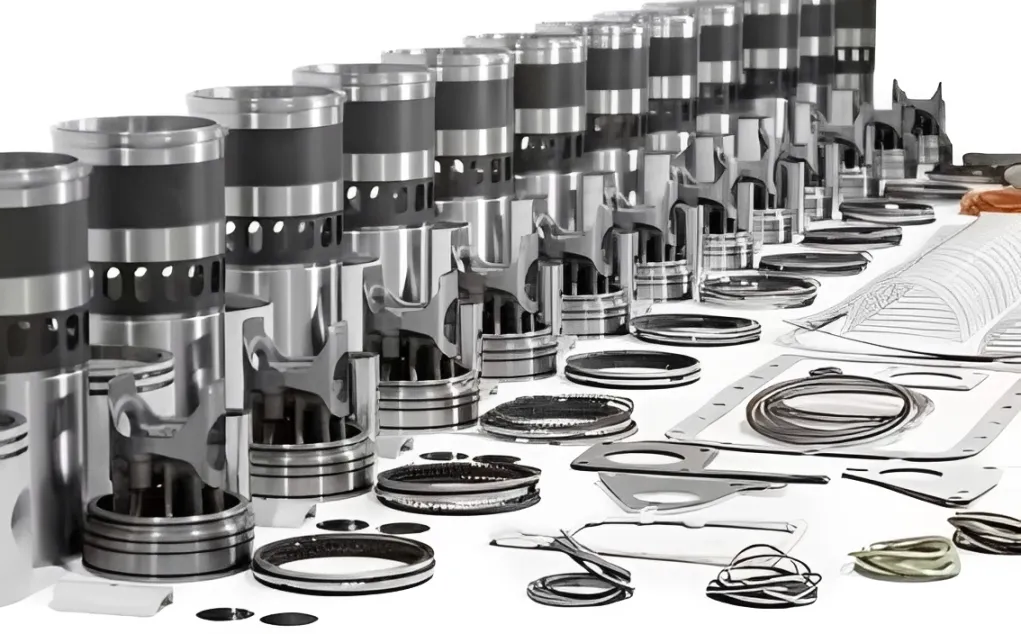
Consistency across thousands of units separates a reliable manufacturer from a high-risk vendor. Batch inspection must be executed in a strict, sequential order to capture defects before they reach your warehouse.
Step-by-Step Batch Inspection Execution
Documentation Review: Before physically touching the product, verify the batch traveler ticket. Ensure the material lot numbers match the approved FAI material certificates. (Evidence: Batch routing card).
Visual and Coating Integrity Check: Sample the batch according to AQL (Acceptable Quality Limit) standards. Inspect for coating flaking, uneven elastomer distribution on MLS layers, or edge quality (burrs/indentations). (Evidence: Visual inspection log).
Dimensional Sampling: Measure critical parameters (thickness, bore size) on the pulled samples using calibrated gauges. (Evidence: SPC/Control chart data).
Defect Classification: Any deviation must be categorized and actioned.
| Defect Type | Description / Example | Assessment Result / Action |
|---|---|---|
| Critical Defect | Missing fluid port; incorrect bore size; wrong material grade. | REJECT ENTIRE BATCH. High risk of catastrophic internal leak or combustion seal failure. |
| Major Defect | Coating scratches crossing the sealing bead; slight warp > tolerance. | HOLD BATCH. 100% sorting required. Assess root cause. |
| Minor Defect | Slight cosmetic discoloration; packaging label slightly misaligned. | ACCEPT WITH DEVIATION. Issue a warning to the supplier to correct in the next run. |
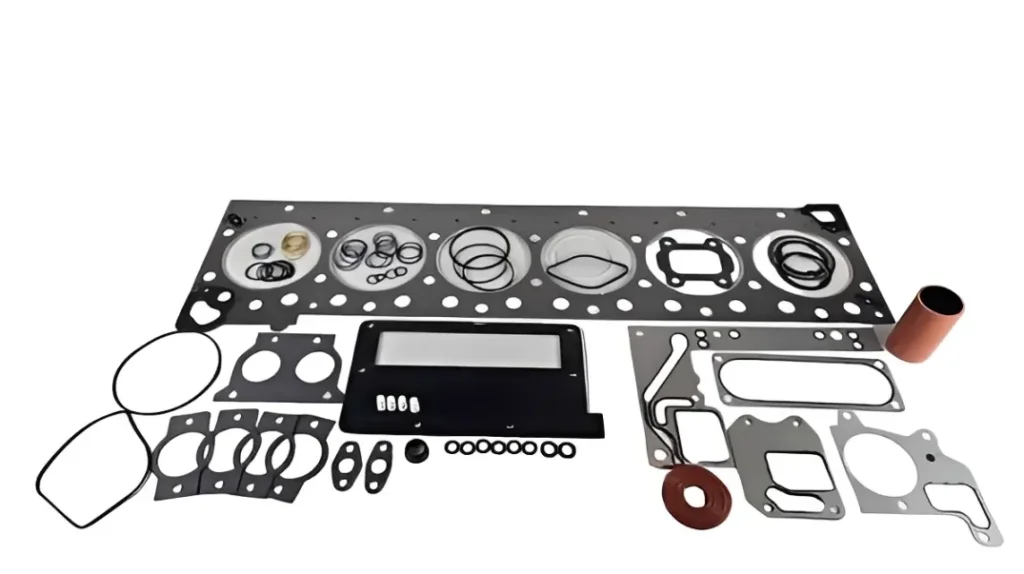
WARNING: Installing untested, visually approved aftermarket gaskets carries a high risk of catastrophic internal engine leaks, fluid mixing (coolant in oil), or combustion seal blow-by. Always demand documented proof of material composition and dimensional accuracy before installation.
— Brian Walker
Heavy-Duty Service Advisor
Packaging and kit completeness
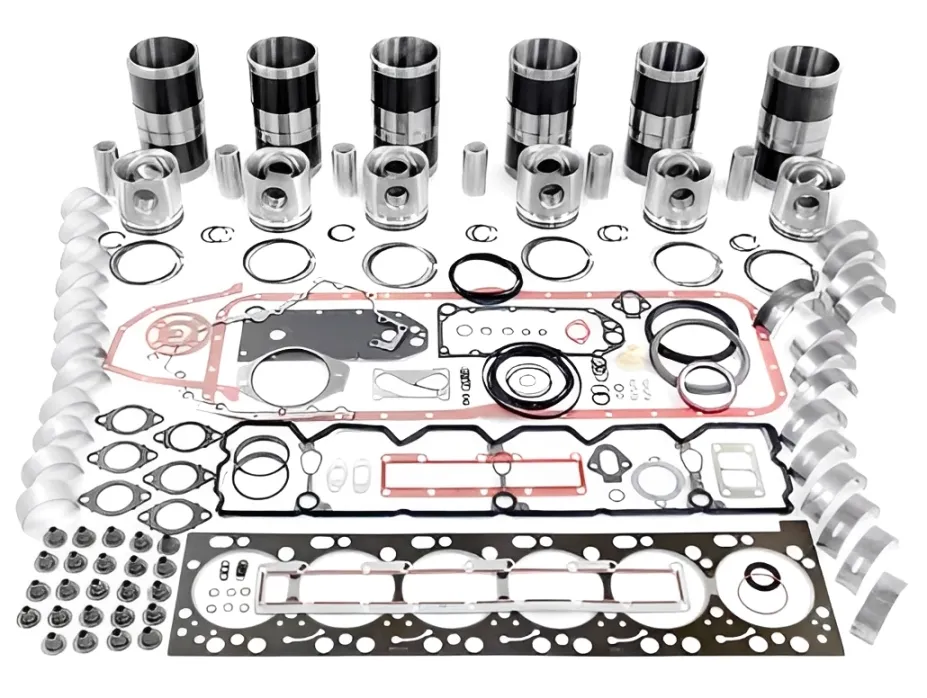
A premium gasket is worthless if it arrives bent or if a critical O-ring is missing from the engine overhaul kit. Buyers must verify: Does the supplier guarantee BOM completeness and use packaging that prevents deformation?
The actionable standard is strict BOM (Bill of Materials) verification against the specific Cummins ESN. The most commonly mismatched or missing items in aftermarket kits are the small, irregularly shaped gaskets, specialized O-rings, and oil seal lips.
Executable Standard: Packaging Audit
Packaging must ensure that MLS head gaskets are mounted on rigid cardboard or plastic backing to prevent bending during transit.
| Check Item | Actionable Standard | Verification Method |
|---|---|---|
| Rigidity | Head gaskets must not flex or bend during transit. | Drop/transit test; check for rigid backing boards. |
| BOM Accuracy | 100% match with target ESN/CPL overhaul requirements. | Weight check / optical scanning of small O-rings and seals. |
| Protection | Elastomers must be sealed away from UV light and ozone. | Verify use of opaque or UV-resistant polybags. |
| Labeling | Labels must show exact OE cross-reference and batch trace code. | Scan barcode to verify database linkage. |
Supplier corrective-action process
Even the best suppliers make mistakes. The true measure of a B2B partner is their Corrective and Preventive Action (CAPA) process. If a batch of gaskets has a missing injector O-ring or an out-of-tolerance bolt hole, how does the supplier respond?
The actionable standard is the 8D (Eight Disciplines) reporting framework. A supplier must be able to isolate the defective batch, identify the root cause (e.g., worn tooling, operator error), and implement a permanent fix rather than just offering a discount on the next order.
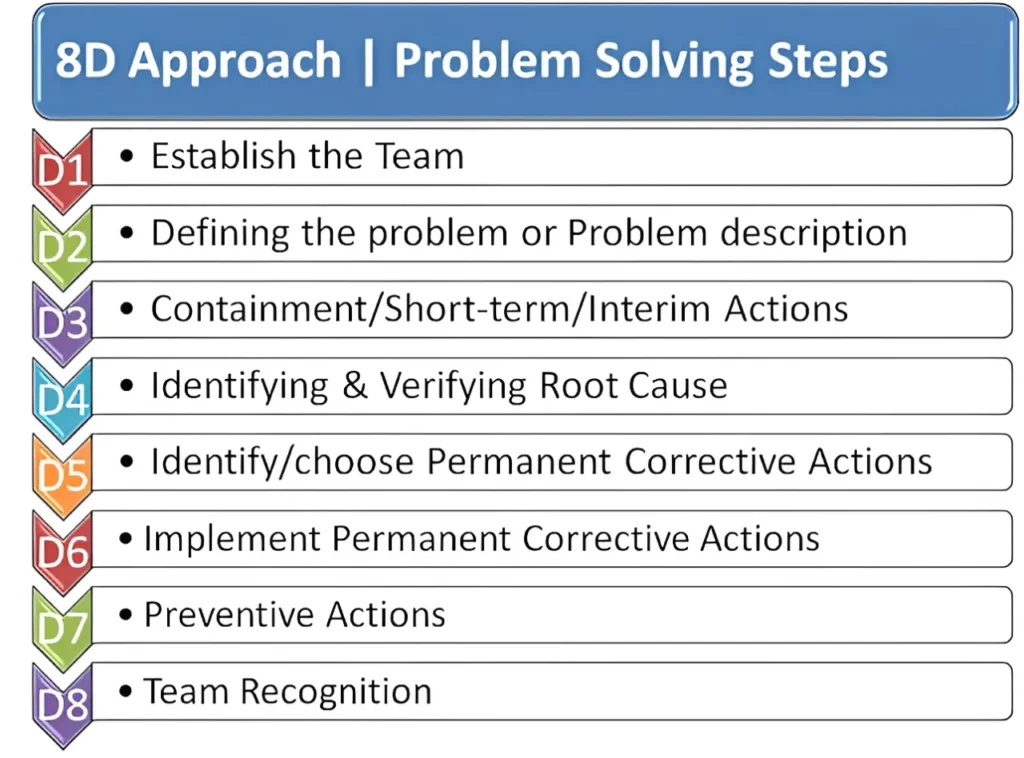
B2B Customer Scenario: Managing Kit Completeness
Consider an engine rebuilder ordering ISX15 head gasket kits.
The Trial: The buyer started with a small MOQ trial based on approved FAI samples. The samples matched the specific ISX15 CPL perfectly.
The Bulk Order: Upon receiving the first bulk order of 200 kits, the rebuilder’s intake team noticed that a specific, irregularly shaped coolant bypass gasket was missing from 15% of the boxes.
The Corrective Action: Instead of just sending the missing pieces, a high-quality supplier initiated an 8D report. They discovered the automated optical counter on their packaging line was miscalibrated for that specific dark-colored gasket. They updated the sensor, implemented a final weight-check for all boxes, and provided the buyer with the revised Control Plan. This is the level of supplier response required for heavy-duty engine parts.
Expert Guidance: Strict Verification Boundaries
Composite Expert Guidance on Aftermarket Procurement:
"When sourcing aftermarket Cummins gaskets, your verification boundary must begin and end with the Engine Serial Number (ESN), Control Parts List (CPL), and official service manuals. A gasket cannot be approved simply because it 'looks identical' to an OE part or shares a single superseded part number. Dimensional accuracy of fluid passages, layer count on MLS designs, and verified coating integrity (e.g., FKM over cheaper elastomers) must be proven with data. Never accept claims of OEM-equivalent lifespan percentages without reviewing documented thermal cycling, torque-retention, and functional leak test history. At VPGASKET, we emphasize checking exact BOMs against the target ESN to ensure true compatibility."
— Brian Walker
Heavy-Duty Service Advisor
Interactive B2B Gasket Supplier Evaluation Tool
Use this self-contained calculator to score your potential aftermarket gasket supplier based on the evidence they can provide.
Supplier Quality Evidence Scorecard
Actionable Next Steps for Procurement
Stop relying on guesswork for your engine rebuilds. To ensure maximum reliability and prevent costly downtime, you need a gasket manufacturer that builds quality validation into every step of the process.
CTA: Contact VPGASKET today to request samples, detailed inspection reports, and batch traceability documentation for your heavy-duty fleet needs.
FAQ
What should a sample report contain?
A comprehensive sample report should contain the drawing version, sample batch number, measurement methods/gauges used, critical dimension results compared to tolerances, material certificates, and the target engine installation parameters (ESN/CPL) along with any thermal cycle or leak test results.
Is ISO certification enough?
No. While ISO 9001:2015 indicates a baseline quality management system, it does not guarantee the dimensional accuracy or material suitability of a specific gasket. Buyers must request part-specific FAI reports, material certs, and ESN compatibility data to ensure safety and performance.
How can buyers verify material grade?
Buyers should request Mill Test Certificates (MTC) for steel components (like MLS layers) and polymer batch formulation records for elastomers (verifying FKM vs. cheaper NBR). Advanced buyers may also ask for torque-retention and compression-set testing data.
Why is ESN/CPL so critical for gasket verification?
Cummins engines undergo constant revisions. A gasket that fits one iteration of an engine may lack a critical coolant port on a later version, even if the block looks identical. The Engine Serial Number (ESN) and Control Parts List (CPL) lock down the exact Bill of Materials (BOM) required for a flawless rebuild.
How do we ensure kit completeness in aftermarket purchases?
Request that the supplier implement exact BOM matching against the target ESN/CPL, utilize final weight-checking or automated optical scanning for small O-rings and seals before sealing the box, and provide rigid packaging to prevent MLS gasket deformation.
Illustrative Customer Scenario
We stopped ordering by model name alone and used the verification sequence in this aftermarket Cummins gaskets review. The receiving team found the scope mismatch before the engine was opened, which protected the repair schedule.
— Sarah Bennett
Fleet Parts Coordinator