
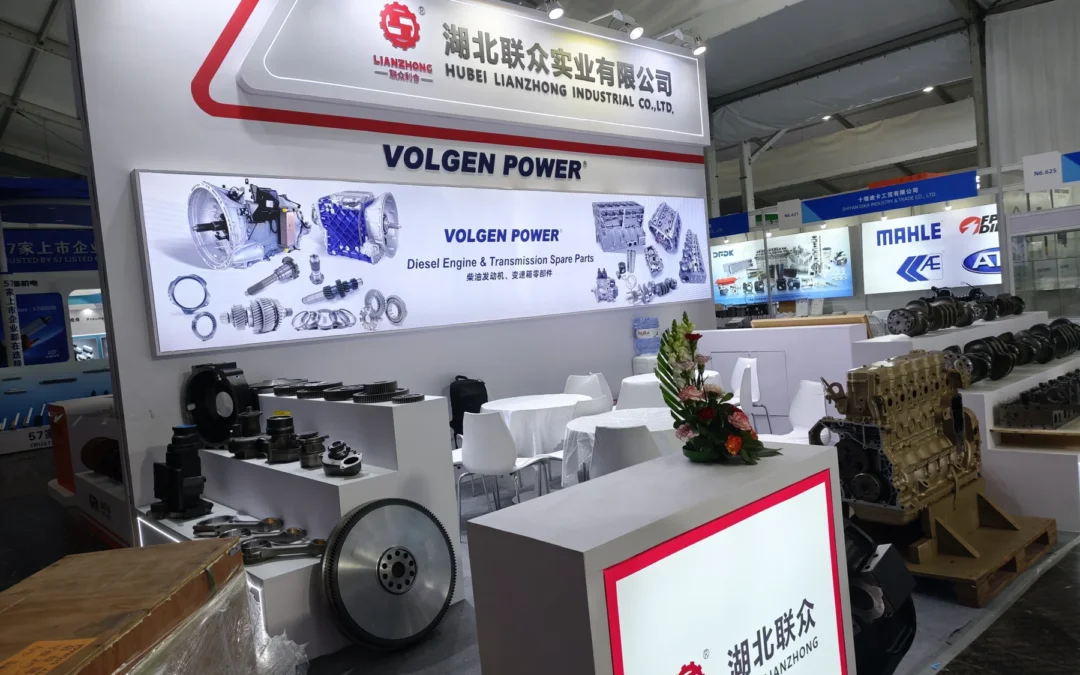
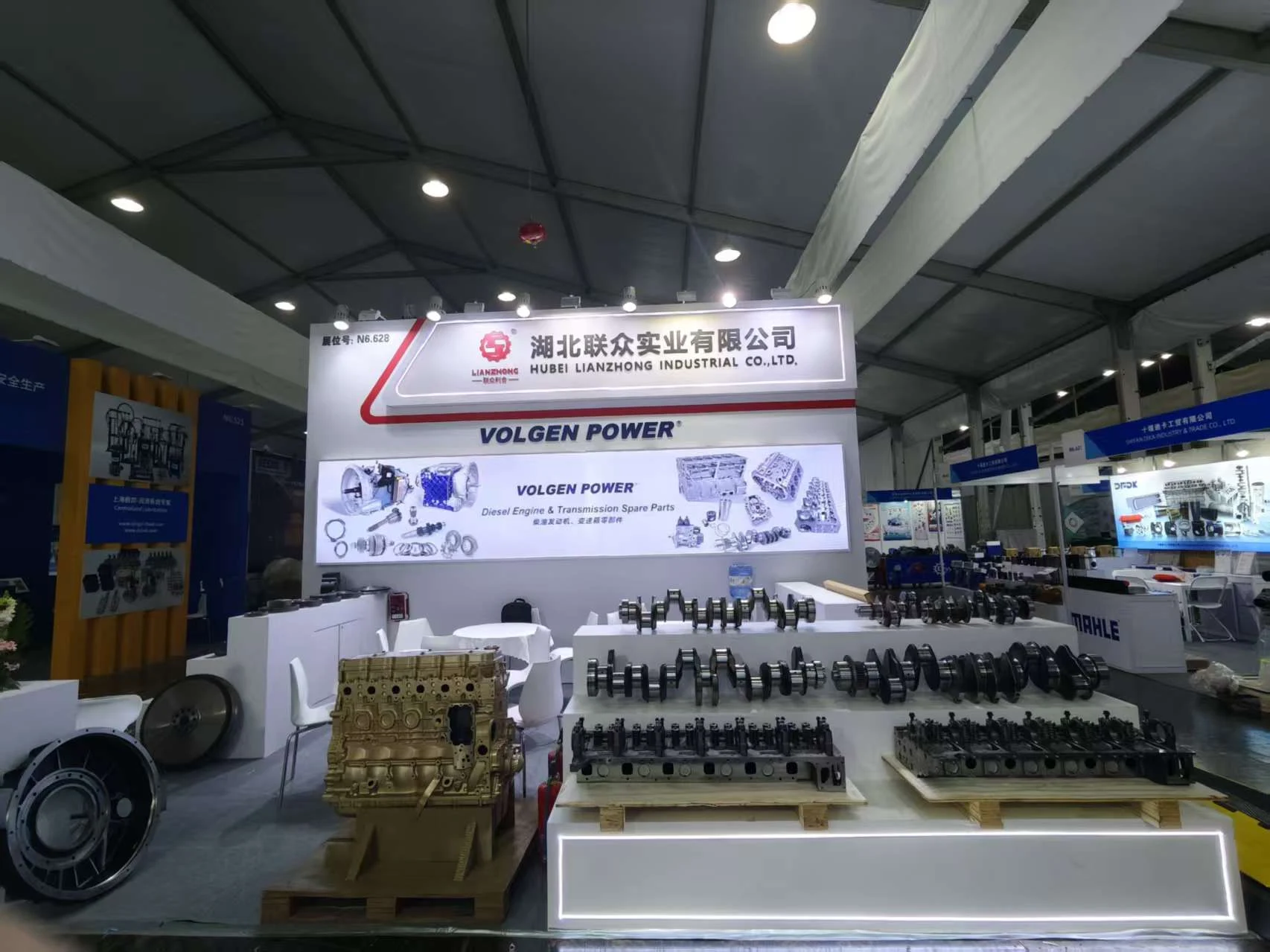
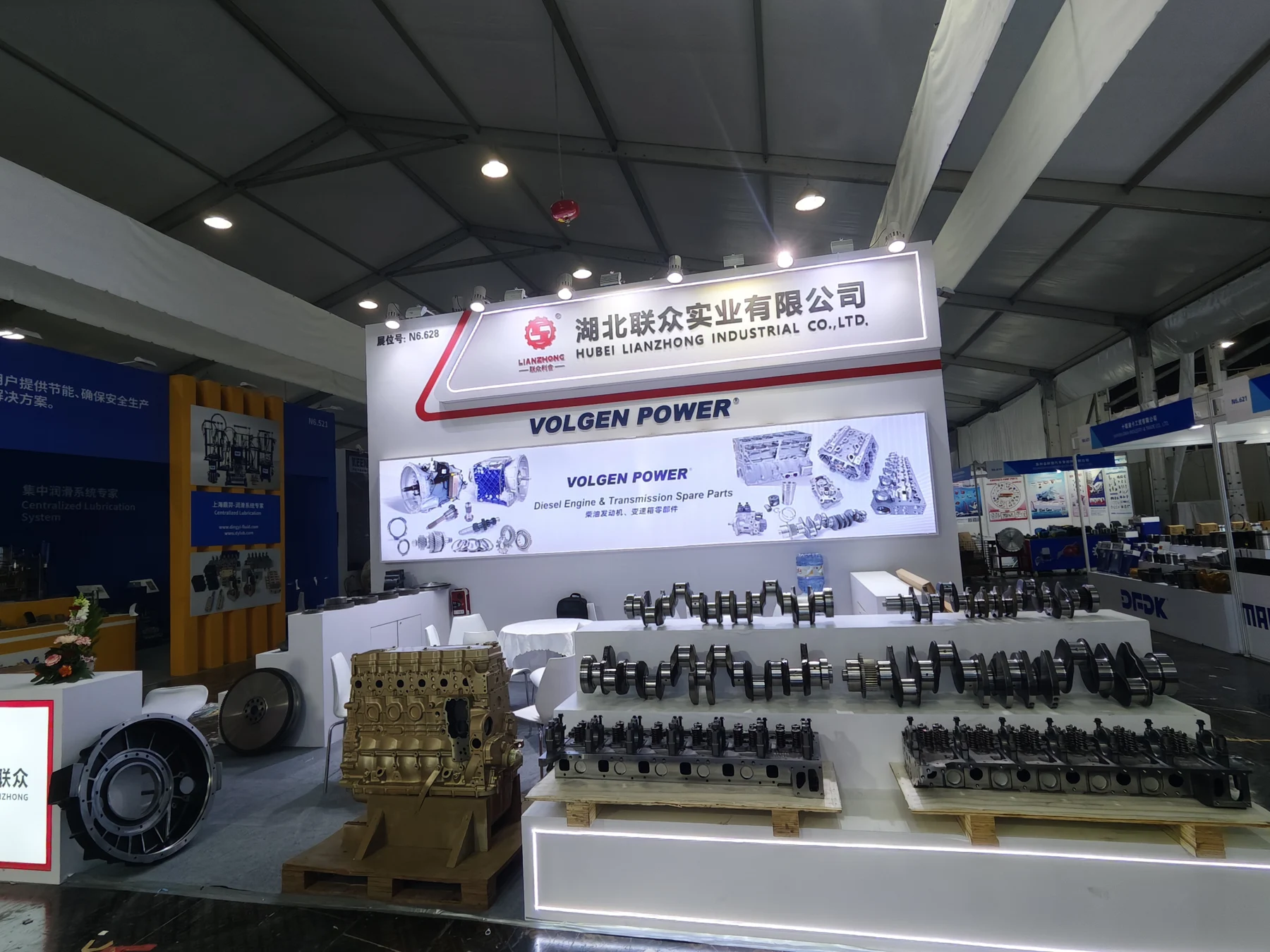
Shanghai, 24 November 2026 — Sourcing engine gasket kits or diesel engine parts at bauma CHINA 2026? Visit us at Booth N6.628, Shanghai New International Expo Centre, from 24 to 27 November. Look for Hubei Lianzhong Industrial Co., Ltd. above the stand and the blue VOLGEN POWER sign underneath.
If your workshop has asked for a gasket kit but the quotation names a different set, bring both the request and the quote. Our guide to upper, lower and full gasket sets explains what those names usually mean. At the booth, we can focus on which seals your particular repair calls for.
Estimated reading time: 10 minutes
Table of Contents
How to find Booth N6.628 at bauma CHINA 2026
This year’s show uses two venues. For N6.628, head to the Shanghai New International Expo Centre (SNIEC), 2345 Longyang Road, Pudong. The venue is open 09:00–17:00 on 24–26 November and 09:00–15:00 on Friday, 27 November. Official visitor information and directions.
Video: XCMG’s highlights from bauma CHINA 2024 in Shanghai.
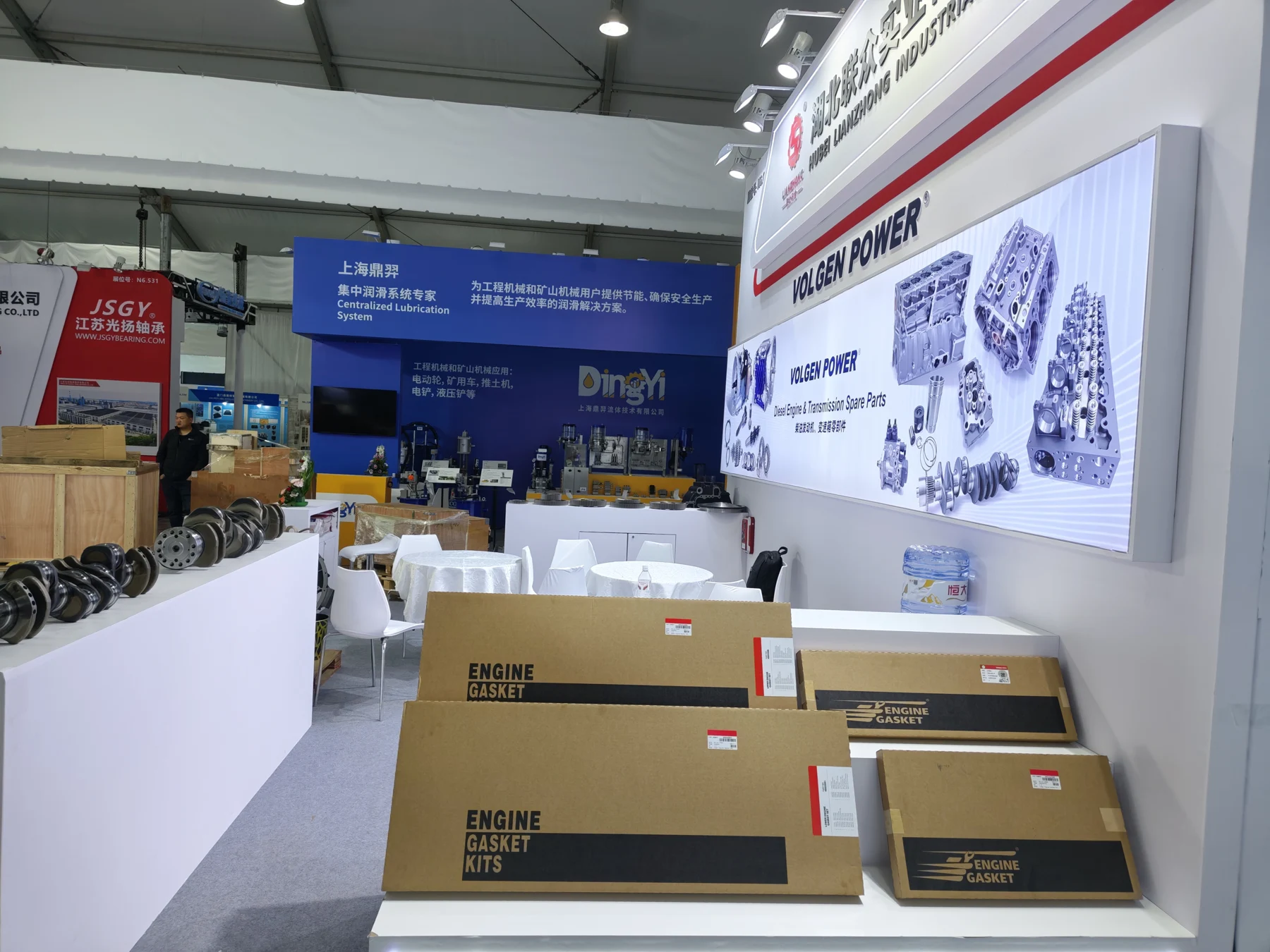
From the aisle, look for the crankshafts on the white display stands. The engine gasket kit boxes are just inside the booth, next to the meeting tables. Arrange a visit to N6.628 on WhatsApp.
Plan your booth visit
Choose the visit that matches your plans. Open a row to see where to go, what to bring and a message you can edit before sending.
November · Identify an unknown gasket
Visit N6.628 at bauma CHINA 2026. Bring the engine plate photo, any readable packaging label and a note about which joint the workshop will open. Prepare my meeting message.
November · Compare two quotations
Meet us at N6.628 with both itemized offers. Mark the line where the references or quantities differ so we can start there. Prepare my meeting message.
December · Plan a sourcing meeting
For Automechanika Shanghai, use booth 1.1D104 at NECC, not the November venue. Bring your reference list with a quantity beside each item. Prepare my meeting message.
What should I bring for a gasket kit discussion?
If you have an old kit but no readable part number: Bring a photo of the engine data plate along with a picture of the gasket. A note from the workshop about what it plans to remove helps us narrow the inquiry without assuming similar-looking parts are interchangeable.
If two suppliers have quoted different references: Bring both quotation lines and their lists of contents. Compare the seals offered with the joints your technician will open. Our ISX15 reference-checking guide shows why two sets described as “upper” still need separate checks.
If you’re buying for several workshops: Keep each engine reference beside its requested quantity. Mark any line where the customer hasn’t confirmed the repair yet. For a longer list, use our gasket kit quotation checklist before sending it over.
Plan a booth visit around the decision you need to make
A useful meeting starts with the decision waiting back at your workshop or purchasing desk. Are you trying to identify one unmarked part, choose between two gasket sets, or build a repeat order for several customers? Tell us which of those jobs you have in mind. A buyer with a machine already apart needs a different conversation from a distributor planning next quarter’s stock.
If a colleague is visiting on your behalf, send them the booth number together with one question you want answered. A phone full of photographs is less useful if nobody knows which image belongs to which machine. Put the engine reference in the same message as the photo and say whether you want identification help, a packing list, or a quotation. That gives your colleague something specific to bring back.
| Reason for visiting | A useful outcome to take away |
|---|---|
| A machine is waiting for a repair | A shortlist of references to check and the missing information needed to distinguish them. |
| Two offers have different prices | A clear explanation of which items and quantities the offers actually cover. |
| Several customers request similar kits | Separate inquiry lines for each application before you discuss a combined order. |
| You are meeting suppliers for a colleague | A named follow-up contact and a written note of the question still open. |
If you have only a few minutes between appointments, start with the line that is blocking a purchase. Other references can follow by email. On a busy exhibition floor, a single clearly identified engine and a legible original reference can make a shorter visit more productive than working through an entire stock list from memory.
Build an identification record from the evidence you already have
You do not need to dismantle a machine just to start a conversation at the show. Begin with information already available from the workshop: a readable photograph of the engine plate, the equipment description and any reference printed on the previous packaging. Keep the original image as well as your transcription. A faint digit that looks obvious on a phone can be much harder to interpret after the number has been copied into a spreadsheet.
Distinguish where each number came from. A number taken from an old invoice is evidence of what was ordered last time; it is not necessarily evidence of what the technician installed. A label from a shelf may belong to a different engine. If the source is uncertain, tell us rather than silently treating it as a confirmed part number. It is usually easier to investigate an openly flagged discrepancy than to trace a wrong assumption after a quote has been circulated.
| Evidence available | What it helps establish |
|---|---|
| Engine data plate photograph | The engine identity to use when checking a catalog reference. Keep the serial number readable. |
| Old box or invoice | A reference to investigate. Note whether the workshop confirmed that the previous part fitted. |
| Photo of the removed component | The location and visible features under discussion, not proof of interchangeability. |
| Workshop job description | Which assemblies will be opened and which are expected to stay in place. |
Keep identification and availability as separate questions. Establishing what the workshop needs does not establish whether that item is ready to ship. Conversely, finding a readily available kit does not show that it suits the engine. Ask for the reference check first, then discuss quantity, destination and delivery requirements against that reference.
Translate the workshop job into a list of sealing joints
Imagine a workshop quoting a cylinder-head repair while its purchasing department has been offered an overhaul set. A bigger box can look like the safer purchase. Before deciding, ask the technician what will actually come apart. The answer changes the comparison from a debate about kit names into a check of the joints that will need sealing when the engine goes back together.
Write down any related work that is still undecided. For example, if the workshop will inspect an adjacent assembly before deciding whether to remove it, keep its seals on a separate optional line. This lets purchasing compare the known job on equal terms and ask what an extension would cost without committing to it. It also prevents an optional item from quietly becoming part of the base order when a quotation is forwarded.
| Workshop instruction | How to frame the inquiry |
|---|---|
| Cylinder head will be removed | Request an itemized proposal for the head work and any associated joints the technician lists. |
| Only one leaking joint will be opened | Ask about the individual seal as well as any kit offered; compare the relevant contents. |
| Additional teardown depends on inspection | Separate confirmed work from optional work and request independent lines. |
| Several assemblies are being resealed | Map each required joint to an item; flag omissions and duplicates before combining sets. |
A display sample is helpful for discussing the difference between an individual component and a packaged order. It cannot tell you how many pieces will be in a different kit. Ask for the contents of the particular reference being quoted, including quantities where several similar seals are needed. Keep the list with the quotation rather than relying on a photograph of the exhibition stand.
Compare two quotations without losing the differences
When a buyer brings two prices to the stand, the first question is whether both prices buy the same thing. Check the supplier reference, the unit of sale and the number of units before comparing totals. One offer might price one gasket set while another prices a carton. The word “set” on its own does not resolve that difference, even when both descriptions mention the same engine family.
Next, look at how each supplier handles exceptions. If a reference is proposed as a replacement for the one requested, keep both numbers visible and ask what supports the substitution. If a seal is sold separately, give it its own price and quantity line. This is particularly important when one buyer selects the supplier and a different person releases the purchase order: the reasoning behind a decision can disappear when an offer is reduced to a single total.
| Quotation field | Question to settle before approval |
|---|---|
| Offered reference | Is this the requested reference or a proposed alternative that still needs review? |
| Packing list | Which items and quantities are included, and which required seals must be ordered separately? |
| Unit and quantity | Does the quoted price apply to a single piece, one kit, or a larger pack? |
| Delivery basis | Are both prices for the same destination and shipping arrangement? |
| Timing | Is the stated date a dispatch estimate or an estimated arrival at the workshop? |
If a supplier cannot answer one of these questions at the stand, record it as open. A quotation can still be useful without being ready for approval. Identify which answer would change your choice and ask for that answer in writing. There is no need to hold up an unrelated line just because one application needs more evidence.
Leave the meeting with a follow-up your workshop can use
Before leaving Hall N6, take a minute to review the notes with the person you met. Agree on which reference will be checked, who will supply the missing evidence and how you want to receive the reply. A photograph of a business card can help you remember a contact, but it will not tell your colleague why one kit was shortlisted and another was left out.
For a distributor, a simple way to avoid mix-ups is to give every open inquiry a customer or job reference of your own. Use the same reference in the subject line of the follow-up email and beside the relevant quotation line. If the same engine model appears twice, do not merge the quantities until you have confirmed that the repair scope and offered reference are identical. Similar descriptions are not enough to justify combining two customers’ orders.
| Before you leave | What to record |
|---|---|
| Reference agreed for review | The requested number and the offered number, written separately if they differ. |
| Information still missing | The specific photograph, engine detail or packing list needed and who will send it. |
| Written quotation requested | Required quantity, unit of sale, destination and the contact who should receive the reply. |
| Next decision | What the workshop must confirm before purchasing can release the order. |
If your colleague will continue the discussion at the December show, send a short handover while the details are fresh. Include the November booth contact, the open question and any material already supplied. That way the next meeting can begin with the unresolved item instead of starting the identification process again.
Visiting Shanghai in December instead?
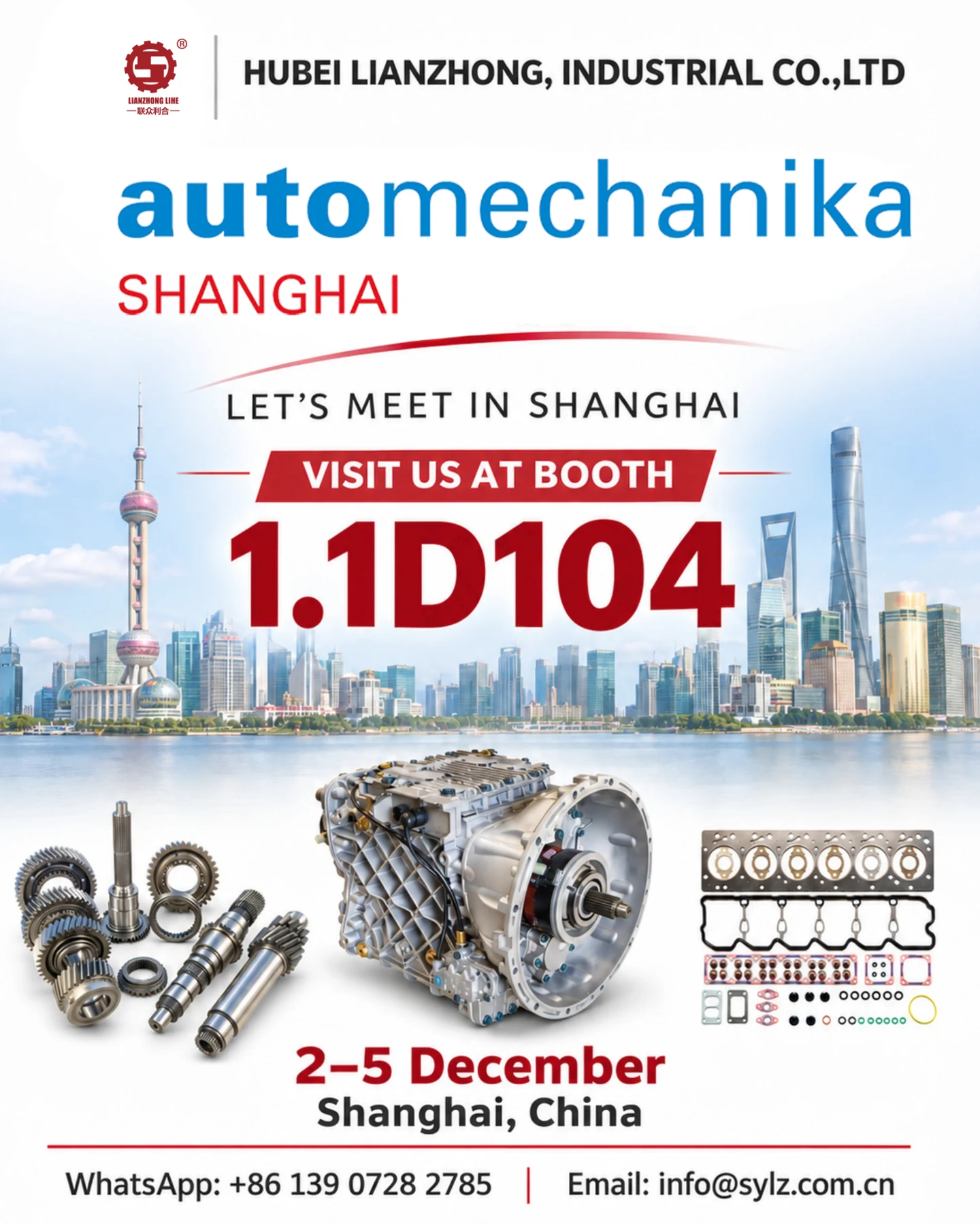
Meet us at Automechanika Shanghai, 2–5 December 2026, at the National Exhibition and Convention Center (Shanghai). This is a different show and venue: our December booth is 1.1D104. Official Automechanika visitor information.
Arrange a December booth visit or email [email protected]. Already at bauma CHINA? Stop by N6.628 with the part number or photo you’d like to discuss.