
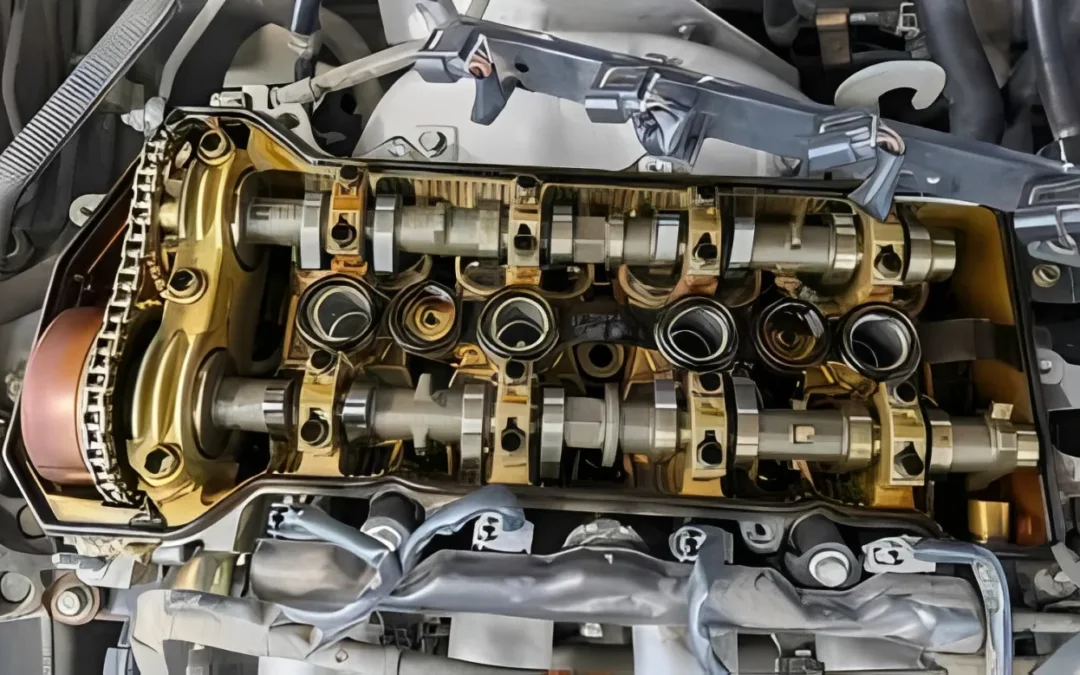
When tackling a leaking diesel top end, the immediate question is: Which seals and grommets should be replaced with a diesel valve cover gasket? The short answer is that you must replace the main perimeter gasket, all bolt grommets (isolators), injector harness pass-through seals, and crankcase ventilation (CCV) O-rings. Fleet managers and owner-operators often face this dilemma when trying to minimize unexpected downtime and manage their maintenance budgets.
If you only swap the outer perimeter seal, heat-hardened bolt grommets will fail to maintain clamping force, leading to an immediate repeat leak. By evaluating a comprehensive kit rather than a single piece, you can significantly optimize your overall valve cover gasket replacement cost and avoid paying labor charges twice for the same job. Let's break down the exact framework for choosing the right components for your engine.
Estimated reading time: 12–14 minutes.
Table of Contents
For broader planning context before this diesel valve cover gasket decision, read our earlier blog, How Much Is an Intake Manifold Gasket Replacement? B2B Cost Guide. It provides related repair or fitment context without replacing the engine-specific service procedure.
For sourcing context, compare the repair scope against VPGASKET engine gasket sets, Cummins engine gasket options, Cummins B-series gasket kits, 4025107 upper engine gasket kit, 3800487 ISB 5.9L lower gasket kit. VPGASKET supplies gasket repair kits and seals only; hard parts must be sourced separately.
When the decision depends on the wider engine layout, use these external references for diesel engine parts and system layout, Cummins engine assemblies and spare-parts context, engine diagnostic context, then confirm the exact configuration with the applicable ESN, CPL, OE number, and service information.
Diesel valve cover gasket selection should start with the real repair scope, the engine identification evidence, and the condition of every sealing surface—not with a model name or one isolated part number.
What Belongs in a Complete Valve Cover Gasket Kit
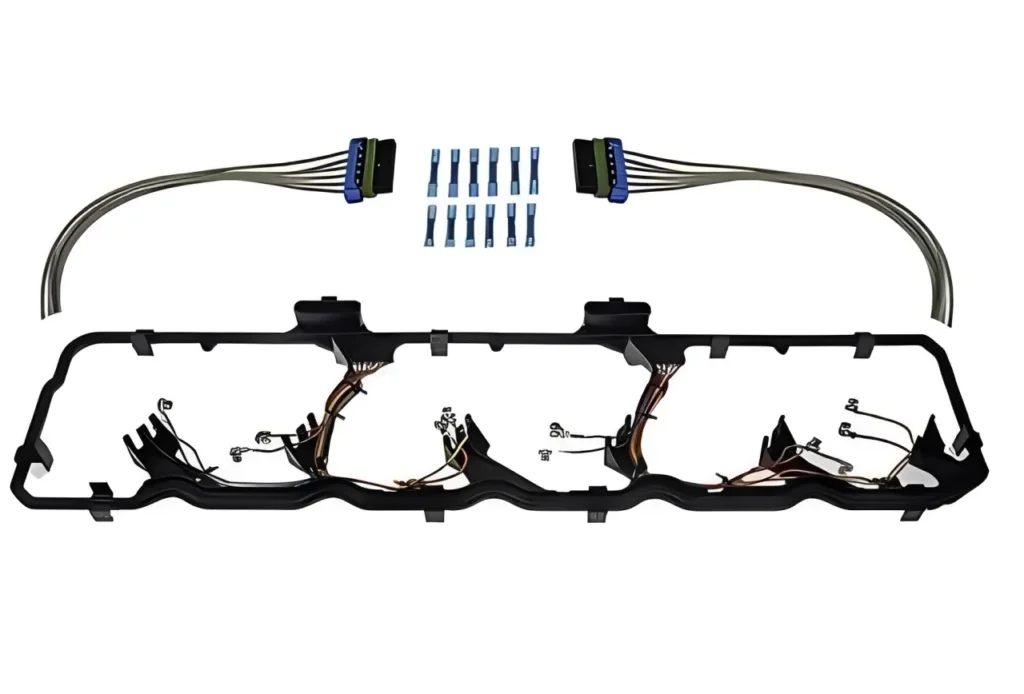
A comprehensive diesel valve cover gasket kit goes far beyond the perimeter seal. It is designed to restore the entire upper sealing ecosystem of the engine. When evaluating what belongs in your kit, use this actionable standard: If you must remove a bolt, a wire harness, or a ventilation tube to take off the valve cover, the associated seal must be replaced.
Keep in mind that different engine configurations and supplier bills of materials (BOM) may vary. Some engines integrate the harness seals directly into the perimeter gasket, while others use discrete pieces.
| Component Type | Primary Function | Replacement Priority | Supplier/Engine Variation |
|---|---|---|---|
| Perimeter Gasket | Primary oil containment | Mandatory | May be one-piece, multi-piece, or molded rubber on metal carrier. |
| Bolt Grommets/Isolators | Maintain clamping force and isolate vibration | Mandatory | Quantities vary by engine; some kits include new bolts. |
| Injector Pass-Through Seals | Prevent oil entering electrical/fuel paths | High | May be integrated into the main gasket or sold as separate grommets. |
| Breather/CCV O-Rings | Seal crankcase ventilation ports | High | Often overlooked; highly dependent on specific emission configurations. |
| Injector Tube Seals | Seal spark/injector tubes from oil ingress | High | Design heavily relies on cylinder head architecture (e.g., Cummins ISX vs. ISB). |
Bolt Grommets and Sealing Washers
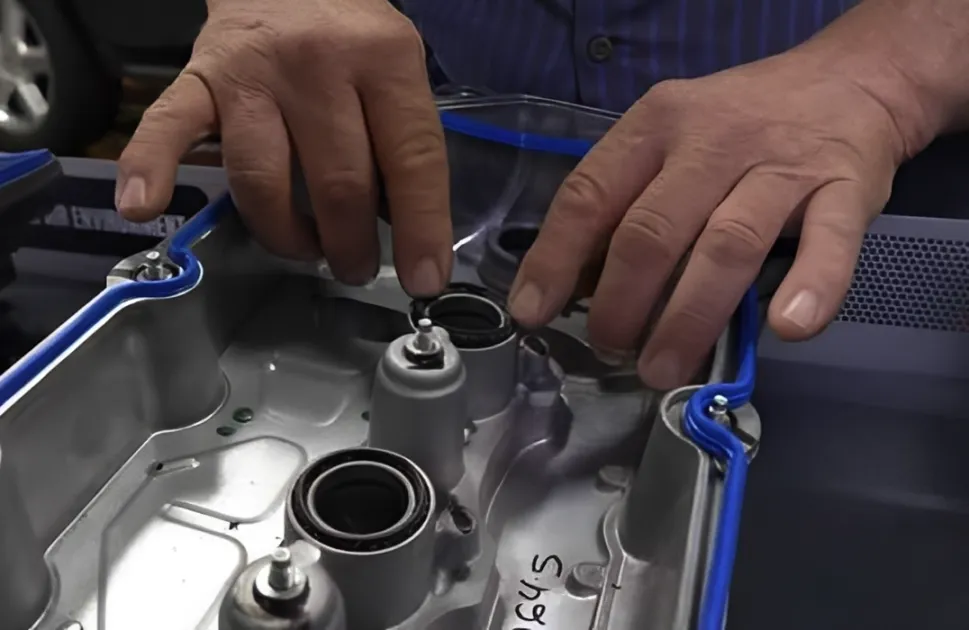
The most common mistake during a top-end reseal is ignoring the bolt grommets. Diesel engine thermal cycles, crankcase pressure, and constant exposure to engine oil cause rubber parts to undergo compression set (permanent deformation). When a grommet hardens, it loses its elasticity and can no longer provide the active clamping force required to keep the main gasket sealed.
Typical components in this category include isolator sleeves, rubber grommets, and copper or steel sealing washers. Please note that different engine configurations and supplier lists may dictate whether these are sold independently or pre-installed on replacement bolts.
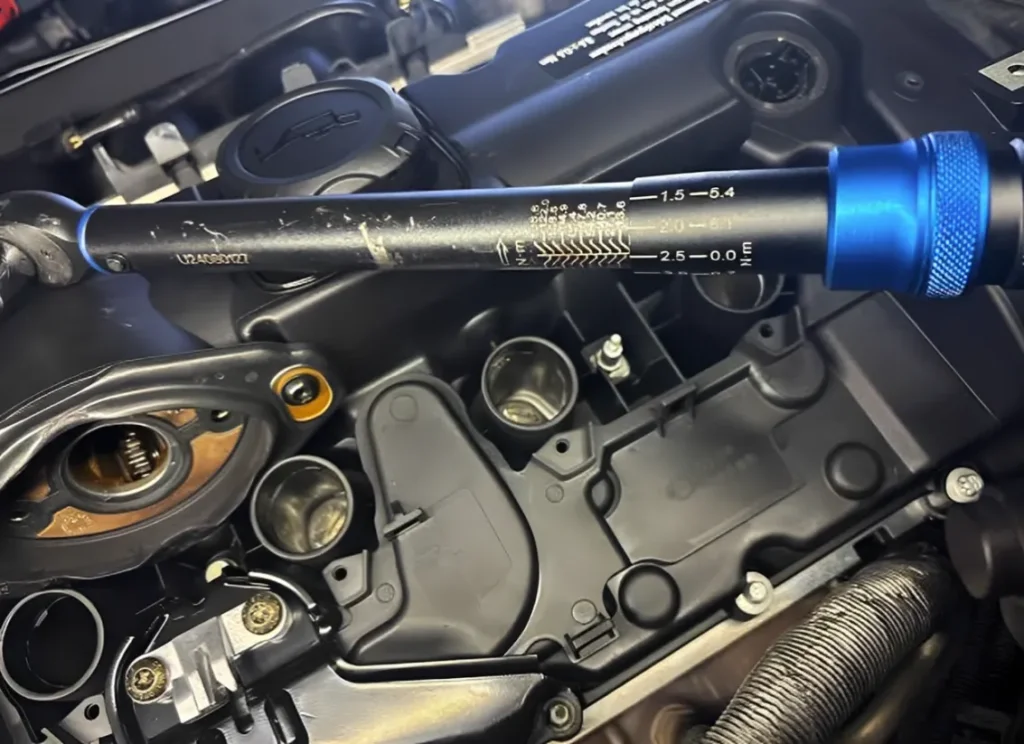
WARNING: Do not reuse old grommets. Attempting to compensate for hardened grommets by overtightening the bolts will crush new seals, warp the valve cover, or strip the threads in the cylinder head. Always adhere to the OE service manual torque specifications.
— Laura Mitchell
Aftermarket Parts Quality Auditor
| Symptom / Observation | Physical Cause | Operational Risk |
|---|---|---|
| Grommet feels rigid or plastic-like | Thermal degradation & oil exposure | Total loss of clamping force. |
| Visible cracking on the rubber flange | Ozone, heat cycling, age | Oil seepage directly up the bolt threads. |
| Flat profile (no crown) | Compression set over time | Main perimeter gasket will blow out under pressure. |
| Metal sleeve protrudes past rubber | Rubber shrinkage | Metal-to-metal contact, causing vibration damage. |
Injector Harness and Pass-Through Seals
Modern electronic diesel engines route critical wiring through the valve cover to reach the fuel injectors. The pass-through seals must handle not only oil splash and heat but also electrical isolation. Typical parts include injector tube seals, pass-through harness connectors, and pigtail grommets.
Again, note that different engine configurations and supplier lists may vary. On some platforms, replacing the pass-through seal requires a specific sequence of harness disconnection. Failure to replace these seals allows oil to wick into the engine wiring harness, potentially reaching the ECM and causing catastrophic electrical failure.
Breather and Crankcase Ventilation Seals
The crankcase ventilation (CCV) system connects directly to or through the valve cover on many heavy-duty diesels. The seals here are subjected to highly concentrated oil vapors and pressurized blow-by gases. Typical replacement parts include breather box perimeter seals, PCV/CCV grommets, and internal baffle O-rings.
Depending on the engine generation and specific supplier kit BOM, these seals might be separate from the main valve cover kit. Always verify your specific configuration.
| Seal Location | Contaminant Exposure | Failure Consequence |
|---|---|---|
| CCV Filter Base O-Ring | Oil vapor, high pressure | External oil leak on top of the engine. |
| Internal Baffle Gasket | Direct hot oil splash | Increased oil consumption; fouled turbocharger compressor. |
| Vent Tube Grommet | Crankcase pressure, heat | Vacuum leaks; rough idle; environmental emissions violation. |
When the Cover Itself Must Be Inspected or Replaced
A new gasket cannot fix a mechanically compromised valve cover. Before installing your new VPGASKET seals, you must execute a strict inspection sequence.
Step 1: Clean and Degrease
Evidence needed: A completely bare surface. Clean all sludge and carbon before installation.
Result: Allows for proper visual inspection of the material structure.
Step 2: Check for Warpage
Evidence needed: Place a precision straight-edge across the sealing flange. Try to slide a 0.002" (0.05mm) feeler gauge underneath.
Result: If the gauge passes through, the cover is warped and must be replaced.
Step 3: Inspect Bolt Bosses for Cracks
Evidence needed: Visual inspection using a flashlight around the mounting holes.
Result: Hairline cracks, often caused by previous overtightening, dictate immediate replacement of the hard part.
Step 4: Evaluate Internal Baffles
Evidence needed: Check the breather baffles for heavy sludge blockage.
Result: Blocked baffles increase crankcase pressure, which will blow out your new gasket.
How the Extra Parts Change Valve Cover Gasket Replacement Cost
Understanding the true cost requires looking beyond the price of the rubber. We utilize a standard cost parameter model:
Total Cost = (Labor Hours × Regional Labor Rate) + Gaskets/Seals + Single-Use Fasteners/Consumables + Downtime Cost.
Do not rely on a single global price, as labor rates and engine accessibility vary wildly. Labor impact factors include:
Engine Bay Accessibility: Cab-over vs. conventional truck layouts.
Harness and Line Removal: Whether high-pressure fuel lines or EGR piping must be removed.
Surface Preparation: Cleaning old, baked-on silicone or sludge.
Post-Leak Cleaning: Degreasing the side of the engine block.
The parts list also influences the cost. Replacing typical components (perimeter seal, grommets, injector tube seals) adds a fractional amount to the parts bill but guarantees the labor investment. As always, different engine configurations and supplier lists may dictate slightly different inclusions.
| Cost Variable | Replacing Only Perimeter Gasket | Replacing Complete Seal Kit | Impact on Total Cost |
|---|---|---|---|
| Parts Cost | Low | Moderate (Includes grommets/o-rings) | Slight upfront increase. |
| Initial Labor | Standard | Standard | Identical (cover is already off). |
| Risk of Rework | Extremely High (high) | Negligible (lower) | Prevents paying labor twice. |
| Downtime | 1 Day (Initial) + Unplanned breakdown | 1 Day (Initial) | Saves thousands in lost freight/uptime. |
Interactive Tool: Valve Cover Repair Cost Evaluator
Use this self-contained calculator to estimate the real-world financial risk of a repeat repair due to reusing old grommets versus doing it right the first time.
Repair Cost Risk Calculator
Composite Expert Guidance
From the Desk of a VPGASKET Sealing Expert:
— Laura Mitchell
Aftermarket Parts Quality Auditor
"When selecting a kit, material science matters just as much as geometry. Many modern OEM and premium aftermarket kits utilize FKM (Fluoroelastomer) for its exceptional resistance to high temperatures, mineral oils, diesel fuel, ozone, and diverse chemical media. However, FKM's performance relies heavily on the specific compound formulation and the engine's thermal cycles. Hardened grommets lose their clamp force regardless of the main gasket's material. The combination of an FKM perimeter seal with fresh, correctly torqued isolator grommets is the only way to ensure the engine's breathing mechanisms and oil galleries remain fully sealed."
Illustrative Customer Scenario
A regional freight operator running a fleet of Cummins ISX15 engines recently experienced a top-end oil leak on Unit 42. Seeking to save money, the shop technician ordered only the perimeter gasket, reusing the 12 old bolt isolators. After additional service intervals, the engine was leaking again—this time worse than before. The hardened grommets lacked the elasticity to absorb engine vibrations, causing the new gasket to shift and blow out under crankcase pressure. The fleet had to sideline the truck for another full day, paying the mechanic's labor twice, losing a day of freight revenue in daily freight revenue, and eventually purchasing the complete VPGASKET seal kit they should have bought the first time.
— Kevin Adams
Diesel Workshop Foreman
Pre-Order Checklist by Engine Configuration
To ensure you get the exact seals required, follow a strict verification protocol based on your Engine Serial Number (ESN) or Control Parts List (CPL).
Step 1: Locate the Engine Data Plate
Evidence needed: Find the ESN and CPL physically stamped on the engine block or data plate.
Result: Provides the primary key for looking up the exact bill of materials.
Step 2: Cross-Reference the BOM
Evidence needed: Input the ESN into official manufacturer service portals (e.g., Cummins QuickServe).
Result: Identifies every individual seal, O-ring, and grommet required for a complete valve cover service on that exact engine build.
Step 3: Verify the Harness Integration
Evidence needed: Check the service manual to see if your specific valve cover incorporates pass-through connectors.
Result: Dictates whether you need independent injector tube seals or an integrated harness gasket.
| Verification Step | Source Material | Action to Take |
|---|---|---|
| 1. Identify ESN/CPL | Engine Data Plate | Write down exact alphanumeric codes. |
| 2. Check Current BOM | OEM Online Parts Catalog | Look for superseded part numbers for the gasket. |
| 3. Inventory Isolators | Service Manual Diagrams | Count required bolt grommets (e.g., 10, 12, or 14). |
| 4. Check CCV Updates | Technical Service Bulletins | Note if the breather O-rings require an updated compound. |
VPGASKET Verification Boundary & Fitment Support
Important Note: VPGASKET exclusively engineers and supplies high-quality gasket repair kits and seals. We do not manufacture or supply hard engine parts such as pistons, bearings, liners, or complete valve covers. All technical conclusions, torque specifications, and parts breakdowns in this article must be verified against the official manufacturer service materials (e.g., Cummins QuickServe Online or the Cummins official online parts catalog) using your specific ESN. You can cross-reference our local part directories utilizing the VPGASKET Cummins Engine Gasket Catalog and the Engine Model Comparison worksheet. However, if our local catalog number differs from the OEM's current active BOM for your target ESN, the OEM's active supersession number is the final authority.
Frequently Asked Questions (FAQs)
Can you replace only the main valve cover gasket?
While physically possible, it is highly discouraged. Replacing only the main perimeter gasket leaves aged, heat-hardened bolt grommets and harness seals in place. These old components will fail to hold the proper clamping force, usually resulting in a leak shortly after the repair.
Why does a new valve cover gasket still leak?
A new gasket will leak if it is installed on a warped or cracked valve cover, if the mating surface was not properly cleaned, if the crankcase ventilation system is blocked, causing excessive pressure, or—most commonly—if the old bolt grommets were reused and overtightened, which distorts the cover and crushes the new seal.
Are valve cover grommets reusable?
No. Valve cover grommets are subjected to extreme heat, pressure, and oil exposure, which causes the rubber to suffer compression set. Once removed, they cannot spring back to their original shape to provide the necessary isolation and clamping tension. They must be replaced every time the valve cover is removed.
Ready to do the job right the first time? Don't waste money and downtime piecing together a repair. Ask for the complete set of valve cover seals rather than just the single perimeter price.
Explore our comprehensive Engine Gasket Sets or learn more about minimizing your overall maintenance expenses in our detailed guide on valve cover cost factors.
Illustrative Customer Scenario
We stopped ordering by model name alone and used the verification sequence in this diesel valve cover gasket review. The receiving team found the scope mismatch before the engine was opened, which protected the repair schedule.
— Kevin Adams
Diesel Workshop Foreman