
Equipment operating under intense thermal stress requires specific sealing solutions. Specifying high-temperature gaskets and seals involves evaluating actual application data rather than relying on generalized marketing claims. This guide covers seven material rules to help procurement and engineering teams align operational conditions with appropriate elastomer and metallic choices, preventing premature joint degradation.
Estimated reading time: 7–9 minutes.
Table of Contents
See the kit contents and scope guide and supplier approval checks for related purchasing context.
Temperature at the Seal Versus Combustion Gas
Use the conditions at the actual sealing location, including thermal gradients and exposure on each side of the joint. Peak combustion-gas temperature is not a direct material rating for every seal in the engine. Establish the required duty from application data and engineering guidance rather than assuming one temperature represents the whole assembly.
Evaluating the continuous operating temperature, periodic peak exposures, and the overall duty cycle provides a realistic baseline for selecting high-temperature gaskets and seals. A constant industrial generator load creates different thermal soaking conditions compared to an automotive application with frequent heating and cooling cycles.
| Thermal Parameter | Assessment Focus | Specification Limitation |
|---|---|---|
| Continuous Temperature | Sustained heat at the actual flange | Does not account for brief extreme spikes |
| Peak Exposure | Maximum brief thermal event | May over-spec if treated as continuous |
| Combustion gas | One part of the engine’s thermal environment | Not a substitute for the actual seal-location duty |

Exact Media, Pressure and Joint Movement
High thermal loads often occur simultaneously with complex chemical exposures and fluctuating pressures. A material rated for severe heat may rapidly degrade when exposed to specific oil additives, synthetic lubricants, or blended coolants. The specification must account for the exact chemical media and its concentration at operating temperatures.
Record pressure, cycling and any relative movement of the mating parts separately. Joint design, supported gap and clamping conditions influence seal performance as well as material choice. Evaluate these conditions together; a temperature rating alone cannot establish suitability.
| Operating Variable | Specification Check | Failure Risk |
|---|---|---|
| Chemical Media | Identify specific fluid additives | Elastomer swelling or rapid degradation |
| Fluid Temperature | Media heat transfer to the seal | Accelerated chemical attack on rubber |
| Pressure Spikes | Mechanical outward force on the joint | Material blowout from the sealing gap |
FKM Compound-Specific Limits
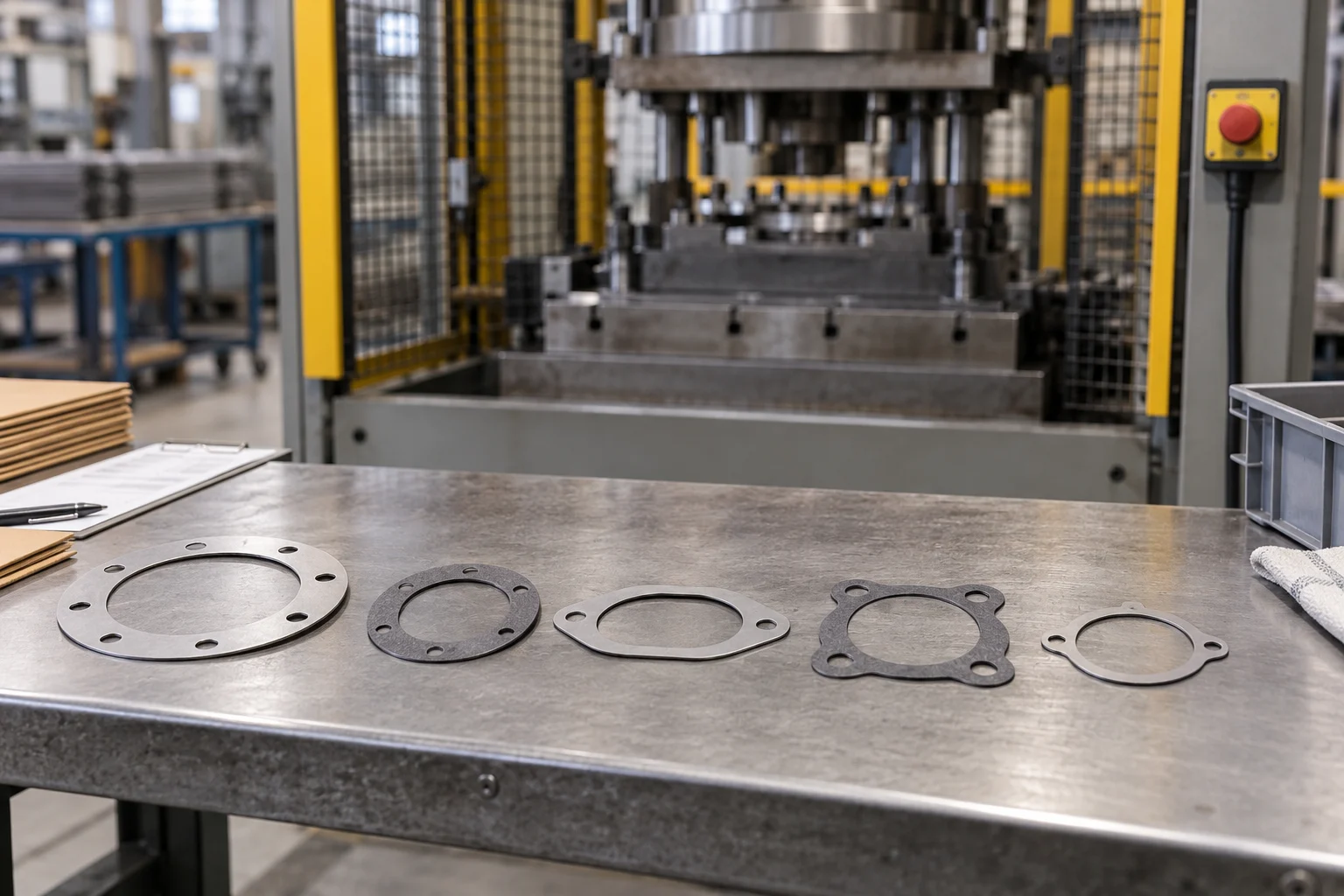
Treat FKM as a material family, not a universal coolant approval. Parker’s coolant-resistant FKM discussion illustrates why formulation matters when seals encounter coolant and oil. Its application examples are not blanket approval for every coolant, compound or engine.
Buyers must verify the actual compound chemistry against the specific fluid media rather than assuming universal compatibility based on the family name. A generic FKM designation on a material certificate does not confirm the component will survive in a specific chemical and thermal environment.
| Elastomer Family | Generic Assumption | Factual Application |
|---|---|---|
| Standard FKM | Universally handles all hot engine fluids | May degrade in specific modern coolants |
| Specialized FKM | Unnecessary premium expense | Evaluate the specified grade against the actual fluid and duty |
| Family Designations | Indicates exact performance limits | Only identifies base chemical group |
Reinforced Graphite Oxidation and Support
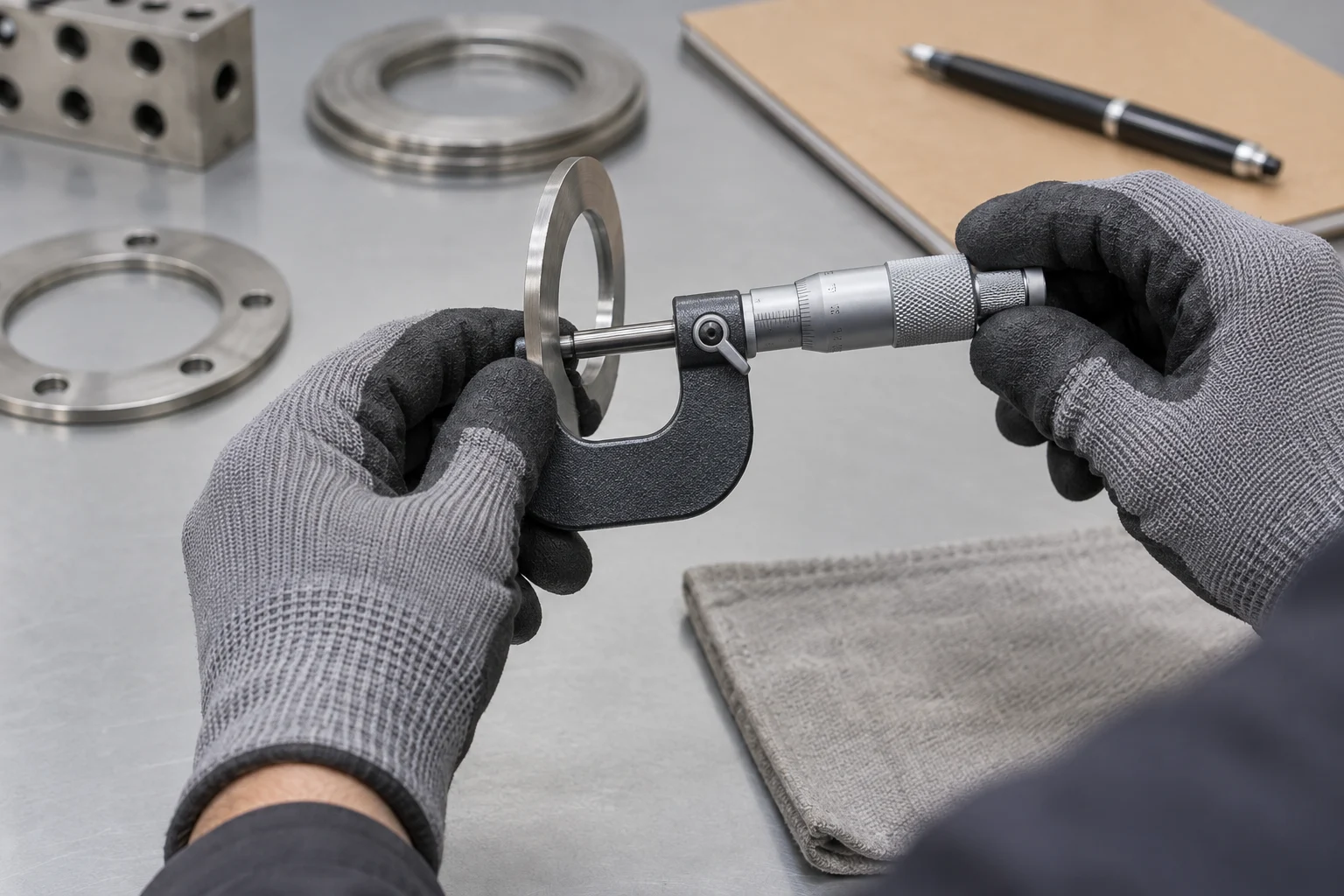
Graphite grade, reinforcement, oxidation environment and exposure time all matter. The Flexitallic RGS3 data sheet, for example, distinguishes service environments and warns against assuming suitability from data alone. It is an industrial material example, not approval to substitute that sheet in an engine.
Do not choose graphite to compensate for a flange outside service limits. Inspect the joint and follow the permitted repair, machining or replacement route; some components cannot be machined. Select high-temperature gaskets and seals only for an approved joint condition and construction.
| Graphite Characteristic | Operational Impact | Service Requirement |
|---|---|---|
| Oxidation Rate | Material loss over operating hours | Select grade based on target lifespan |
| Metallic Core | Contributes mechanical support; does not eliminate every failure mode | Match reinforcement to system pressure |
| Compressibility | Fills minor acceptable surface marks | Cannot bridge warped or severely pitted flanges |
MLS Engineered Construction Constraints
An MLS gasket is an engineered construction rather than a universal upgrade. Elring’s Metaloflex technology overview describes application-specific beaded, coated steel-layer designs. Do not generalize one manufacturer’s design to every head gasket.
Changing from the specified construction requires qualified application approval, including the relevant surface condition, clamping and dimensional requirements. Not all head gaskets are MLS, and not all coated designs use the same compound. A product labeled “high temperature” is not automatically interchangeable.
Flange Condition and Installation Approved Limits
Verify flatness, surface condition and any specified finish using the applicable service instructions and product requirements. If those instructions appear inconsistent, resolve the conflict with the responsible technical source before installation. Do not impose one universal roughness or machining rule on high-temperature gaskets and seals.
Follow the applicable assembly sequence, fastener rules and tightening method. Use sealant only where the instructions specify the correct product, location and amount. Adding unapproved sealant can affect sealing behavior; do not assume more sealant compensates for an incorrect component.
| Installation Factor | Required Action | Unsafe Practice |
|---|---|---|
| Surface Roughness | Inspect against applicable limits; repair or replace only as permitted | Ignoring deep scratches or heavy pitting |
| Clamping Force | Follow published torque sequence | Uneven tightening causing localized crushing |
| Chemical Sealants | Follow the exact product and application instructions | Applying generic RTV over coated gaskets |
Qualifying High-Temperature Gaskets and Seals Evidence
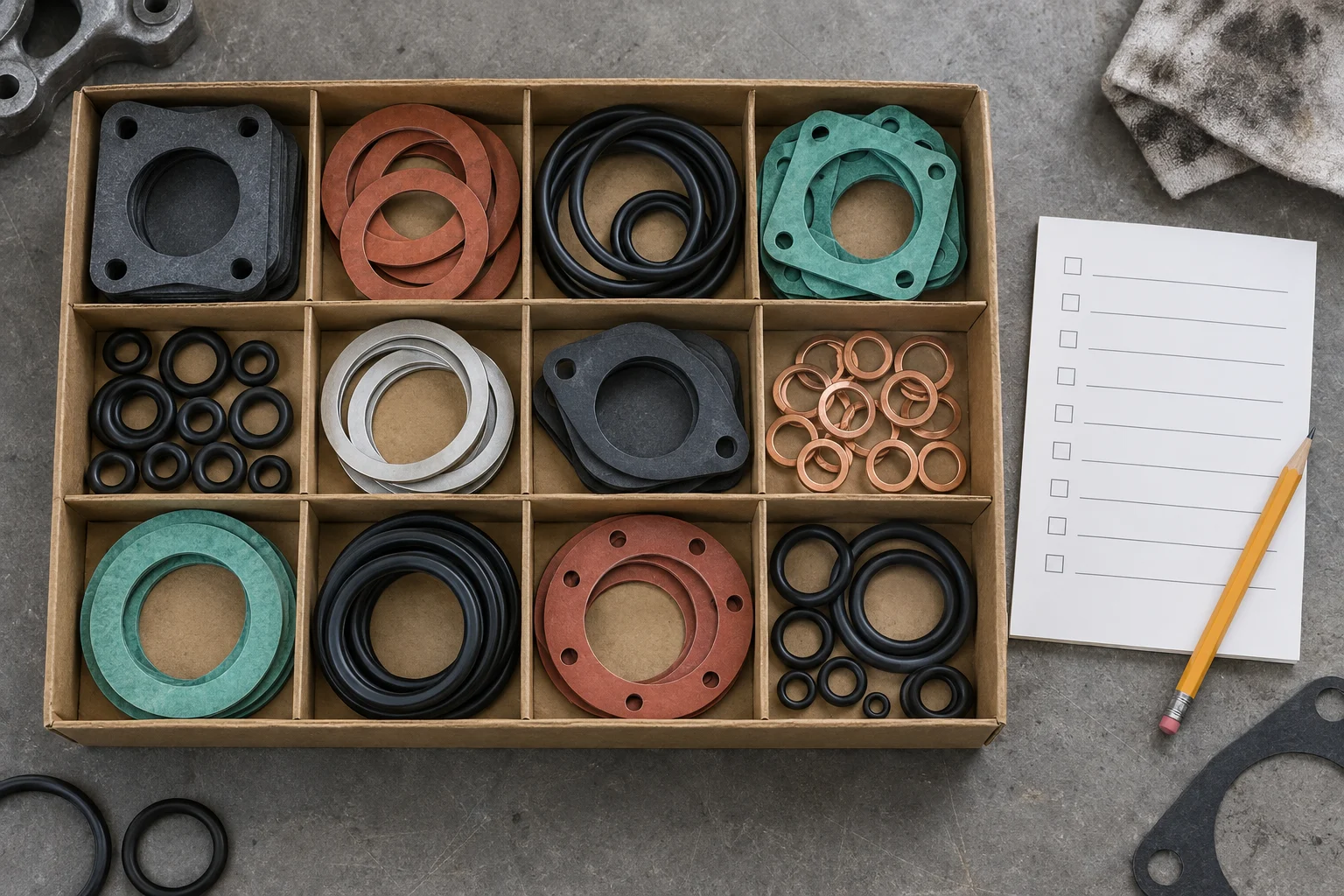
Agree the evidence needed for the application and risk: identified compound or construction, applicable data, dimensional checks and any required validation. Read each record’s scope and traceability. A raw-material certificate does not automatically qualify the finished gasket or an entire kit.
For high-temperature gaskets and seals, record the approved specification and change-notification rules. A compound, reinforcement or supplier change may require renewed review. Keep acceptance decisions separate from generic family names and marketing temperature claims.
Material Selection Evidence Checklist
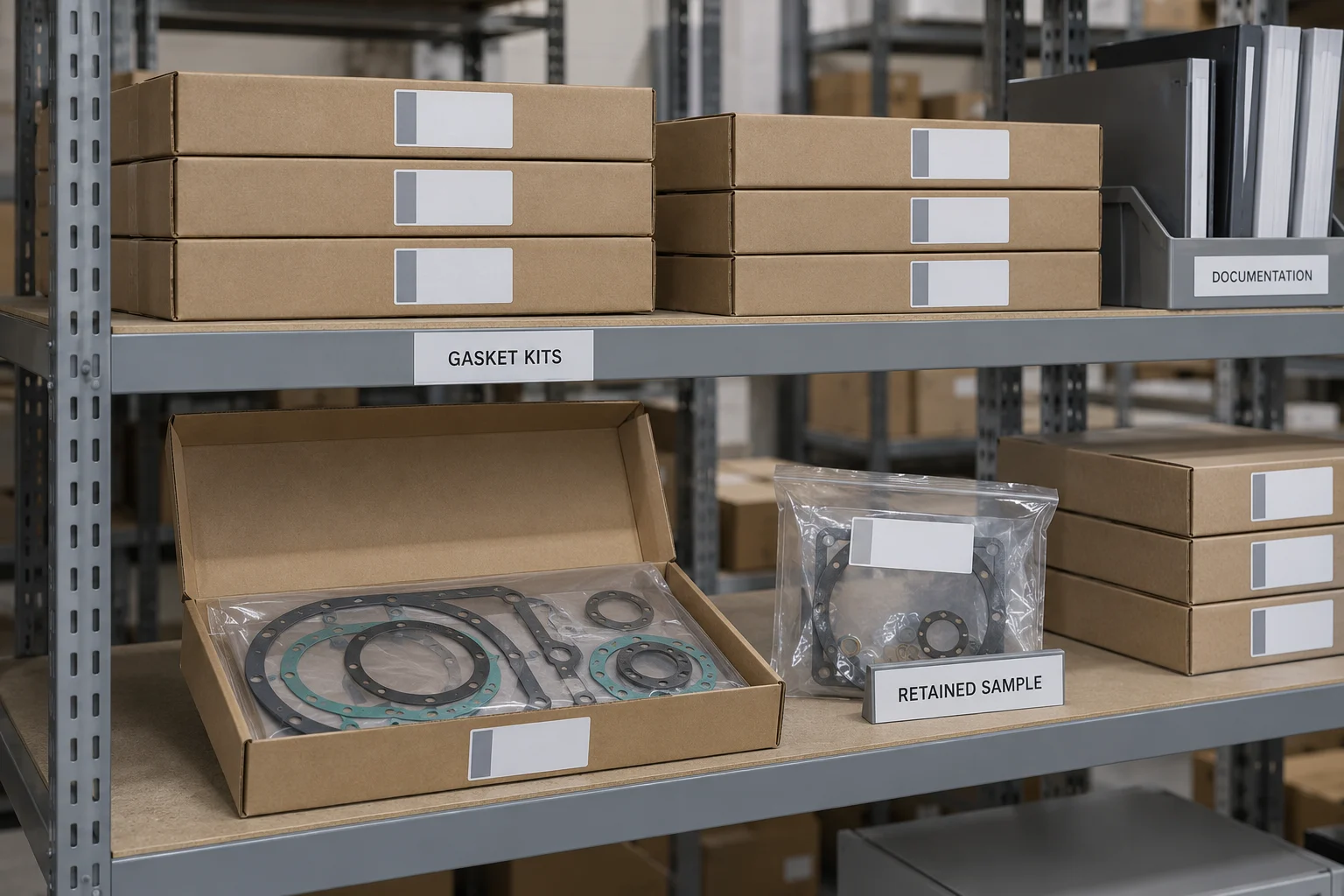
Material Selection Evidence Checklist
This checklist records evidence. It is not a material approval, fitment confirmation or release authorization.
Frequently Asked Questions
Does a specific color prove a seal is made of FKM?
No. Manufacturers use various chemical dyes across different rubber compounds, meaning color is never proof of base material or thermal capability.
Can I use a reinforced graphite gasket to seal a warped flange?
No. Assess the flange against the applicable service limits and use the permitted repair or replacement route. Machining is not allowed for every component, and a different material cannot automatically correct an unacceptable joint.
Are all multi-layer steel gaskets coated with the same high-temperature elastomer?
No. Elastomer coatings vary significantly by application design, operating fluids, and specific manufacturer specifications.
Is a multi-layer steel gasket always a direct upgrade over a composite gasket?
Not automatically. An engine block must have the appropriate surface finish and structural rigidity to support the specific compression requirements of a multi-layer design.
Make the Next Decision on Evidence
Choose high-temperature gaskets and seals using the actual thermal, chemical and mechanical duty—not a single headline rating. Confirm the specific material grade, approved joint condition and required evidence. Qualified review and controlled installation remain essential after material selection.
Browse engine gasket sets for sourcing context, then send the application, required scope and evidence needs for a written discussion. Product availability and suitability require confirmation.
Watch Elring’s R9M and OM626 cylinder-head assembly example for an illustration of application-specific sealing instructions. Its sealant, parts and tightening procedures must not be transferred to a different engine.