
The quotation says four weeks, but nobody agreed when the clock starts. Your team counts from the purchase order; the supplier counts from drawing approval; the freight forwarder has not received a booking request. A diesel gasket kit lead time becomes useful only when each milestone has a defined start, finish, and owner. This guide helps procurement teams turn a general promise into a schedule they can actively monitor.
Estimated reading time: 8–9 minutes.
Table of Contents
For background on defining the item before comparing suppliers, read our earlier guide, Cummins Gasket Kit Contents: 7 Critical Scope Differences. Confirm the exact quoted contents for your application before making a purchasing commitment.
1. Start Diesel Gasket Kit Lead Time With an Approved Specification
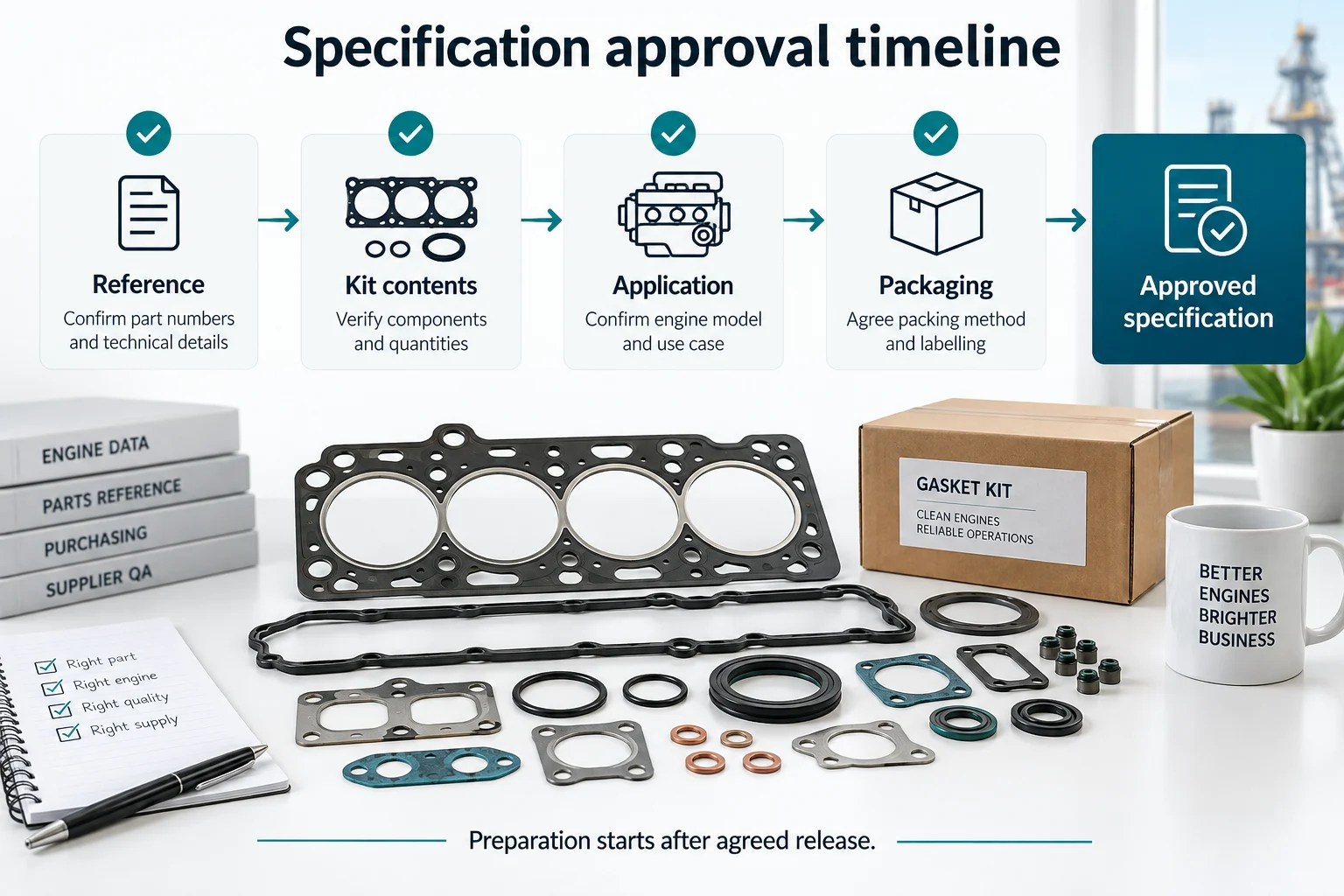
Confirm the kit reference, contents, application information, and packaging revision. An unresolved fitment question can stop preparation even after payment. Ask the supplier to distinguish a provisional estimate from a committed date.
For engine identification, Cummins QuickServe provides access to engine-specific parts information. Use the relevant evidence in your own review. Browse the gasket set range to identify candidates, then resolve the actual order specification.
Different repair scopes and revision levels may have different availability dates, even within one engine family. Confirm the diesel gasket kit lead time for each accepted order line rather than assigning one blanket timeframe to the purchase. When comparing Cummins B-series gasket kits, record the exact reference and quantity beside its forecast. A more complex overhaul package should not silently inherit the schedule quoted for a smaller replacement set.
2. Define the Commercial Release Event
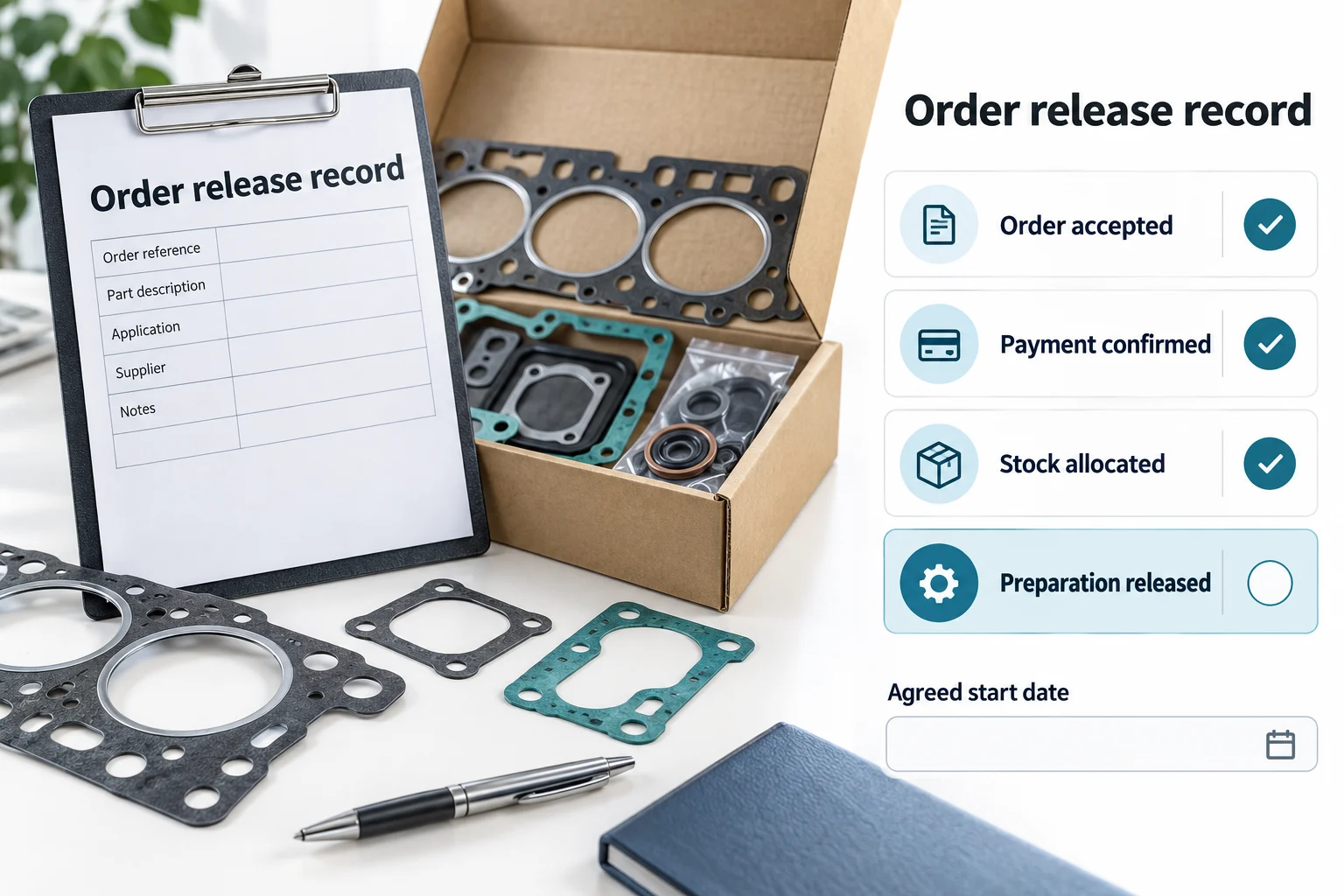
Ask whether the diesel gasket kit lead time begins after order acceptance, deposit receipt, credit approval, or another agreed event. Clarify whether the schedule is built on calendar days or working days. Record the date and the responsible party. The purpose is to avoid two teams maintaining different schedules for the same order.
Separate an administrative release from physical stock allocation. If goods are said to be available, ask whether the accepted quantities are reserved and for how long. If supply depends on a new batch, identify the production milestone instead of describing it as stock.
A duration is difficult to monitor until it is tied to a dated start event. To calculate your diesel gasket kit lead time, identify whether each stage uses working days or calendar days, and check applicable factory closures and holidays. Record explicit dates using the day, month, and year. Label dates as provisional or confirmed, and retain the assumptions behind them so a revised approval date can be translated into a revised completion forecast.
3. Track Diesel Gasket Kit Lead Time Through Readiness
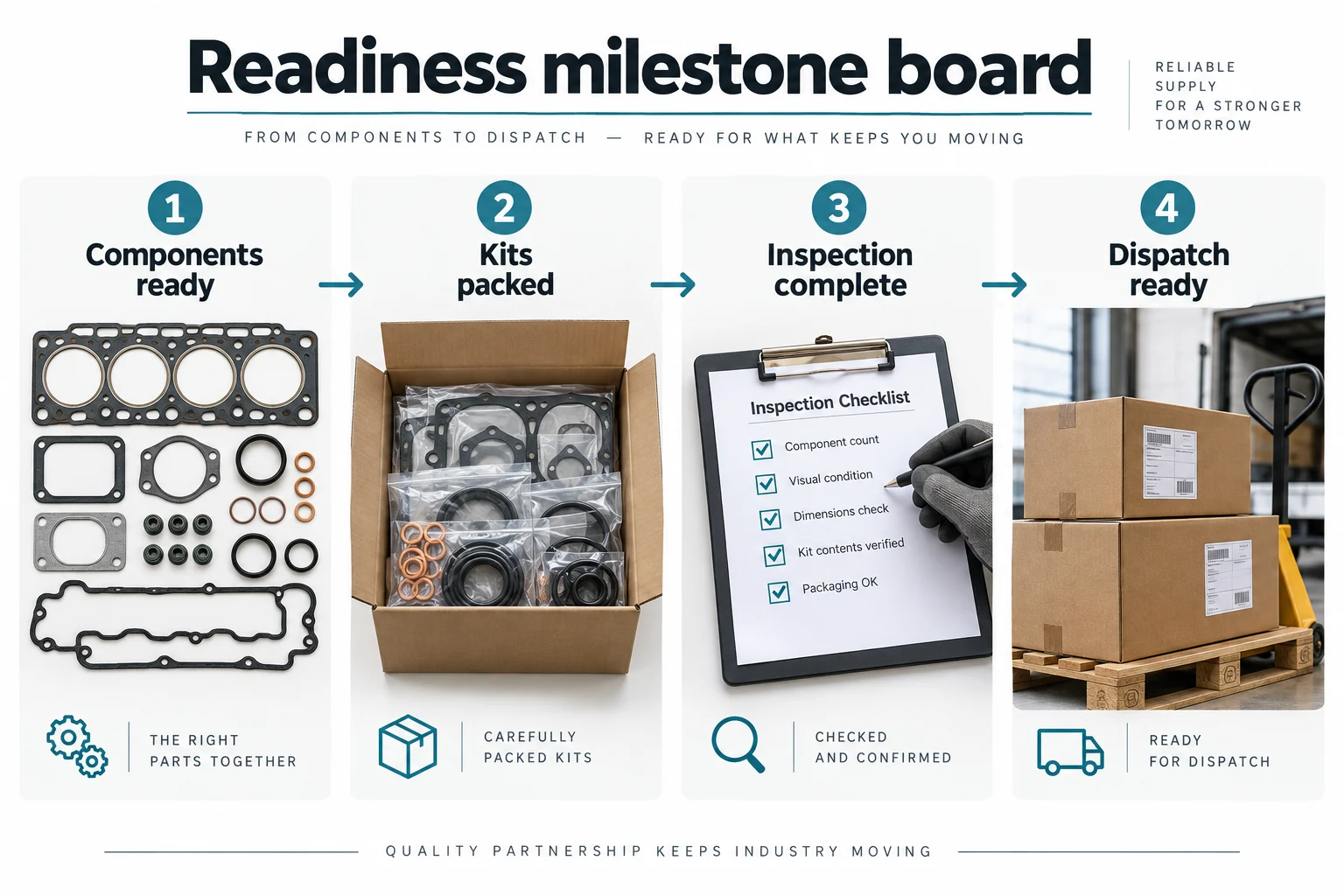
When tracking diesel gasket kit lead time, production completion is not necessarily dispatch readiness. Kit assembly, label preparation, packing, and review may still be outstanding. Ask what 'ready' means in the supplier's update and what evidence closes that milestone. Ensure clear communication exists so that any expected delays are flagged immediately.
For a consolidated shipment, the last required item to become ready can hold up dispatch even when most lines are complete. Identify which SKU controls your diesel gasket kit lead time, while also checking inspection and transport constraints. If that item slips, discuss whether a split shipment is suitable and who would pay additional freight. Do not describe a physical readiness delay as a commercial release hold when order acceptance and payment conditions have already been satisfied.
4. Include Pre-Dispatch Inspection
Include pre-dispatch inspection, review, and any required corrections in your plan when those steps are mandated. A schedule that assumes immediate approval leaves no room for a missing document or packing issue. The ISO quality-management overview supports the broader importance of controlled processes; however, your order still needs its own acceptance criteria. If tasks overlap—such as inspecting completed kits while others are still being packed—calculate the actual critical path rather than repeatedly adding sequential days.
Progress reports should replace vague reassurance with evidence that can be checked. Each update on diesel gasket kit lead time should name the completed milestone, its supporting record, and the next target date. Packing photographs or an agreed inspection sign-off may be appropriate, depending on the order. Ask for any active blocker, the person responsible for resolving it, and the expected effect on dispatch. Retain dated updates so revised forecasts remain traceable.
Worked example: compare the same endpoint
Consider a hypothetical purchase for which approval and release take 3 calendar days, preparation takes 14, inspection takes 3, pickup and transit take 10, and destination processing and receipt take 4. If those stages are strictly consecutive, they total 34 days. Adding a separately stated 5-day contingency gives a 39-day planning allowance. These are illustrative inputs for the calculator below, not VPGASKET delivery commitments or estimates for any particular route.
The example only describes diesel gasket kit lead time correctly if the start event and endpoint match your purchase. If the supplier quotes from approved drawings but your worksheet starts at PO submission, include the approval interval separately. If the buyer needs inspected inventory rather than arrival at the gate, include that receiving step too. Comparing two quotations with different endpoints can otherwise make the shorter promise appear better than it really is.
Keep a baseline and a current forecast
Retain the originally agreed milestone dates alongside the latest forecast. When a change occurs, record the affected order line, the date of the update, the reason, and the decision required from each party. Do not overwrite the baseline and lose the history. This simple change record helps distinguish time added by a buyer revision from time added by preparation, inspection, or transport, without assuming responsibility before the facts are established.
For example, a label correction may proceed while a carrier booking is being arranged. Adding both durations in full would overstate diesel gasket kit lead time if the tasks genuinely run together. Conversely, an inspection that cannot begin until packing is complete belongs after packing in the sequence. Confirm dependencies with the people doing the work before replacing their schedule with a simple sum.
Use the diesel gasket kit lead time review to agree the next action, not just a new total. Ask what evidence will close the current blocker and when the next update is due.
Enter calendar days for consecutive stages. Use your own confirmed estimates; do not add overlapping work twice.
5. Separate Dispatch From Transit
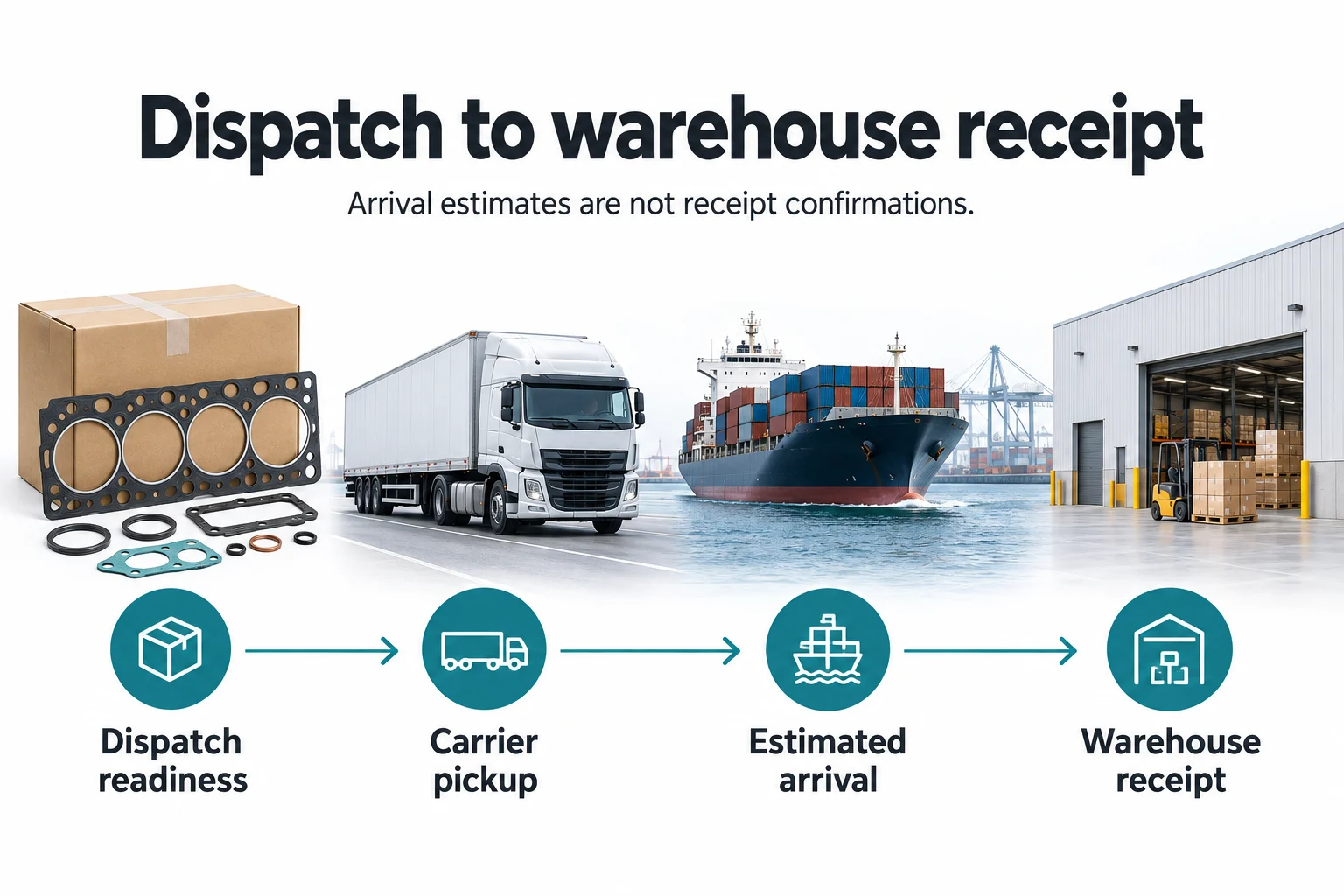
A dispatch date is not an arrival date. Booking availability, pickup, transfer, carrier transit, and other route events belong in the schedule. Ask your logistics provider for the relevant estimate and identify whether it is confirmed or provisional.
Use a precise named place with the agreed ICC Incoterms rule to clarify the delivery obligation. A shipment can reach the contractual delivery point before it reaches your warehouse. Avoid using the word 'delivery' for both events in the same worksheet.
Related video: Watch Manage Export Shipping Costs and Risk with Incoterms by the International Trade Administration for an overview of shipping responsibilities, costs, and risk allocation. Use it as background when discussing handover arrangements; it does not replace an order-specific delivery schedule.
Arrival at a destination port is an intermediate event, not necessarily the final handover to your receiving team. When charting diesel gasket kit lead time, separate that arrival estimate from the forecast warehouse date. Applicable customs procedures, terminal handling, and onward transport can change the gap between them. Ask the responsible logistics provider to update both milestones. The agreed trade rule clarifies responsibilities but does not replace an order-specific schedule or guarantee a transit duration.
6. Include Destination Processing and Receiving
A warehouse-based diesel gasket kit lead time plan should allow for applicable import procedures, final transport, and your own receiving inspection. Ask the responsible provider what documents are needed early. Do not insert a universal customs duration; it depends heavily on the specific shipment and destination.
Build a contingency allowance based on your own route history and service risk. Where tasks overlap, use the actual critical path to avoid double-counting durations. For packing inputs, the Cummins packaging portal is a useful reference to understand why dimensions, protection, and documents should be agreed upon before transport is arranged. Its requirements concern the Cummins supplier network; they are not a claim that your particular order follows those standards.
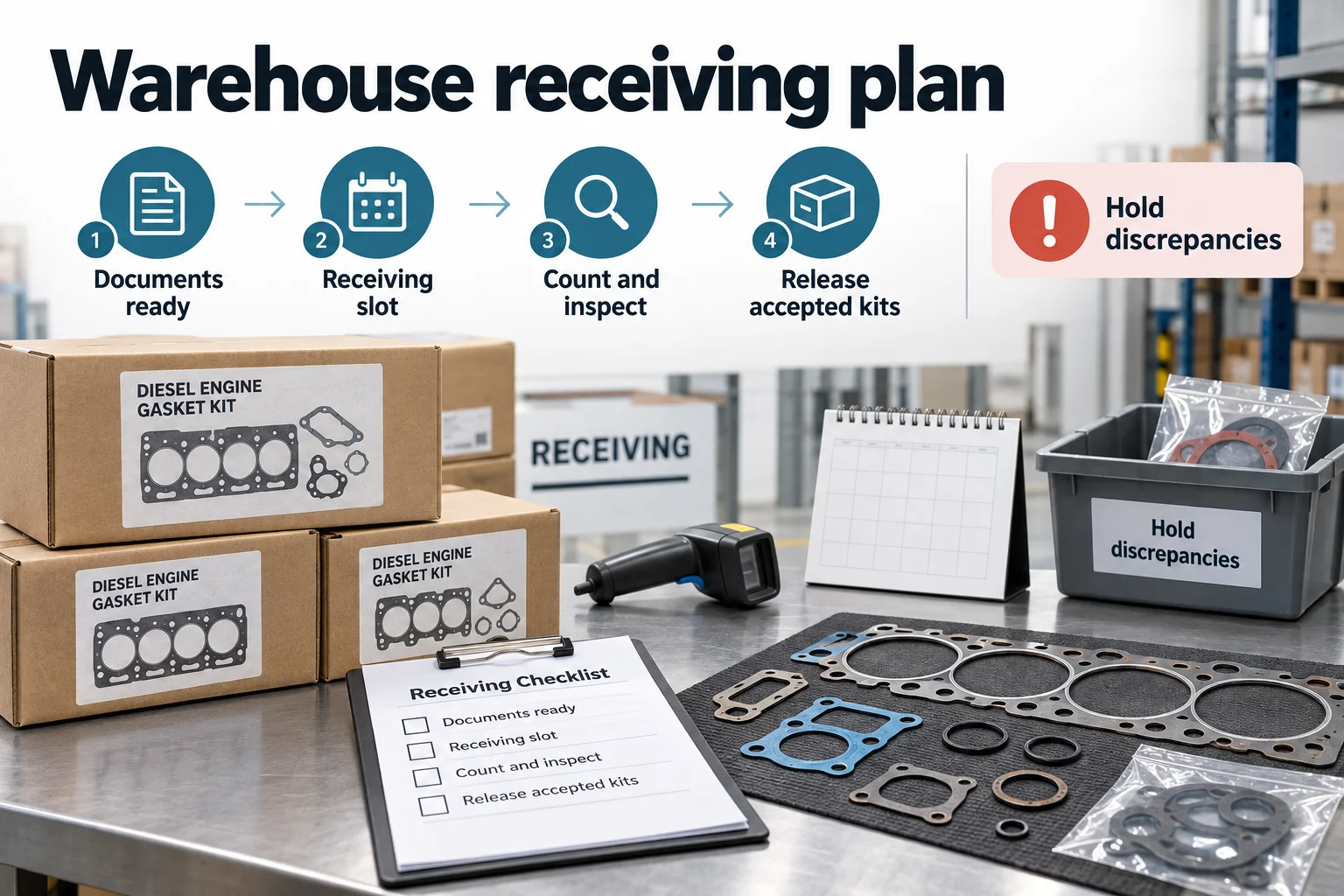
Physical receipt at the loading dock does not automatically mean the parts are ready for a planned repair. If your diesel gasket kit lead time ends at usable inventory, include the receiving checks required by your own process. Prepare label and quantity checks against the accepted order and shipping documents, plus a route for isolating discrepancies. Agree who releases accepted kits to the workshop. Planning these checks before arrival makes the final milestone measurable rather than simply marking every delivered box as available.
Ask for a Milestone-Based Diesel Gasket Kit Lead Time
When requesting a diesel gasket kit lead time schedule from VPGASKET, provide the reference list, quantities, destination, and required-at-warehouse date. Ask for the earliest realistic dispatch option and the assumptions behind it. Review the company and workshop information, then send your target schedule.
Purchasing FAQs
Does diesel gasket kit lead time include shipping?
Only if the quote explicitly says so. Ask for preparation, dispatch, and transit estimates separately.
Can a stock item be dispatched immediately?
Availability alone does not prove allocation, completed packing, payment release, or a carrier slot. Confirm the remaining steps with your supplier.
How should a delay be reported?
State the affected milestone, revised date, cause, and options. Identify the effect on the buyer's required receipt date rather than sending a vague delay notice.
Should I track calendar days or working days?
Always clarify this during the commercial release event. A 30-working-day lead time is significantly longer than a 30-calendar-day lead time.
What happens if one SKU is delayed in a multi-item order?
Consolidated dispatch may be delayed unless the parties agree to a suitable split shipment. This is separate from commercial release, such as order acceptance or payment approval. Identify the affected line and update the warehouse receipt forecast.