
A supplier may offer an attractive catalogue and volume discounts. Before buying a new product line, your sales team must ask harder questions: which references do customers actually request, how are fitment queries answered, and what happens when slow-moving inventory ties up capital? Evaluate any engine gasket kit distributor program as a functional operating relationship. These eight questions help buyers define expectations before committing to opening stock.
Estimated reading time: 6–7 minutes.
Table of Contents
For essential background on properly defining the item before comparing aftermarket suppliers, read our earlier technical guide, Cummins Gasket Kit Contents: 7 Critical Scope Differences. Always confirm the exact quoted contents for your specific engine application before making any formal purchasing commitment to avoid costly discrepancies later.
1. Match the Engine Gasket Kit Distributor Program to Demand
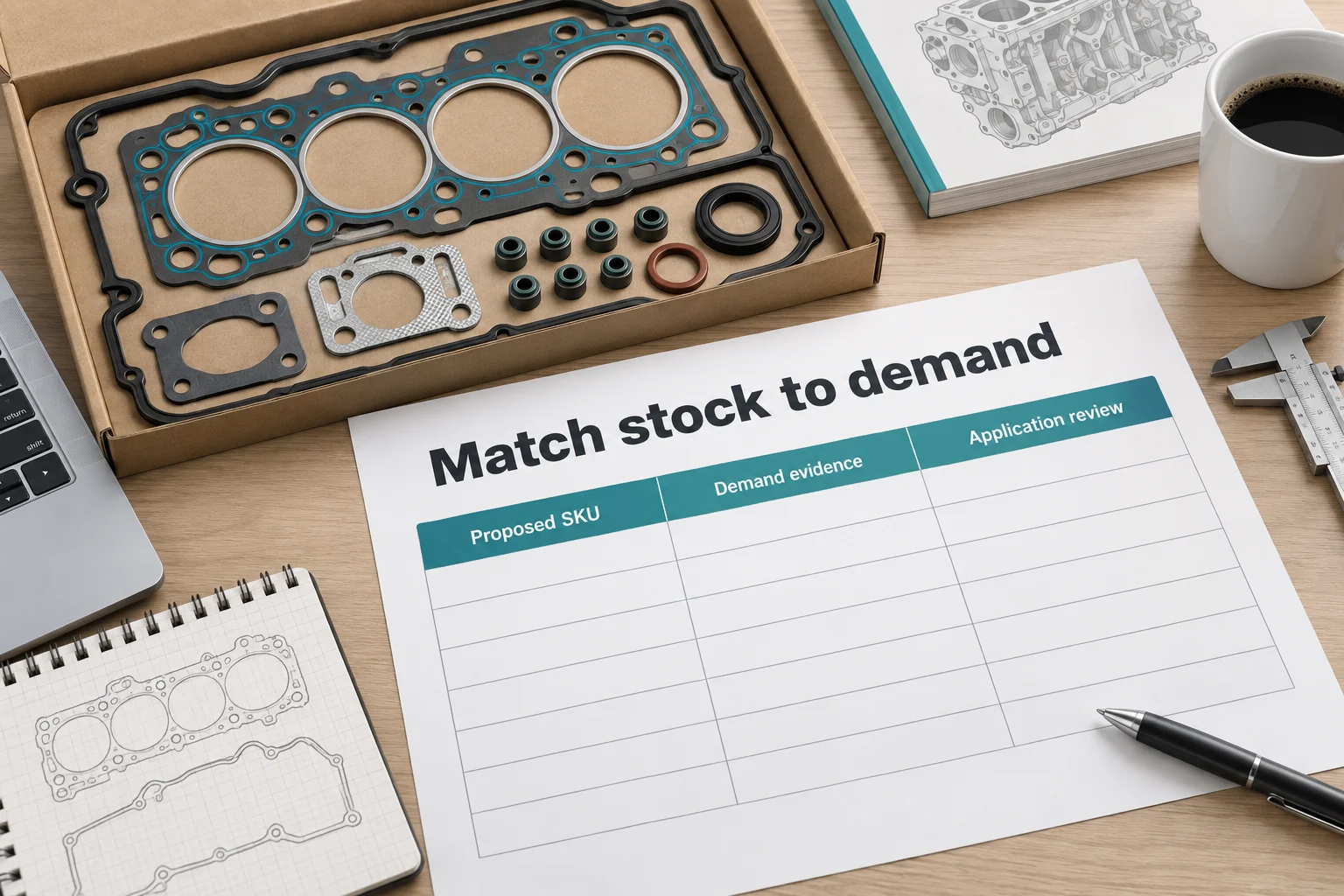
Start your evaluation with real customer enquiries, workshop repair orders, and actual sales history rather than a broad engine-family list. Carefully separate repeated local demand from occasional special orders. A technically available sealing reference may still be a poor stocking choice if it lacks consistent turnover in your specific regional market.
Review the supplier’s gasket set range against observed demand. Record the kit scope and application evidence for each proposed opening SKU. Use the relevant engine or component details with the current Cummins parts catalog to support identification; a broad catalog heading alone is not a universal fitment match.
2–3. What opening commitment and product data are required?
When structuring an engine gasket kit distributor program, explicitly request the proposed opening quantities, per-SKU manufacturing minimums, packaging conditions, and ongoing replenishment terms. Clearly distinguish a binding purchase order from a rolling forecast. Do not accept a large mixed inventory bundle simply because its average unit price initially appears favourable.
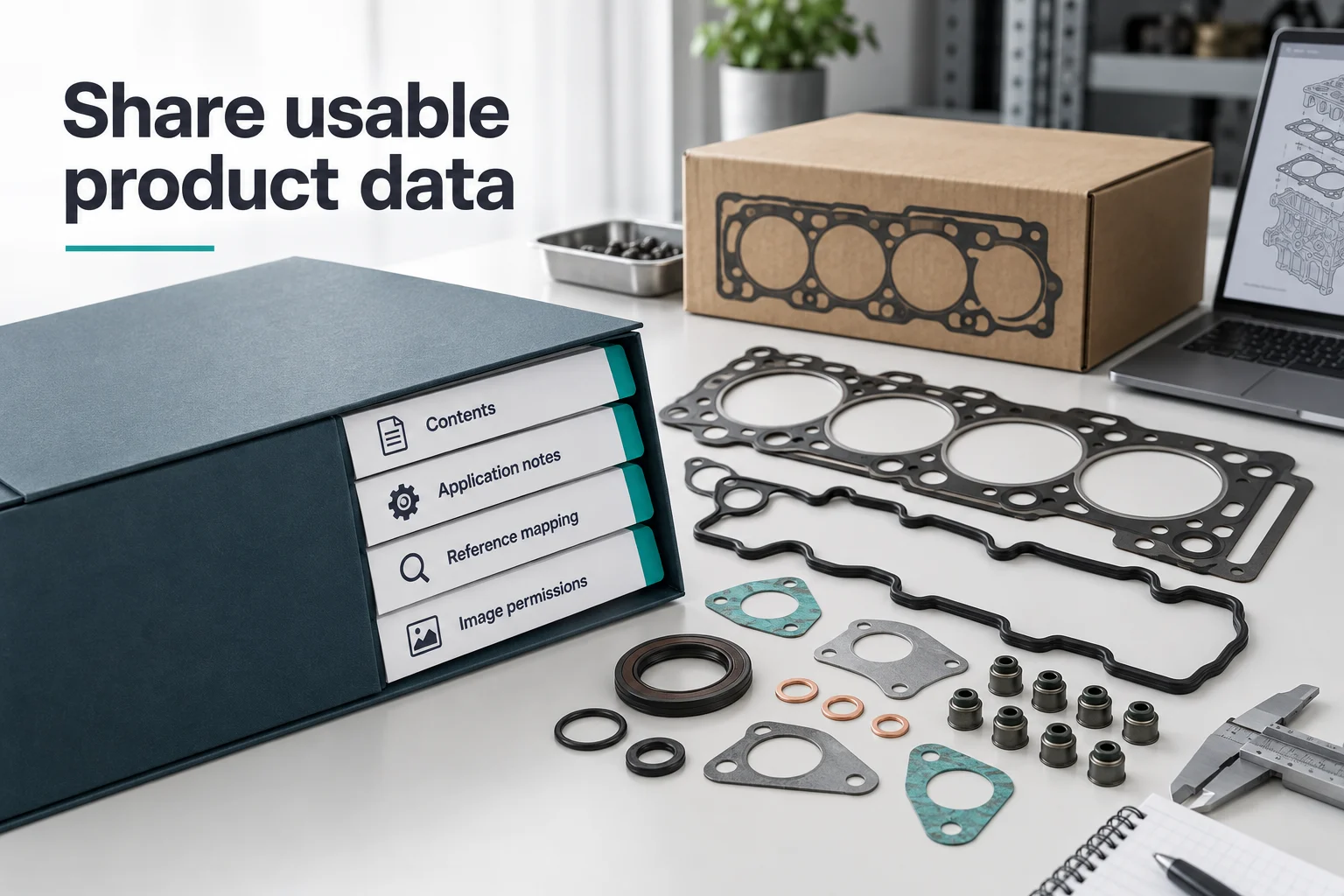
Ask the supplier for highly usable product information, including accurate reference mapping, detailed contents, application limitations, approved photographs for marketing, and revision dates. Your sales team needs these resources so they know precisely when to request an engine serial number or a technical review instead of merely guessing on compatibility.
4. Plan Engine Gasket Kit Distributor Program Replenishment
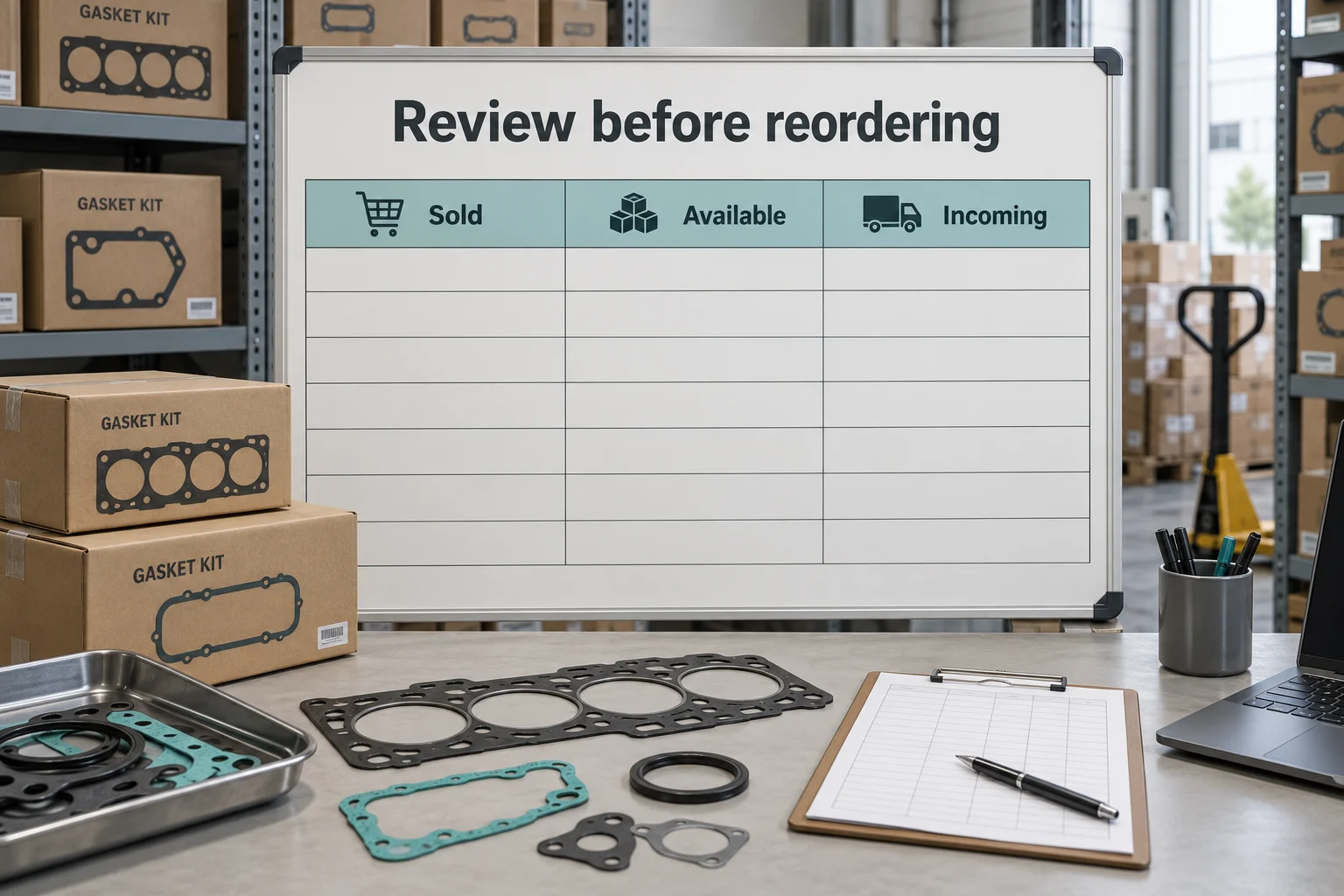
The initial shipment of an engine gasket kit distributor program rarely shows how the relationship handles sudden shortages when a fast seller runs low. Ask which references are routinely supplied and on what availability basis, how availability updates are communicated, and how accepted quantities are formally reserved. Always maintain a backup sourcing plan for urgent demand.
Agree on exactly how demand forecasts are used in practice. A rolling forecast can support factory planning without functioning as a binding purchase commitment, provided both parties clearly understand the arrangement in writing. Always review actual workshop sell-through data and current open orders before deciding to increase your baseline inventory levels.
Check the items you have confirmed. This tool records readiness questions; it does not certify a supplier or approve fitment.
5–6. Who handles technical questions and delivery issues?
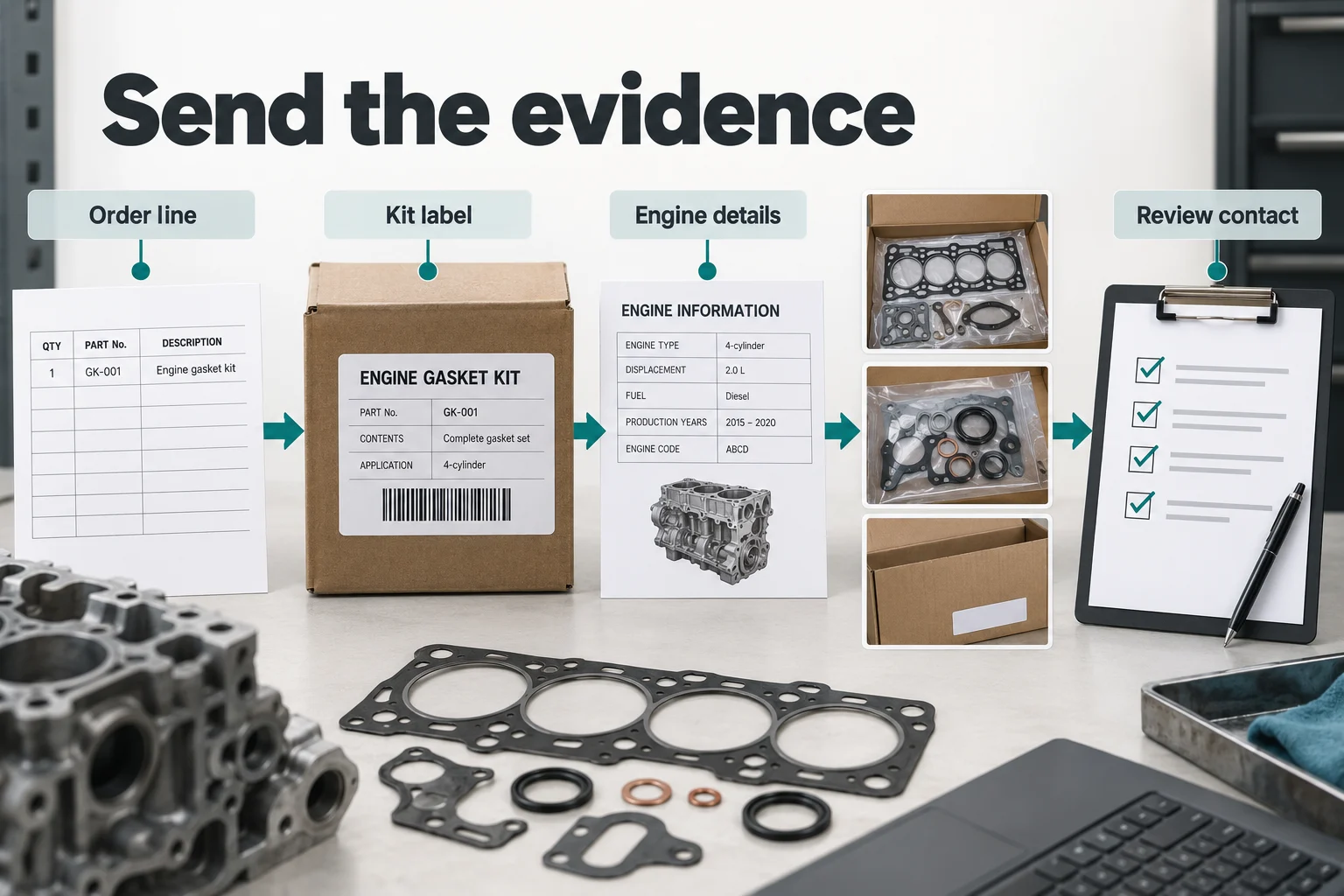
A functioning engine gasket kit distributor program requires a clear escalation route for uncertain applications, missing contents, or damaged goods. Define the exact information needed for a useful supplier response, such as the order line, kit label, engine details, and photographs. Keep standard technical reviews separate from any commercial promise to accept warranty claims.
Agree on the explicit commercial process for handling parts shortages, inventory returns, and disputed items. For cross-border supply chains, always use a precise named place and the appropriate Incoterms rule. Note that neither an upfront volume discount nor a standard trade term can replace clear, written claim and product acceptance procedures.
7. What does the relationship actually authorize?
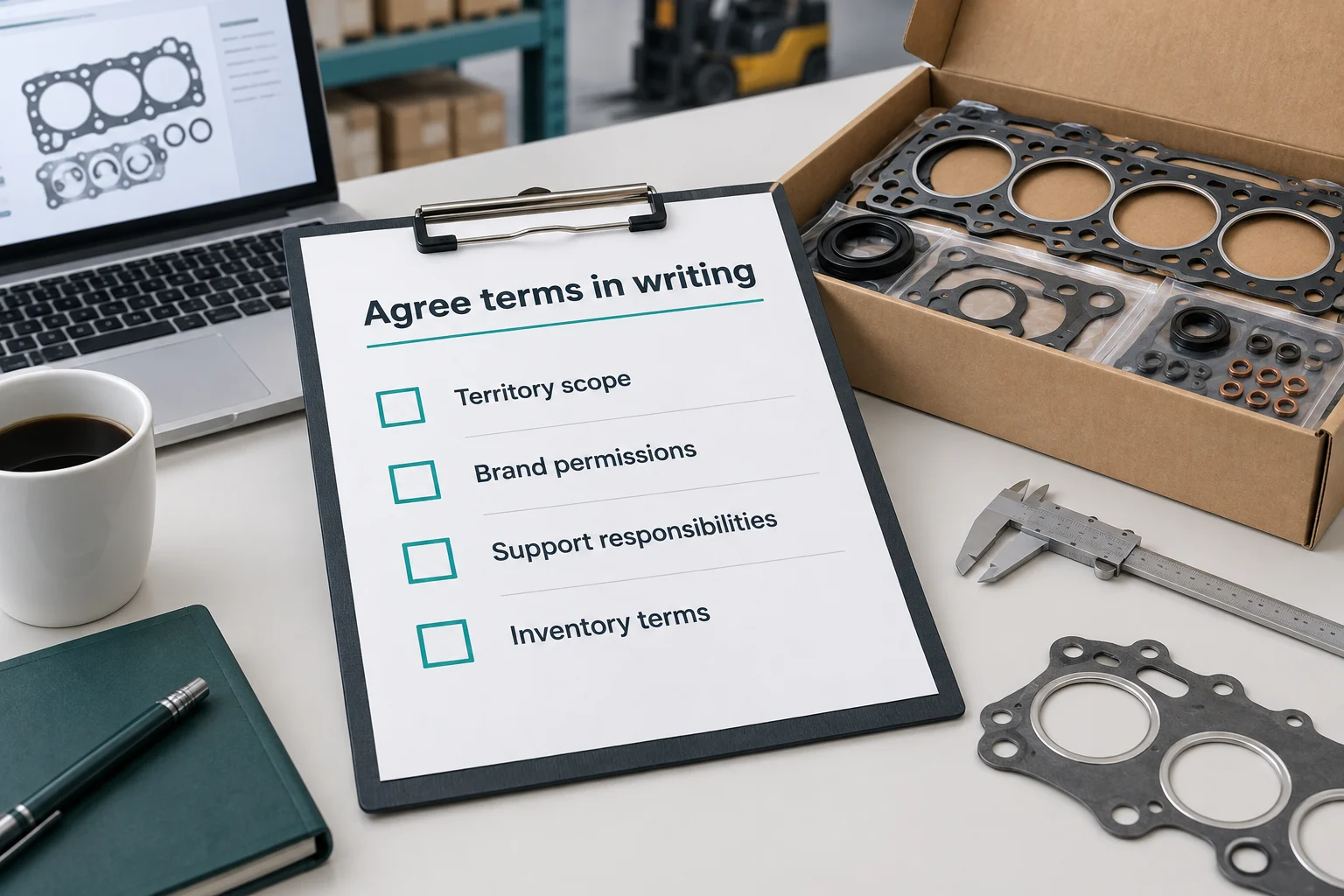
Clarify whether the supplier's proposal represents ordinary wholesale supply, a branded reseller arrangement, or a formally defined distribution contract. Never assume you hold territory exclusivity, authorization to use specific trademarks, guaranteed profit margins, or stock rotation privileges unless they are explicitly detailed in a signed, written agreement.
This article serves purely as a practical evaluation guide, not an announcement of a fixed VPGASKET franchise or an exclusive territory offer. Any proposed engine gasket kit distributor program requires its own specifically agreed scope. ISO's quality-management overview can inform process discussions, but performance claims require current operational evidence.
8. Can you start with a measurable pilot?
Evaluate the trial phase with a manageable range, an agreed review period, and practical performance measures. Track enquiry conversion, reference accuracy, complete-order receipt, and reorder speed. Always use your own historical data as a baseline; relying on invented industry benchmarks makes the results of a pilot much harder to interpret fairly.
Explore VPGASKET's company and workshop details along with the support described for distributors. After reviewing, send your target market, customer types and proposed SKU list to discuss potential supply cooperation. A clearly defined pilot project gives both sides the necessary data and evidence before making any larger inventory commitments.
For company context, watch the VPGASKET factory tour. A company video does not replace current product, quality or commercial evidence for your proposed distributor arrangement.
Purchasing FAQs
Does VPGASKET offer an exclusive territory automatically?
Please note that no automatic territory right or exclusive franchise is established by the information in this guide. Businesses must discuss any proposed regional rights, marketing obligations, and sales targets directly with the manufacturer. Always record the finalized terms in a formal commercial contract to avoid future misunderstandings regarding market access.
How many references should an opening order contain?
When selecting opening inventory, use documented demand evidence, your actual working budget, and the supplier's confirmed delivery terms. A smaller, coherent assortment of highly relevant parts can be much easier to evaluate financially than a broad, speculative order designed merely to hit a high volume discount threshold.
What should determine expansion after the pilot?
Base your ongoing restocking decisions on observed sales, technical customer fit, consistent supply performance, and the actual carrying cost of inventory. Gradually increase your offered product range only when sustained workshop demand and reliable factory delivery evidence support taking on additional financial risk and warehouse space.