

The Problem: There is nothing quite as anxiety-inducing for a truck driver or fleet manager as the sudden glow of a check engine light on a heavy-duty Cummins X15. Modern diesel engines are incredibly complex. A single alert could be a simple sensor glitch or a fatal warning of impending engine seizure, resulting in weeks of downtime.
The Value Preview: This comprehensive guide demystifies the most common and dangerous alerts on your dashboard. We will break down exactly how to read these faults, what they mean mechanically, and how to fix them efficiently.
The Reader Benefits: By reading this, you will learn how to perform roadside diagnostics without an expensive scanner, avoid the costly trap of just throwing parts at a problem, and discover how premium sealing components can keep your rig on the road permanently.
Estimated Reading Time: 8 minutes
Table of Contents
Decoding the Dash: A Core List of Cummins Engine Codes
To fix a problem, you first need to understand the language your engine is speaking. Let's translate these frustrating Cummins engine codes into simple, actionable mechanical terms.
The Anatomy of Cummins Engine Codes on the X15
Your engine’s brain, the Engine Control Module (ECM), uses a specific format to report issues. When you look at Cummins engine codes, you are usually looking at two numbers: the SPN (Suspect Parameter Number), which tells you what component is failing, and the FMI (Failure Mode Identifier), which tells you how it is failing (e.g., voltage too high, pressure too low).
The Top Offenders Triggering Cummins Engine Codes
The Cummins X15, commonly found in heavy-duty platforms like the Kenworth T680, Peterbilt 579, and Freightliner Cascadia, is a powerhouse. However, it is prone to specific faults, primarily centered around its high-pressure emission and air systems.
The 7 Most Critical X15 Faults
| Fault Code | System / Component Affected | Technical Description | Risk Level |
| Code 3348 | VGT Turbocharger | Turbo compressor intake pressure anomaly. | High - Immediate power loss. |
| Code 1866 | EGR System | The exhaust gas recirculation valve delta pressure is low. | Moderate - Reduces fuel efficiency. |
| Code 0559 | Fuel Injector Rail | The injector metering rail pressure is erratic. | Critical - Can cause engine stall. |
| Code 3582 | SCR Catalyst | SCR conversion efficiency below normal. | High - Leads to engine derate. |
| Code 0234 | Intake Manifold | Engine overboost condition detected. | Critical - Blows head gaskets. |
| Code 0299 | Turbocharger | Engine underboost condition detected. | Moderate - Often caused by leaks. |
| Code 3151 | DPF System | Diesel Particulate Filter needs cleaning/regen. | High - Will force limp mode. |
Struggling with constant emission-related alerts? The high frequency of EGR, SCR, and DPF fault codes on the Cummins X15 is a direct result of increasingly strict environmental regulations tightening engine tolerances. To understand how these new regulations are reshaping heavy-duty engines—and what it means for your fleet maintenance and parts procurement—check out our comprehensive breakdown: [EPA Heavy Duty Emissions: 7 Critical Impacts Every Supplier Must Know]

How VPGASKET Seals Prevent These Cummins Engine Codes
Many mechanics overlook a crucial fact: a massive percentage of turbo (Code 0299) and EGR (Code 1866) Cummins engine codes are actually triggered by microscopic exhaust and air leaks, not broken sensors. If the exhaust manifold gasket is degraded, pressure escapes before spinning the turbo, causing the ECM to throw an underboost code.
VPGASKET engineers specialized sealing solutions for the heavy-duty sector. By utilizing premium Multi-Layer Steel (MLS) and high-temperature graphite materials, our heavy-duty gaskets withstand extreme cylinder pressures, ensuring that air and exhaust routing remain 100% sealed. This prevents the pressure drops that trigger these frustrating computer alerts in the first place.
The DIY Approach: Reading Cummins Engine Codes Without a Scanner
What happens when you are stranded on the shoulder of the highway without a $3,000 OBD-II or Cummins INSITE laptop scanner? You can still retrieve your Cummins engine codes manually.
Roadside Diagnostics for Cummins Engine Codes
Most commercial truck manufacturers wire a manual diagnostic feature directly into the dashboard. This allows the driver to communicate with the ECM via the cruise control switches, flashing the active Cummins engine codes on the dash screen.
The Dash Sequence to Reveal Cummins Engine Codes
Follow this simple, step-by-step procedure to manually retrieve your alerts. (Note: This specific sequence works for most late-model PACCAR and Freightliner chassis running the ISX15 or X15.
Manual Dashboard Diagnostic Sequence
| Step | Action Required | Expected Result |
| Step 1 | Turn the ignition key to the "ON" position (Do NOT start the engine). | Dash lights illuminate and cycle. |
| Step 2 | Toggle the Cruise Control switch to the "OFF" position. | Prepares the system for diagnostic input. |
| Step 3 | Press and hold the "Resume/Accel" switch for 3 to 5 seconds. | The Check Engine Light (CEL) will begin to flash. |
| Step 4 | Count the flashes. (e.g., 3 flashes, pause, 3 flashes, pause, 4 flashes, pause, 8 flashes). | This translates to Fault Code 3348. |

When to Call a Pro for Complex Cummins Engine Codes
While the dash flash method is fantastic for a quick roadside check, it has limits. It cannot read inactive (historical) codes, and it cannot run bi-directional tests (like forcing a DPF regen or sweeping a turbo actuator). If you retrieve critical fueling or timing Cummins engine codes, it is time to call a professional diesel technician with dedicated diagnostic software.
Expert Insights
To truly understand how to fix these trucks, you have to look past the computer. We spoke with a seasoned heavy-duty powertrain engineer about the reality of modern diagnostics.
"Throwing expensive parts at Cummins engine codes without diagnosing the root mechanical cause is the fastest way to drain a fleet's maintenance budget. A code simply tells you what system is unhappy, not necessarily what part is physically broken. For example, replacing a $500 EGR sensor won't fix a Code 1866 if the actual problem is a blown $20 EGR cooler gasket. Always check your pressures, your wiring harnesses, and your physical engine seals first."
⚠️ Operational Warnings:
What NOT to Do When Cummins Engine Codes Appear
When the dashboard lights up, panic often leads to poor decision-making. Avoid these critical mistakes when dealing with Cummins engine codes.
Never Ignore "Stop Engine" Cummins Engine Codes
There is a massive difference between an amber (yellow) warning light and a red "Stop Engine" light.
Warning Light Colors and Required Actions
| Dashboard Light Color | Meaning | Required Driver Action |
| Amber / Yellow | Maintenance needed; non-critical fault. | Safe to drive to the nearest repair facility. |
| Flashing Amber | Impending derate (usually DPF-related). | Perform a parked regeneration immediately. |
| Solid Red | Critical mechanical or fluid failure. | Pull over immediately and shut off the engine. |
Driving on red Cummins engine codes (such as absolute loss of oil pressure or extreme coolant overheating) will cause irreversible block damage, melting pistons, and seizing crankshafts in minutes.
Do Not "Parts Cannon" to Fix Cummins Engine Codes
The "Parts Cannon" is a mechanic's term for blindly replacing components, hoping the code goes away. Never replace a DPF filter or a VGT turbocharger simply because a code points to that system. Always perform a smoke test or a boost leak test to verify the mechanical integrity of the engine first.
Avoid Cheap Seals That Cause Repeat Cummins Engine Codes
When you tear down an engine to fix a mechanical leak that triggered your Cummins engine codes, do not cut corners on reassembly. Reusing old, crushed gaskets or buying cheap, low-grade aftermarket paper seals guarantees that the high exhaust temperatures of the X15 will burn right through them, bringing your fault codes back within weeks.
Real User Reviews: Drivers Battling Cummins Engine Codes
The real test of any repair strategy happens out on the asphalt. Here is what industry professionals are saying about diagnosing and fixing these engines.
"I kept getting low-boost underboost Cummins engine codes on my X15. The dealer replaced the boost sensor twice, but the light kept coming back. It turned out it was just a degraded exhaust manifold gasket letting drive pressure escape before the turbo. Once I had the shop tear it down and seal it up right with a heavy-duty VPGASKET kit, the codes never came back. It hauls like a new truck now."
— Marcus T., Long-Haul Owner-Operator
"Our fleet downtime plummeted once we stopped just clearing Cummins engine codes with a laptop and started actually looking for the mechanical leaks causing them. Using high-quality replacement seals makes all the difference in keeping these rigs out of the shop."
— Sarah L., Commercial Fleet Maintenance Manager
The Fix: How to Clear Cummins Engine Codes Safely
Once you have identified and repaired the mechanical root cause, you need to turn the light off. Here is the proper procedure.
The Right Way to Clear Active Cummins Engine Codes
It is important to understand that an active fault cannot be permanently cleared by simply hitting "delete" on a scanner. If the mechanical problem still exists, the ECM will instantly trigger the code again the moment you turn the key. You must fix the physical problem first.
Resetting the ECM After Resolving Cummins Engine Codes
Once the physical repair is done, you will need an OBD-II scanner or heavy-duty diagnostic software to move the code from "Active" to "Inactive/Historical" and clear the dashboard light.
Scanner Compatibility for Heavy-Duty Engines
| Scanner / Software Type | Best For | Capability Level |
| Basic OBD-II Reader | Owner-operators | Basic reading and clearing of standard emissions codes. |
| Nexiq USB-Link | Independent shops | Mid-level diagnostics are good for reading proprietary parameters. |
| Cummins INSITE | Dealerships & Pro Mechanics | Full bi-directional control, ECM flashing, and advanced code clearing. |
The VPGASKET Connection to Eliminating Cummins Engine Codes
Permanently clearing Cummins engine codes comes down to the quality of your repair. When your repair involves pulling the cylinder head, turbocharger, or intake manifold to resolve a code, you cannot afford to do the job twice. Utilizing VPGASKET's precision-engineered, OEM-exceeding sealing solutions ensures that your mechanical repair holds up to the brutal heat and pressure of the commercial hauling industry. By ensuring a flawless seal, you ensure those codes stay off your dashboard for good.
Related Products
-
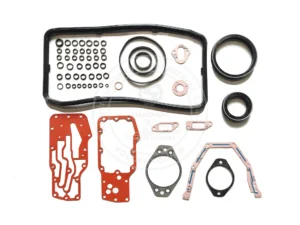
4025108 Lower Engine Gasket Kit for Cummins ISBe4 – Professional Bottom-End Overhaul Set
-
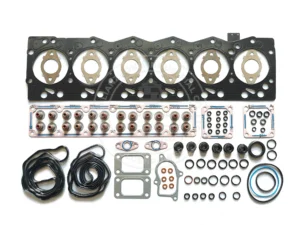
4025138 Upper Engine Gasket Kit for Cummins ISBe6 – Professional Top-End Overhaul Set
-
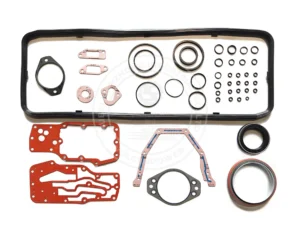
4025139 Lower Engine Gasket Kit for Cummins ISBe6 – Professional Bottom End Overhaul Set
-
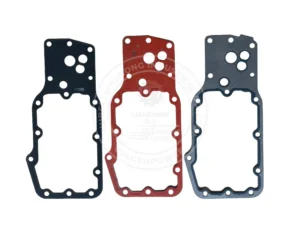
4895742 Cummins Genuine Oil Cooler Core Gasket for ISDe Engine
FAQ: Navigating Your Dashboard's Cummins Engine Codes
Quick FAQ Summary
| Question | Short Answer |
| Will disconnecting the battery clear codes? | No, modern ECMs store codes in permanent memory. |
| Can an exhaust leak trigger an engine code? | Yes, absolutely. It alters pressure readings. |
Will disconnecting the battery clear my Cummins engine codes?
No. This is an old trick that worked on cars in the 1990s, but modern X15 ECMs store fault codes in non-volatile memory. Disconnecting the battery might temporarily turn off the light on the dash, but the Cummins engine codes remain stored deep in the computer. They will illuminate the check engine light again as soon as the engine runs its next diagnostic cycle.
Can a simple mechanical exhaust leak really cause Cummins engine codes?
Yes. Modern diesels rely on a highly delicate balance of air pressure and exhaust flow. An exhaust leak before the turbocharger or DPF sensors alters the pressure and temperature readings that the ECM is expecting. This causes the computer to think a sensor has failed or a turbo has died, prompting it to throw emission or underboost Cummins engine codes.
Conclusion
Navigating the complexities of modern heavy-duty engines doesn't have to be a guessing game. By learning how to read your dash, respecting critical warning lights, and understanding that electronic codes often stem from physical mechanical leaks, you can protect your livelihood. Always prioritize finding the root cause, and remember: the best way to keep those dreaded codes away is by building your engine back up with top-tier, reliable sealing components.