
A diesel engine overhaul kit list is a repair-specific bill of materials, not a universal shopping list. The right order connects approved work, engine identification and inspection findings with the parts actually included in each offered package. These nine checks help buyers separate required mechanical components, sealing items, consumables and services without assuming that every overhaul needs the same replacements.
Estimated reading time: 7–9 minutes.
Table of Contents
For kit-scope context, read Cummins gasket kit contents and scope differences. A cross-reference should identify a candidate; the controlled contents list defines what is actually being offered.
Approved Diagnostic Scope
Begin with a documented diagnosis and proposed repair scope from qualified personnel. The applicable service procedure determines which inspections and tests are needed. Do not order a complete rebuild merely from mileage, one symptom or a generic checklist. Identify confirmed work, conditional work and items that cannot be specified until further inspection.
Build the diesel engine overhaul kit list in stages when findings remain open. Mark provisional items clearly and agree who can authorize a change. This lets purchasing check availability without confusing an inquiry with an approved order, while the workshop retains responsibility for determining the necessary repair.
Engine Identity and Installed Changes
The engine serial number serves as the primary identifier for determining the original factory configuration. However, this serial data cannot guarantee that all internal dimensions remain unchanged since the original manufacturing date. Procurement teams must acknowledge that heavy-duty equipment frequently undergoes aftermarket modifications, accessory swaps, or previous rebuilds that alter the required component profile. Use Cummins parts information for applicable engine-specific reference resources.
Building an accurate diesel engine overhaul kit list requires physically verifying the installed hardware against the active parts catalog. Technicians must inspect the block, cylinder head, and auxiliary mounts to confirm that the physical components match the documented serial data. Identifying field modifications early prevents the arrival of incompatible replacement parts.
| Identification Source | Information Provided | Inherent Limitation |
|---|---|---|
| Engine Serial Number | Identifies original factory build sheet | Does not reflect later aftermarket changes |
| CPL when available | Supporting engine identification | Not a universal dimension or material specification |
| Physical Inspection | Verifies actual current hardware condition | Access and measurement needs depend on the component |
In-Frame Versus Engine-Out Access
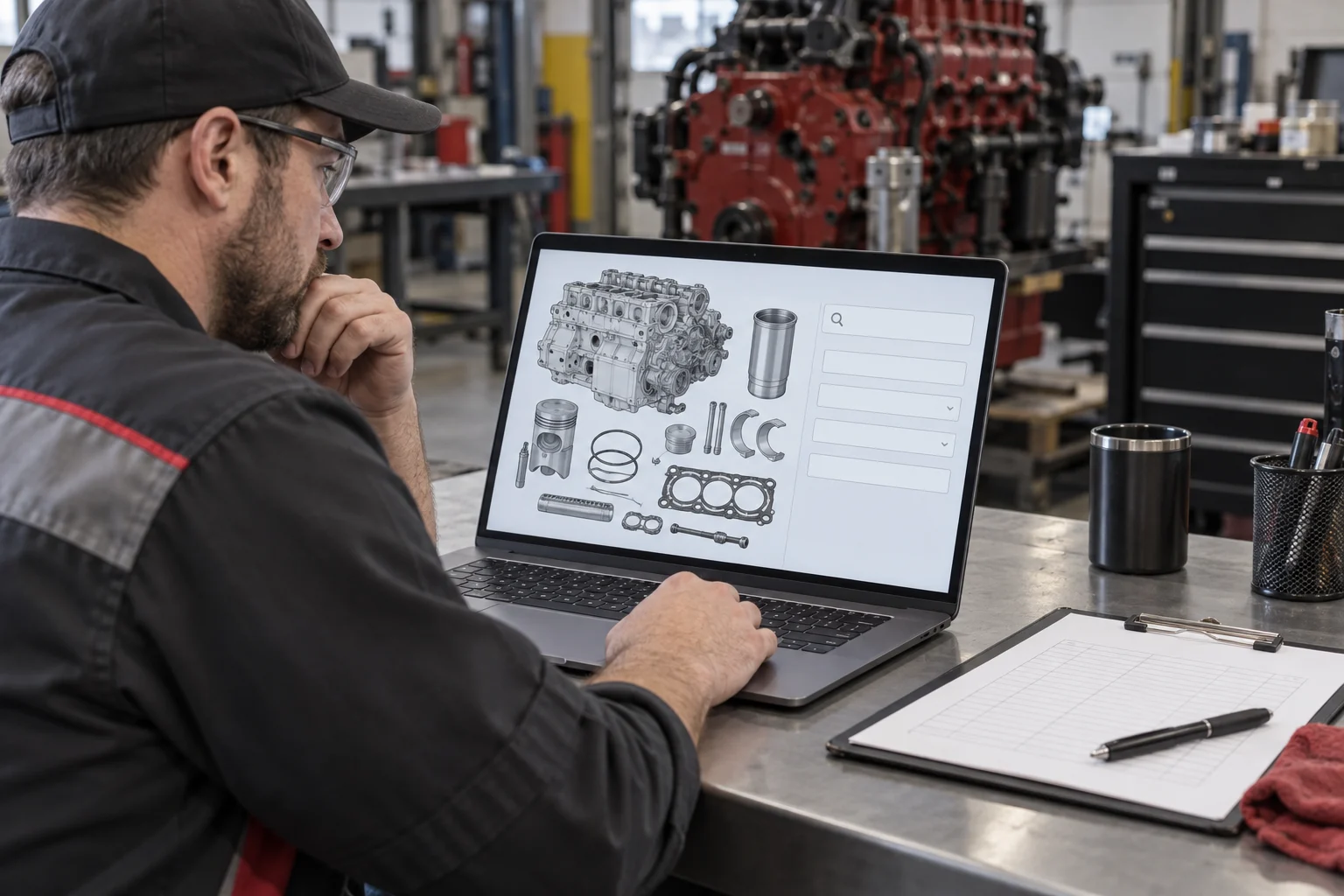
In-frame work leaves the engine installed; engine-out work involves removal from the equipment. Access depends on the engine, chassis and approved procedure. Neither label defines a fixed contents list. Record the actual assemblies to be opened and the connections to be disturbed rather than assigning every seal from a generic category.
Removing an engine does not automatically require crankshaft machining, a new camshaft or replacement of every internal component. Conversely, leaving it installed does not establish that a particular joint will remain untouched. Match the diesel engine overhaul kit list to the approved operation plan and revise it when inspection changes that plan.
| Work description | Clarification | Parts-list consequence |
|---|---|---|
| In-frame | Which assemblies can and will be serviced? | List actual disturbed interfaces |
| Engine-out | What additional disconnection and work is approved? | Add the relevant required items |
| Conditional repairs | What finding triggers a revised scope? | Hold unresolved sizes or parts pending review |
Piston, Ring, and Liner Specification
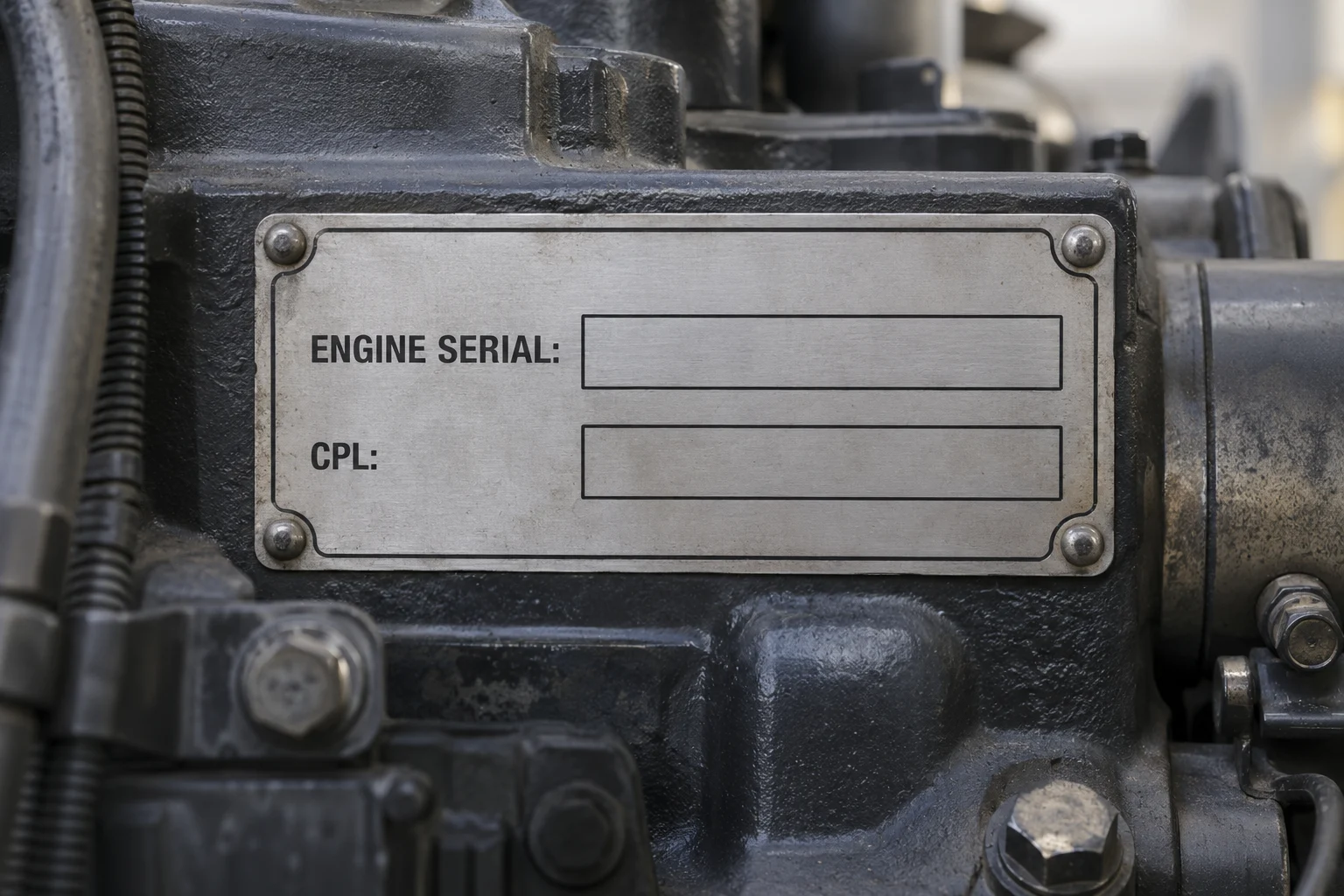
Power cylinder components are the heart of any major rebuild, but their specifications depend heavily on precise physical measurements rather than generic model numbers. Engines utilize different architectures, meaning there is no universal liner type applicable across all blocks. Technicians must carefully determine whether the engine utilizes wet liners, dry liners, or a parent bore design.
Specify required power-cylinder components using the applicable parts information, condition assessment and measurements prescribed for that design. Confirm any approved size, grade or repair option before ordering. Do not infer liner type, piston specification or gasket thickness from a family name, or treat an unverified old component as a complete specification.
Bearing Specification if Required
Where bearing work is approved, confirm the relevant component identifiers and the measurements required by the service procedure. Prior machining or repairs may affect the replacement requirement. The availability of a standard-size part is not evidence that it is correct for the inspected assembly, and not every engine offers the same repair sizes.
Record the approved bearing specification on the diesel engine overhaul kit list, supported by the relevant inspection or repair record. Do not select a repair size from a generic table or assume machining is permitted. Include related items only as required by the actual work and applicable instructions; sealing and mechanical specifications should be separately identifiable.
| Item under review | Evidence to retain | Purchasing boundary |
|---|---|---|
| Main bearings | Specified inspections and approved part reference | Do not assume a universal standard size |
| Rod bearings | Relevant assembly condition and specification | Confirm any approved repair-size option |
| Thrust components if required | Applicable design and clearance assessment | Do not prescribe a generic correction |
Sealing Interfaces on the Diesel Engine Overhaul Kit List
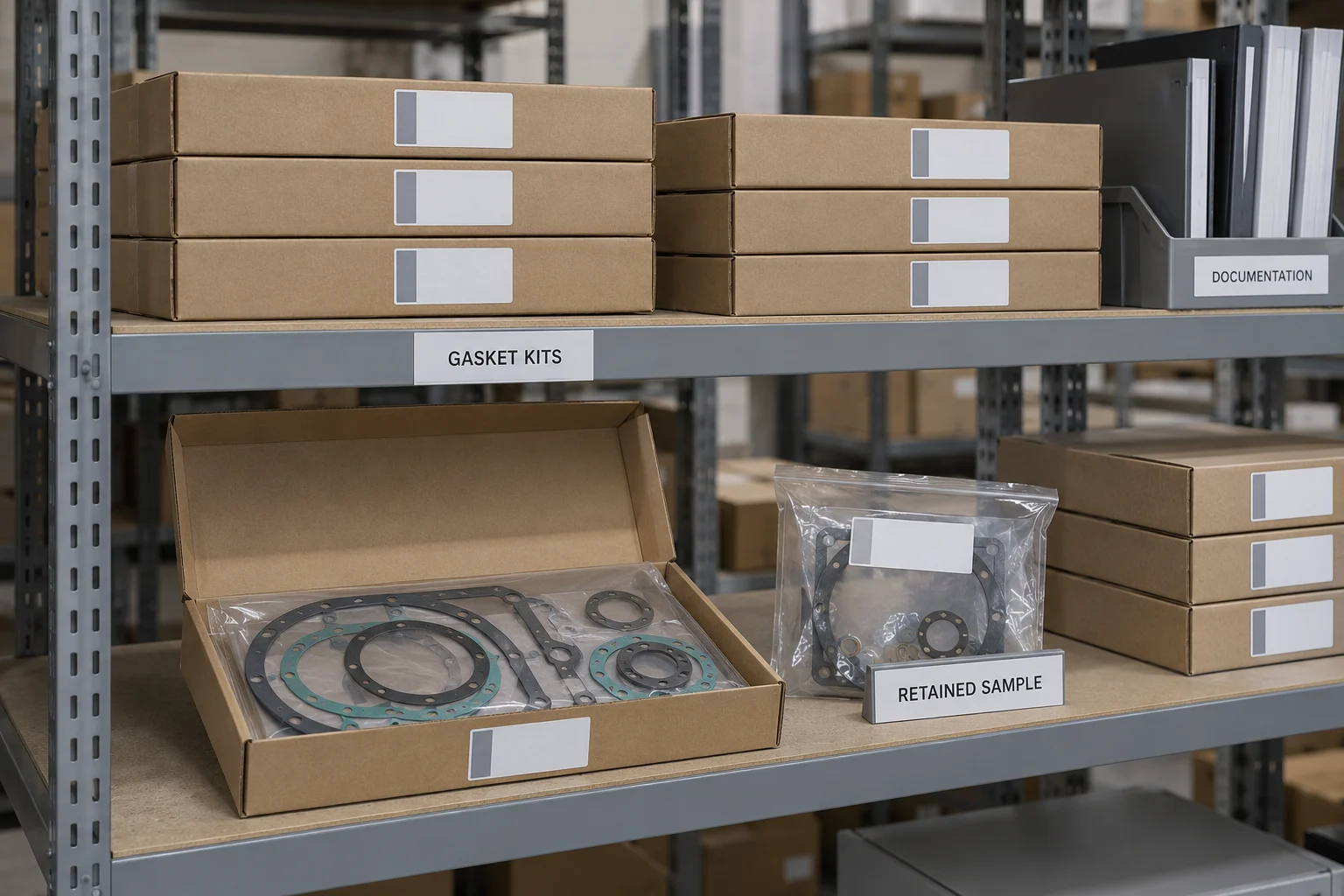
A successful rebuild relies heavily on the integrity of the sealing components separating vital fluids and combustion pressures. Procurement teams must ensure the soft sealing list is thoroughly detailed and segregated from the mechanical hard parts. This separation allows buyers to accurately verify the specific upper and lower gasket sets required for the designated engine block. Elring’s gasket construction overview explains why gasket design cannot be reduced to one material label.
Account for every sealing interface disturbed by the approved repair, then compare that requirement with the offered contents. Head, cover, pan and accessory seals may be divided across packages or sold individually. Do not assume all head gaskets are multi-layer steel, or that a package called “full” covers every optional accessory.
| Interface group | Item to confirm | Evidence |
|---|---|---|
| Head and upper connections | Required gasket and companion seals | Applicable part and installation specification |
| Pan and housing joints | Installed configuration and disturbed joints | Work order and parts records |
| Shaft sealing where disturbed | Seal design and any required companion components | Design-specific repair instructions |
Cooling, Fuel, Lubrication, and Accessory Work
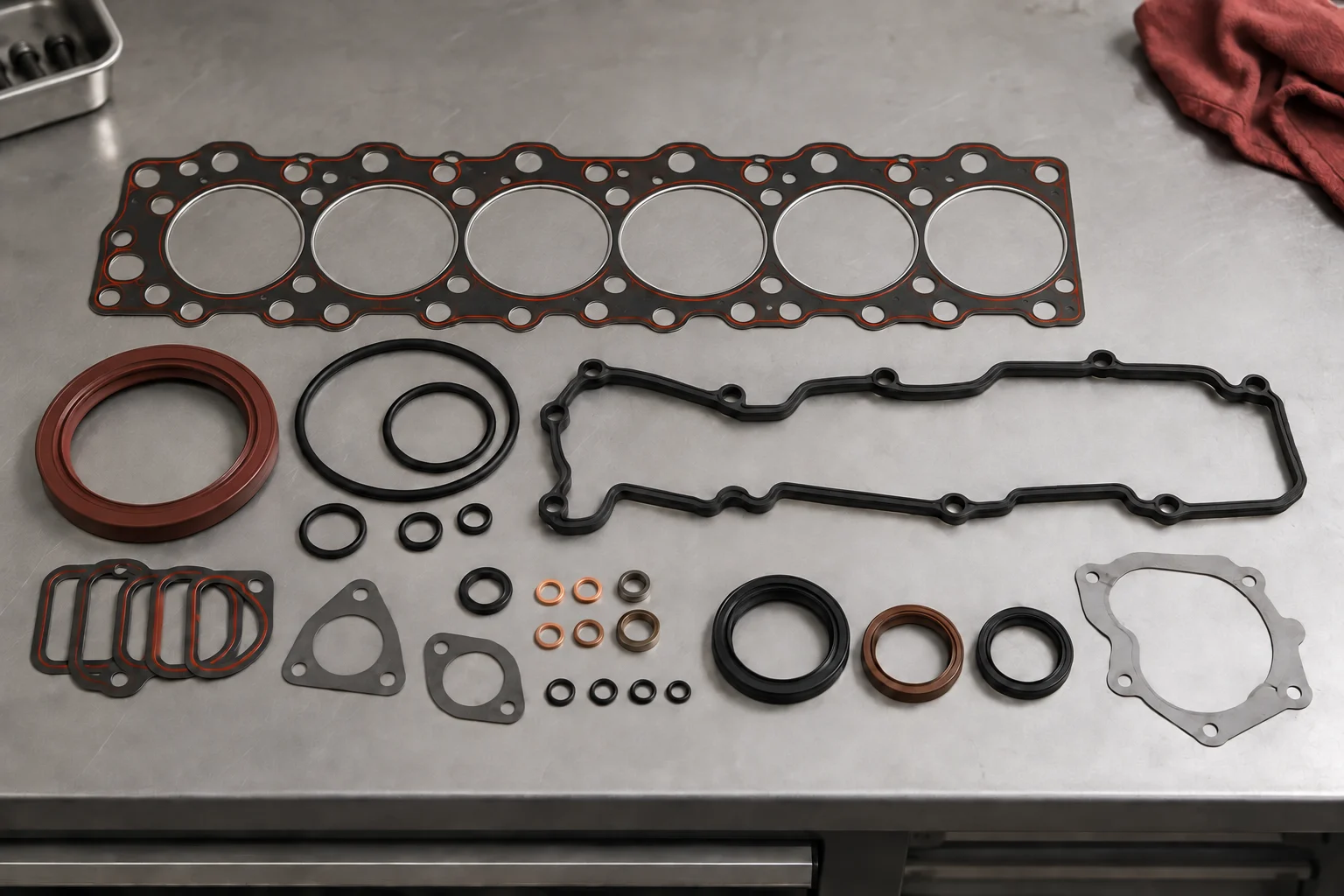
Review the cooling, fuel, lubrication and accessory assemblies that the approved work will disturb. Do not assume every pump or injector must be removed or replaced during every overhaul. If a separate inspection identifies additional work, document the revised requirement and distinguish a complete component replacement from replacement of its seals.
List required O-rings, molded seals, washers or mounting gaskets with an adequate identifier and quantity. Cross-check the component and sealing-package lists so a companion seal is not ordered twice or omitted. For an accessory changed since the original engine build, verify the installed unit rather than relying on the original engine record alone.
Fasteners, Consumables, and Services Exclusions
Check fasteners, consumables and external services as explicit inclusions or exclusions. Gasket-package names do not establish whether hardware is supplied. Follow the engine-specific criteria for fastener inspection or replacement; do not assume all head or bearing-cap bolts share one design or reuse rule.
Add specified fluids, lubricants or sealants only where required by the relevant procedure. Separate machining, cleaning and external testing from physical kit contents, and authorize those services on their own terms. This makes the diesel engine overhaul kit list useful for scheduling without turning it into an unsupported installation recipe.
| Separate line item | Question | Order record |
|---|---|---|
| Fasteners | Which require replacement and are they included? | Required specification and quantity |
| Consumables | Which products does the procedure specify? | Approved product and intended use |
| External services | What inspection or work is authorized? | Scope, price basis and expected return date |
Controlled BOM Receiving
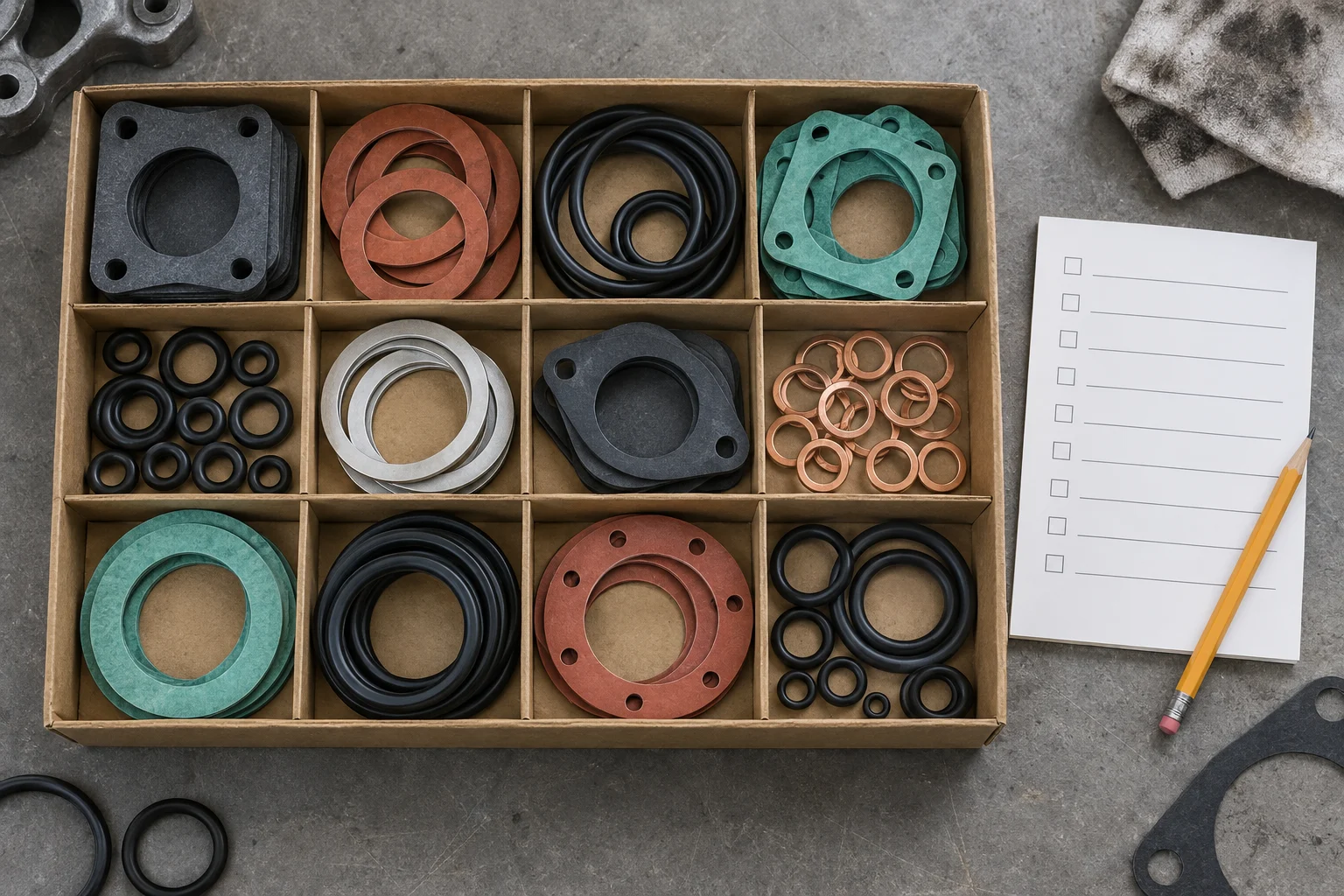
The final critical check occurs when the inventory arrives at the workshop receiving dock. Personnel must conduct a controlled receiving process, physically verifying the delivered components against the approved bill of materials. This inspection confirms that the exact requested piston grades, bearing sizes, and specialized seals are present and undamaged.
Record shortages, identification differences or damage against the affected order line. Keep unresolved items segregated until their disposition is agreed. A complete delivery check is not a substitute for fitment verification or qualified assembly. Retain the final diesel engine overhaul kit list and any approved changes with the repair records.
Overhaul Parts-List Readiness Review
Overhaul Parts-List Readiness Review
This checklist records planning evidence, not a rebuild recommendation or fitment approval.
Frequently Asked Questions
Will providing the engine serial number guarantee all dimensions for my kit?
No. The ESN helps identify the original build. Current configuration, past repairs and the measurements required by the relevant service procedure must also be considered.
Does every overhaul package include the exact same internal components?
No. Kits vary significantly by manufacturer and specific engine application. You must carefully review the dated bill of materials to confirm exact inclusions and exclusions before finalizing your purchase.
Do I need to order different gaskets for an in-frame versus an out-of-frame rebuild?
Possibly. The required seals follow the joints disturbed by the actual repair, not the in-frame or engine-out label alone. Compare the approved operation plan with each proposed kit contents list.
Can I order standard-size bearings without measuring the crankshaft?
Confirm the bearing specification through the applicable inspection and parts-selection procedure, including any required measurements and past repair records. Do not assume a generic standard size is suitable.
Make the Next Decision on Evidence
A useful diesel engine overhaul kit list separates known requirements from unresolved inspection decisions. Define work first, specify each required item, check package coverage and retain approved changes. That produces a clearer order and receiving process without pretending that one kit name guarantees a complete or suitable repair.
Compare the VPGASKET engine gasket range, Cummins gasket options and B-series gasket kits as inquiry starting points. Product references such as the 4025107 upper kit or 3800487 lower kit still require application confirmation. Send your records and proposed scope for review.
See the Cummins overview Parts.cummins.com – Looking For Something Genuine? for catalog context. This archived video is not an aftermarket interchange approval; current navigation may differ.