
A sample arrives looking clean and well packed. The purchasing team wants to release the bulk order, but the workshop notices a missing seal and mismatched labels. An engine gasket kit sample order is valuable only when it resolves questions that might block a larger purchase. These eight checks help buyers, technicians, and suppliers turn a small trial shipment into a reliable approval record.
Estimated reading time: 6–7 minutes.
Table of Contents
For essential background on defining the item before comparing suppliers, read our earlier guide, Cummins Gasket Kit Contents: 7 Critical Scope Differences. Always confirm the exact quoted contents for your specific engine application before making any formal purchasing commitment. Clear definitions prevent scope gaps during sample evaluation.
1. Set the Engine Gasket Kit Sample Order Approval Scope
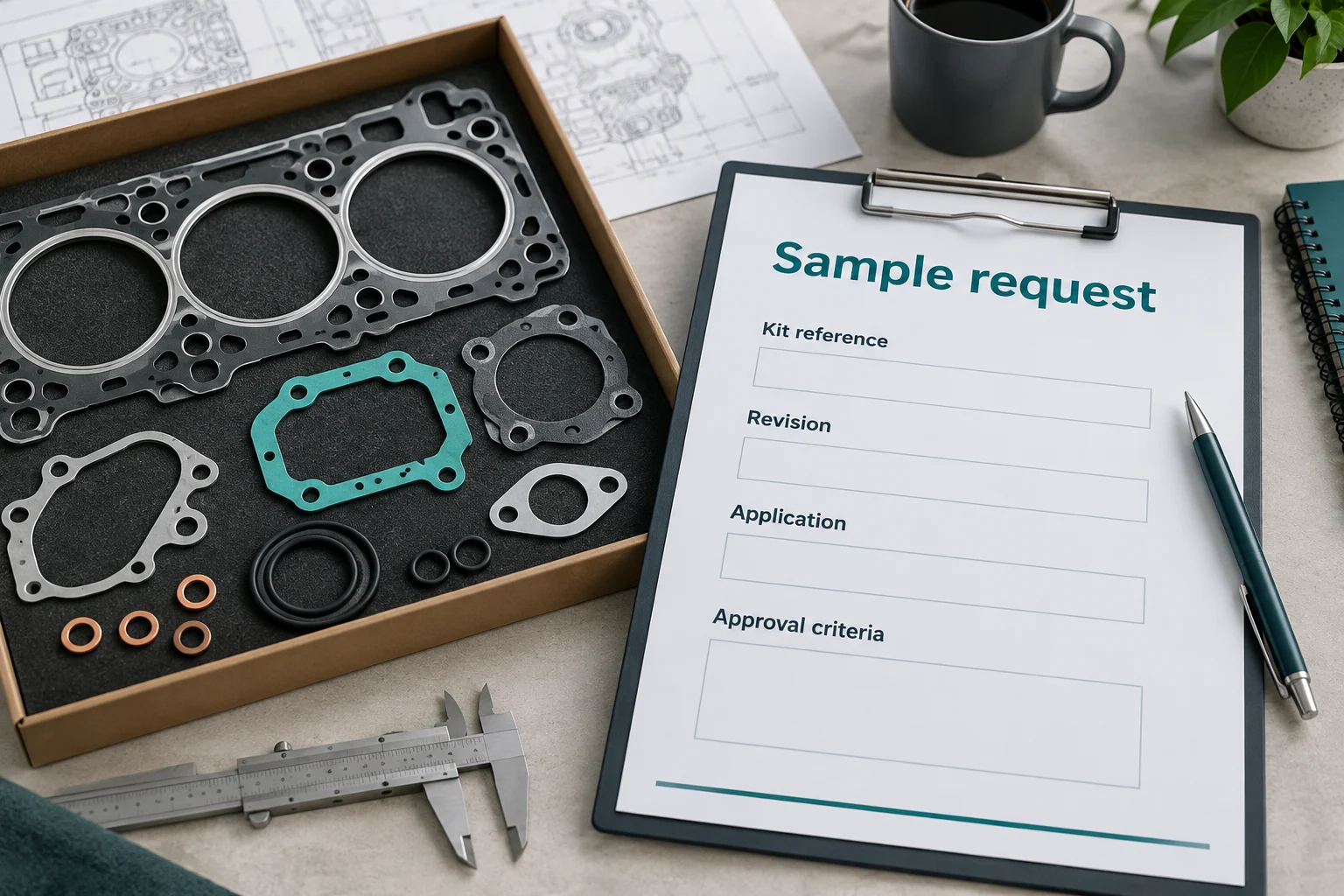
Write clear approval criteria before placing an engine gasket kit sample order. Determine whether you are evaluating a standard configuration, a custom assembly, a new supply source, or a packaging revision, as each requires different evidence. Remember that a polished, hand-selected sample does not automatically guarantee consistency across future mass production.
Specify the reference number, contents revision and intended engine application. A sealing kit that passes a visual inspection may still be incorrect for that configuration. Use the current Cummins parts catalog to support identification from the relevant engine or component information, then resolve the exact quoted aftermarket kit scope with your supplier.
Related video: Watch the official Cummins introduction to Parts.cummins.com for background on the manufacturer’s parts catalog. This is a catalog overview, not a sample-inspection procedure or evidence that an aftermarket kit is genuine or approved by Cummins. Current navigation may differ from the video.
2–3. Verify identity and count every component
When your shipment arrives, photograph the sealed parcel and exterior labels before unpacking. Carefully connect the supplier's sample identifier to your original request and quotation. If any label details differ from the expected documentation, hold the approval process until the supplier formally explains the discrepancy in writing.
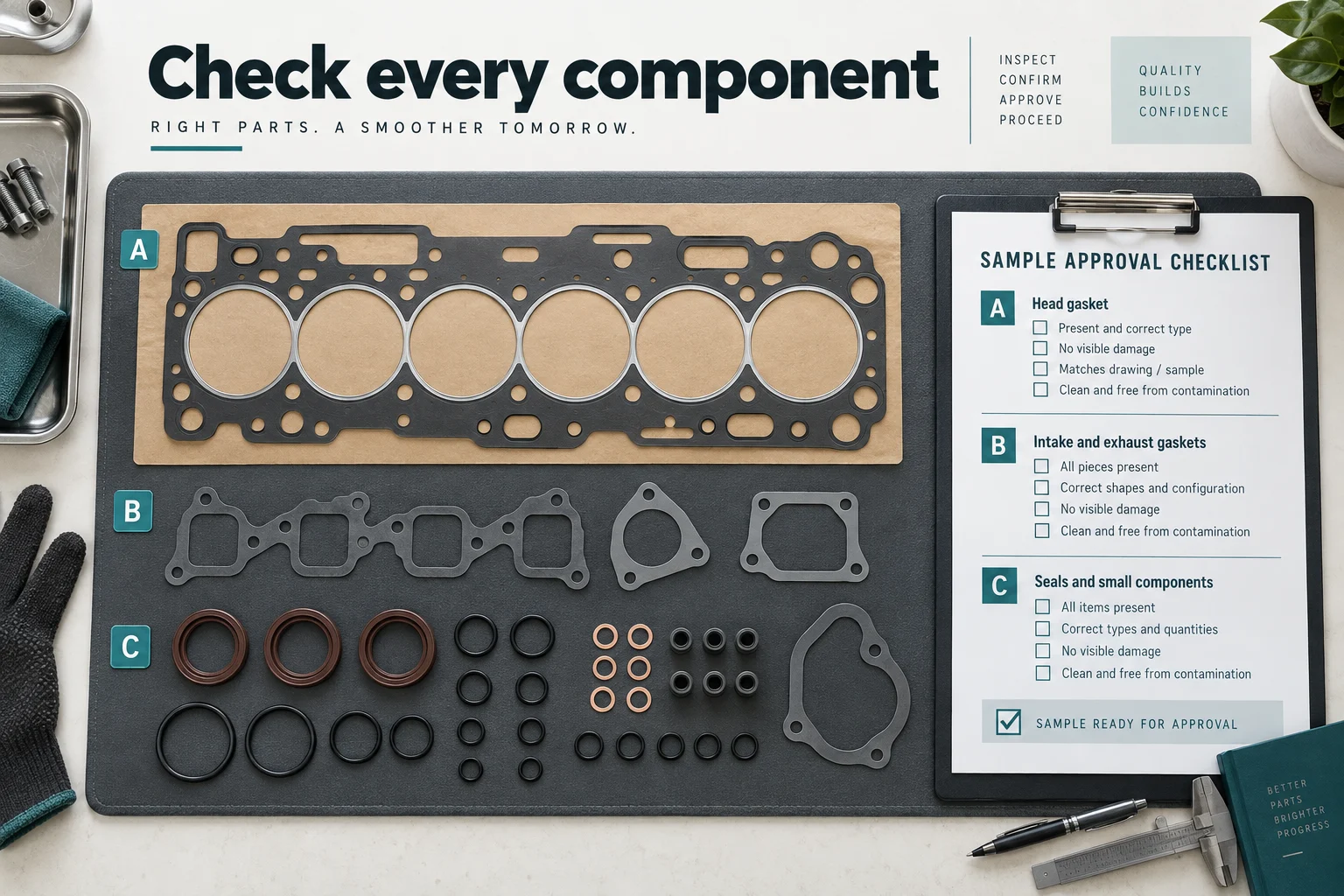
Lay out the received components on a clean surface and compare them against the agreed packing list. Record the exact quantity by individual component, rather than just verifying the total piece count. Several extra small rings cannot compensate for a missing main gasket. Always review the expected gasket kit scope before accepting any optional parts.
4–5. Check condition and the specified characteristics
Inspect the items for handling damage, contamination, creasing, or coating wear that could compromise a critical sealing surface. Avoid bending a flat metal gasket to test flexibility or applying arbitrary chemicals merely to observe a reaction. Record all visual observations carefully without turning an improvised check into an unplanned destructive test.
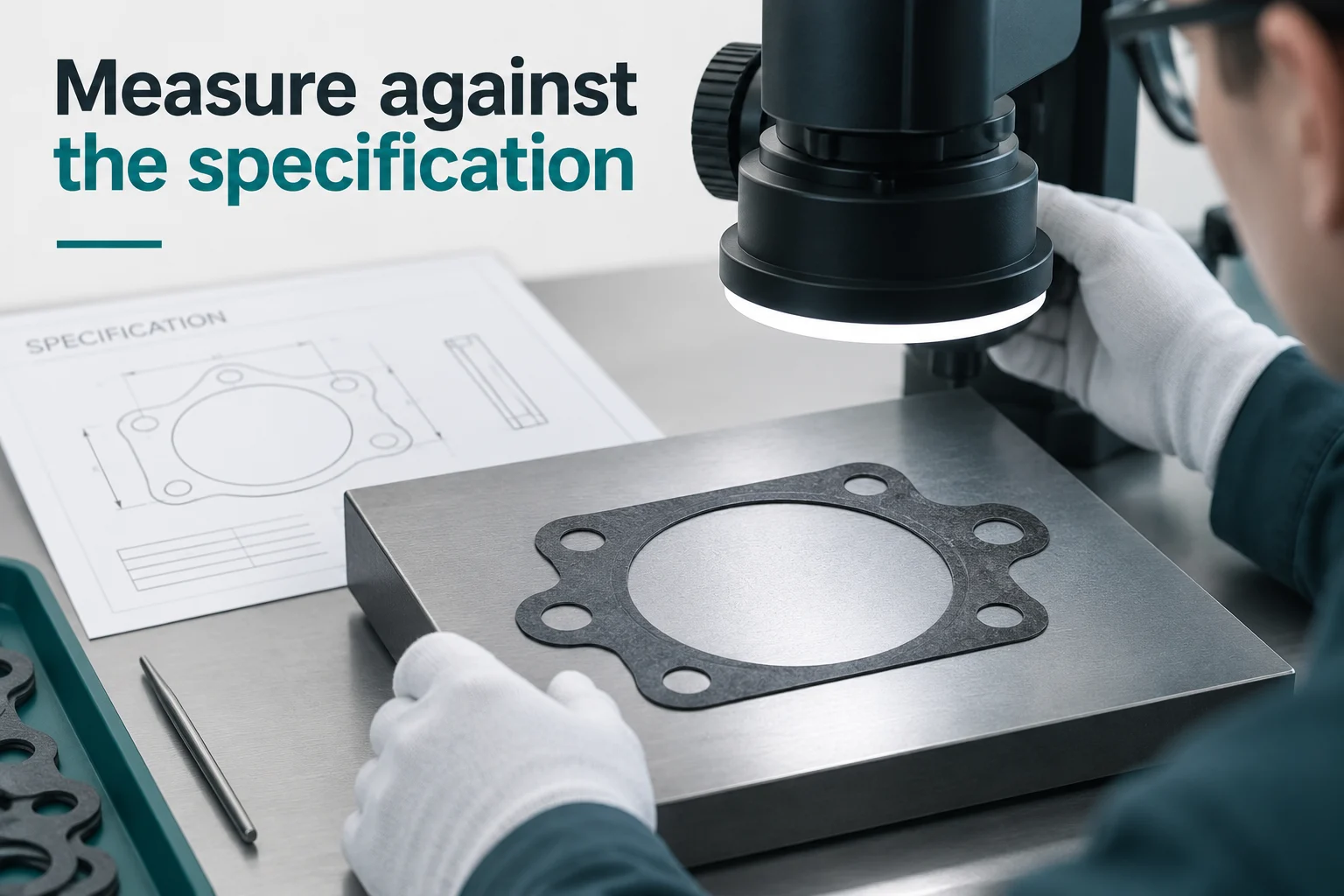
Dimensional and material checks require agreed tolerances, suitable measuring equipment, and a competent reviewer. Visual color is not reliable proof of a specific elastomer compound, and a simple thickness reading does not equal a complete performance assessment. Always ask the supplier to provide relevant specifications and documented evidence for critical characteristics.
Check the items you have confirmed. This tool records readiness questions; it does not certify a supplier or approve fitment.
6. Validate an Engine Gasket Kit Sample Order in Stages
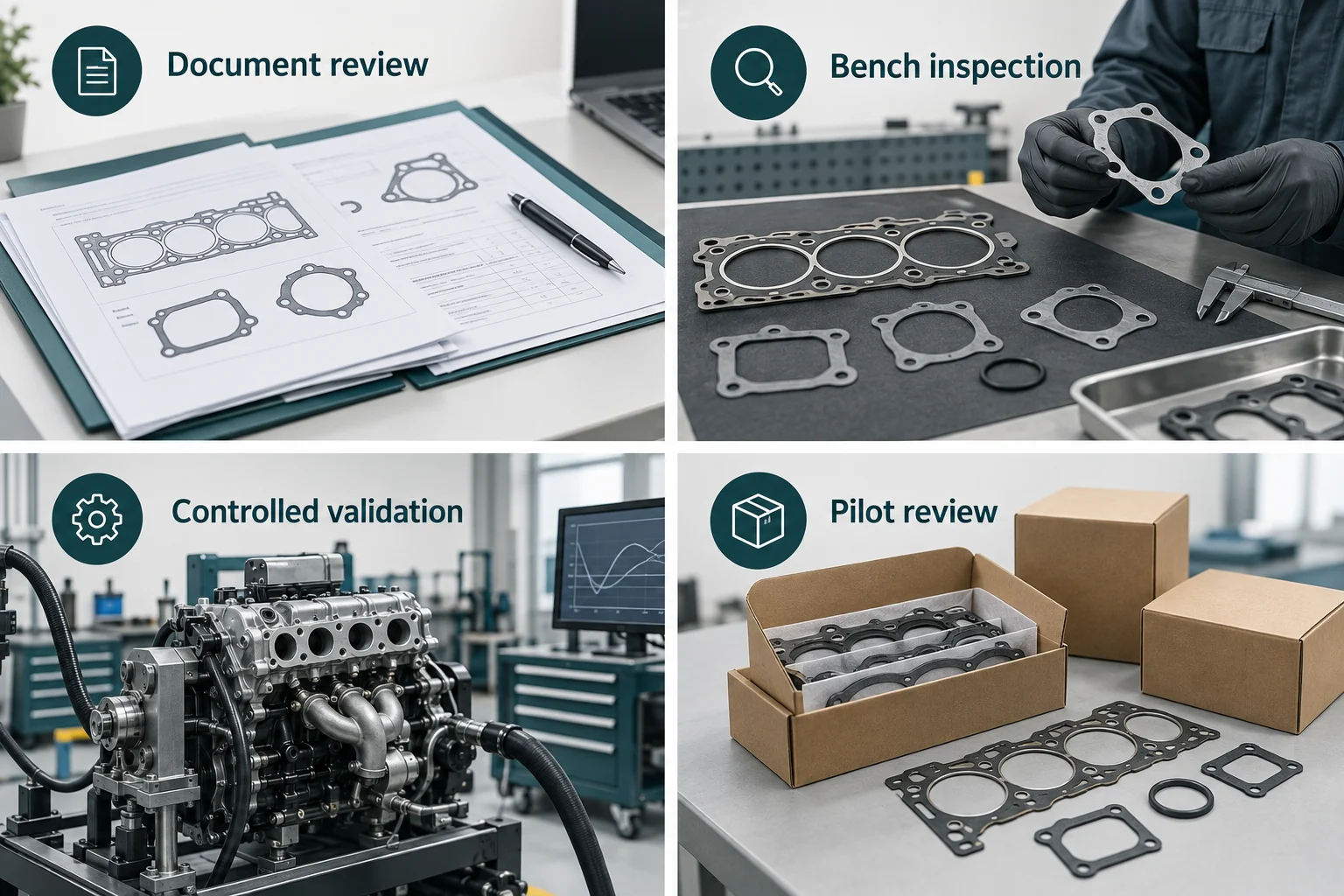
A standard bench check can establish, within the agreed inspection method, part identity, piece count, basic dimensions, and physical condition. It does not by itself establish performance across actual operating conditions. If physical installation or performance validation is necessary, strictly define the engine configuration, testing procedure, acceptance criteria, and responsible technician before beginning work.
Always follow the applicable OEM service instructions during trial installations. Do not assume that a successful fitment on one engine block applies to all variants. The requested sample quantity should cover the planned review, potential destructive tests, and retained reference parts. There is no universal quantity that fits every engine gasket kit sample order.
7–8. Close issues and preserve the approved reference
Methodically classify each inspection finding as accepted, rejected, or awaiting further evidence. A conditional approval must clearly state the exact unresolved items and specify whether bulk production may proceed. Avoid sending vague emails stating 'sample OK' when your workshop technician merely meant that a single dimension was acceptable.
Retain the inspection record, photographs, and physical reference parts in a secure location. Document exactly who authorized the approval and when. Require the supplier to provide advance notice before making material or packaging changes. While ISO's quality-management overview highlights process control, a facility certificate can never replace rigorous sample evaluation.
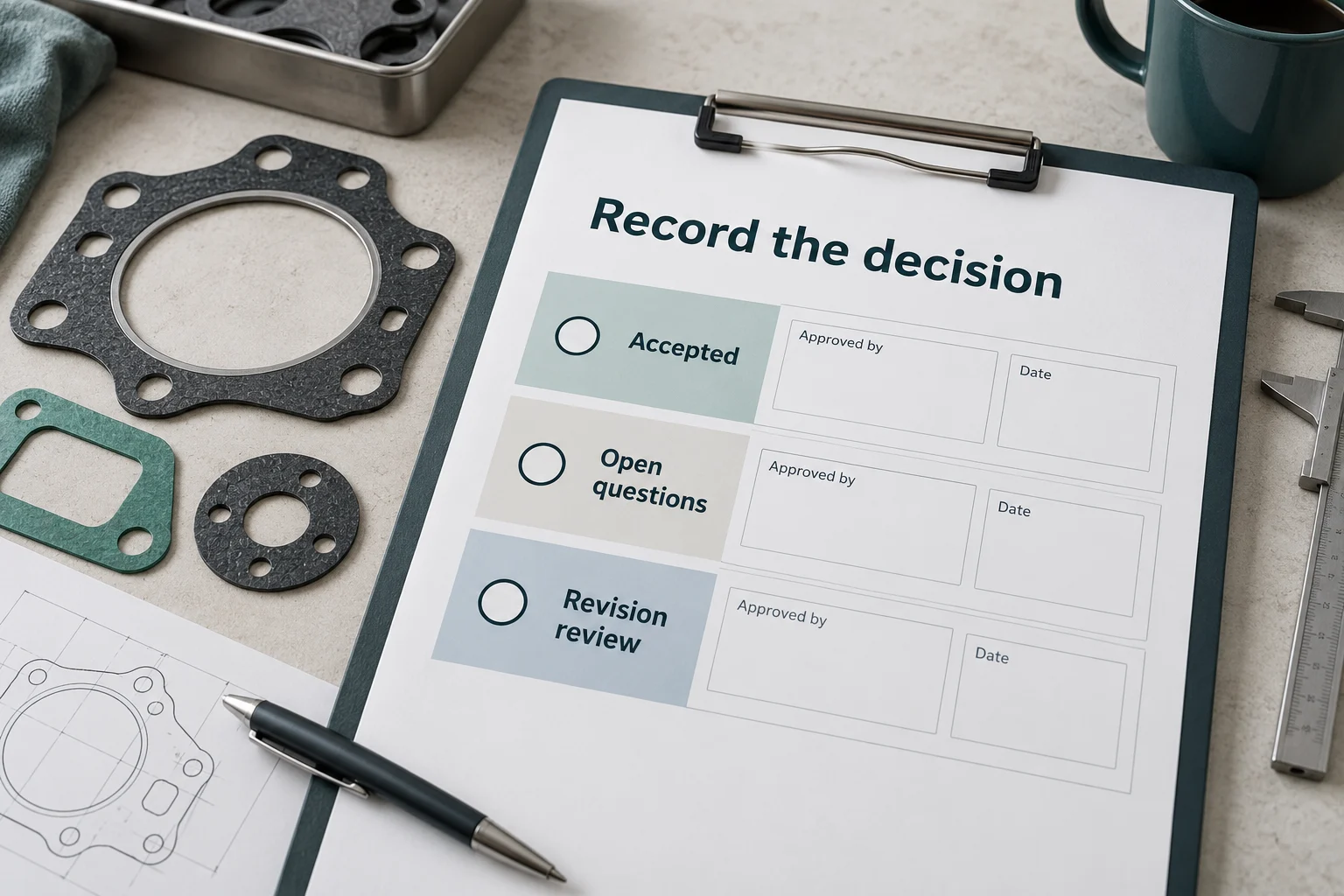
Arrange an engine gasket kit sample order with a purpose
When you contact VPGASKET about samples, be sure to clearly provide the reference numbers, application information, required contents, and your specific technical review criteria. B2B buyers should also confirm inventory availability, applicable sample charges, freight responsibilities, and expected delivery timing before finalizing the trial request to ensure smooth processing.
Reviewing the VPGASKET supply overview and workshop information can effectively help procurement teams prepare for supplier discussions. You may use Cummins' packaging resources as a helpful reference for documented protection standards, but do not treat it as proof that your aftermarket shipment meets an official OEM packaging specification.
Purchasing FAQs
Are samples always free?
Never assume that trial components are provided free of charge. You should explicitly confirm the sample price, international freight costs, and import duties in advance. Additionally, clarify with the supplier whether these initial sample costs can be credited toward a future bulk order upon successful approval.
Can photographs replace a physical sample?
While photographs can successfully support an initial visual review, they are insufficient for comprehensive verification. Images simply cannot establish exact part dimensions, hidden material characteristics, or the true handling condition of the components. Physical inspection remains a crucial step in validating any heavy-duty sealing package.
When should I release the bulk order?
Release a bulk order only when the agreed approval scope is satisfied, unresolved issues are closed or explicitly accepted, and production and commercial conditions are confirmed. Keep a record of any limits on the approval. A successful sample does not automatically establish consistent quality across future batches, so agree the follow-up controls before increasing order volume.