
When receiving heavy-duty sealing components, relying solely on exterior box labels introduces significant risk to the maintenance schedule. A detailed Cummins engine gasket kit packing list provides the roadmap for a structured receiving inspection. Executing these ten critical checks supports accurate delivery verification, confirming that components match the approved specifications and quantities required for the overhaul.
Estimated reading time: 7–9 minutes.
Table of Contents
Read our gasket kit scope and contents guide before comparing supplier offers.
Approved Order and Drawing Revision
The inspection process begins by reconciling the delivered goods against the approved supplier bill of materials. Buyers must understand that an approved supplier document often differs in structure from a generated OEM catalog list. The receiving team must verify the specific drawing revisions and order numbers before opening any internal packaging.
Use the approved order revision as the receiving baseline. A superseded reference is not automatically a nonconformance: any replacement must have a documented, accepted mapping. Receiving acceptance checks delivery against the agreed supply specification; application fitment still needs its own evidence.
For application references, use Cummins parts information. Keep that lookup distinct from the supplier’s contractual packing list.
| Document Source | Primary Function | Inspection Focus |
|---|---|---|
| Purchase Order | Authorizes the transaction | Match itemized supplier part numbers |
| Supplier Bill of Materials | Defines specific kit contents | Verify against received physical items |
| OEM Parts Catalog | Context for engine application | Do not use as direct packing list |

Master Carton Identity
Inspect carton condition and reconcile shipment identity with the purchase order and delivery documents before distributing sub-packs. Check the label fields agreed for the order, such as supplier SKU, quantity and lot reference. Compare gross weight only where a weight requirement or useful baseline was agreed.
Photograph damaged packaging before disturbing it and retain identifiers. A correct outer label supports traceability but cannot prove that all inner items are correct or undamaged.
Mapping the Cummins Engine Gasket Kit Packing List
Once the master carton is open, inspectors must map the individual sub-packs against the Cummins engine gasket kit packing list. It is not necessary for every inner protective bag to feature an OEM part number, provided the supplier SKU links clearly to the authorized component list.
Proper mapping organizes the components by engine system, such as cylinder head or lower block sections. Technicians should preserve the protective packaging where possible during this check to maintain component cleanliness until actual installation begins.
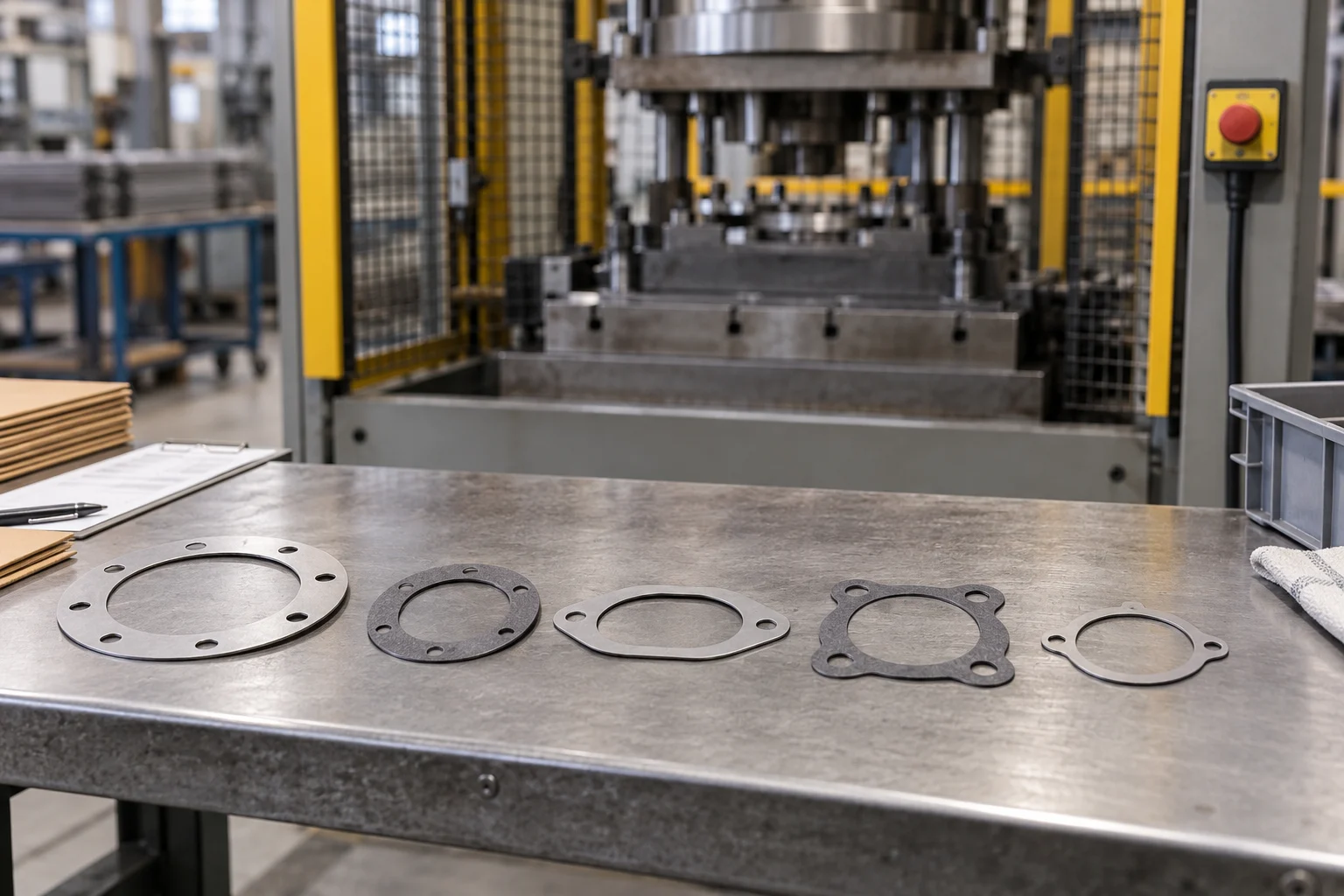
Units Quantity Per Kit Versus Total
Distinguish quantity per kit, number of kits delivered and total loose-piece quantity. Neither cylinder count nor valve count defines every required seal. Reconcile the Cummins engine gasket kit packing list with the approved repair scope and any expressly listed alternates.
Count items using a method that preserves cleanliness and protective packaging. Record shortages or excess quantities against the applicable line item rather than assuming all similar-looking seals are interchangeable.
| Item Category | Counting Challenge | Verification Action |
|---|---|---|
| Small O-Rings | Easily misplaced in bulk bags | Count against itemized line quantity |
| Auxiliary Seals | May include alternates for variations | Verify required specific application count |
| Primary Gaskets | Large items packed tightly | Count complete gaskets; never separate assembled layers |
Small Parts, Duplicates, and Alternates
If the offered package contains duplicate quantities or application alternatives, require the packing list to identify them. Extra pieces are not automatically acceptable substitutes, and a missing required item is not offset by surplus items from another line.
Keep identified alternates protected and separate from parts selected for installation. Resolve unclear quantities or profiles against the approved BOM and application information before release.
Transit Damage and Cleanliness
Inspecting for transit damage and component cleanliness requires careful observation without compromising the materials. Avoid misleading tests, such as checking a multi-layer steel gasket for absolute flatness by looking for daylight under a straight edge, as embossed beads naturally create intended gaps.
Instead, look for severe creases, crushed sealing beads, or ruptured protective packaging that could introduce contamination. Identifying transit damage upon receipt allows procurement to quarantine the affected items before they reach the workshop floor.
| Component Type | Damage Evidence | Handling Action |
|---|---|---|
| Multi-Layer Steel Gaskets | Crushed embossed beads or deep bends | Quarantine and report to supplier |
| Molded Elastomers | Torn packaging introducing shop dirt | Segregate and inspect for contamination |
| Paper or Composite | Creased surfaces or moisture exposure | Hold for review against agreed acceptance criteria |
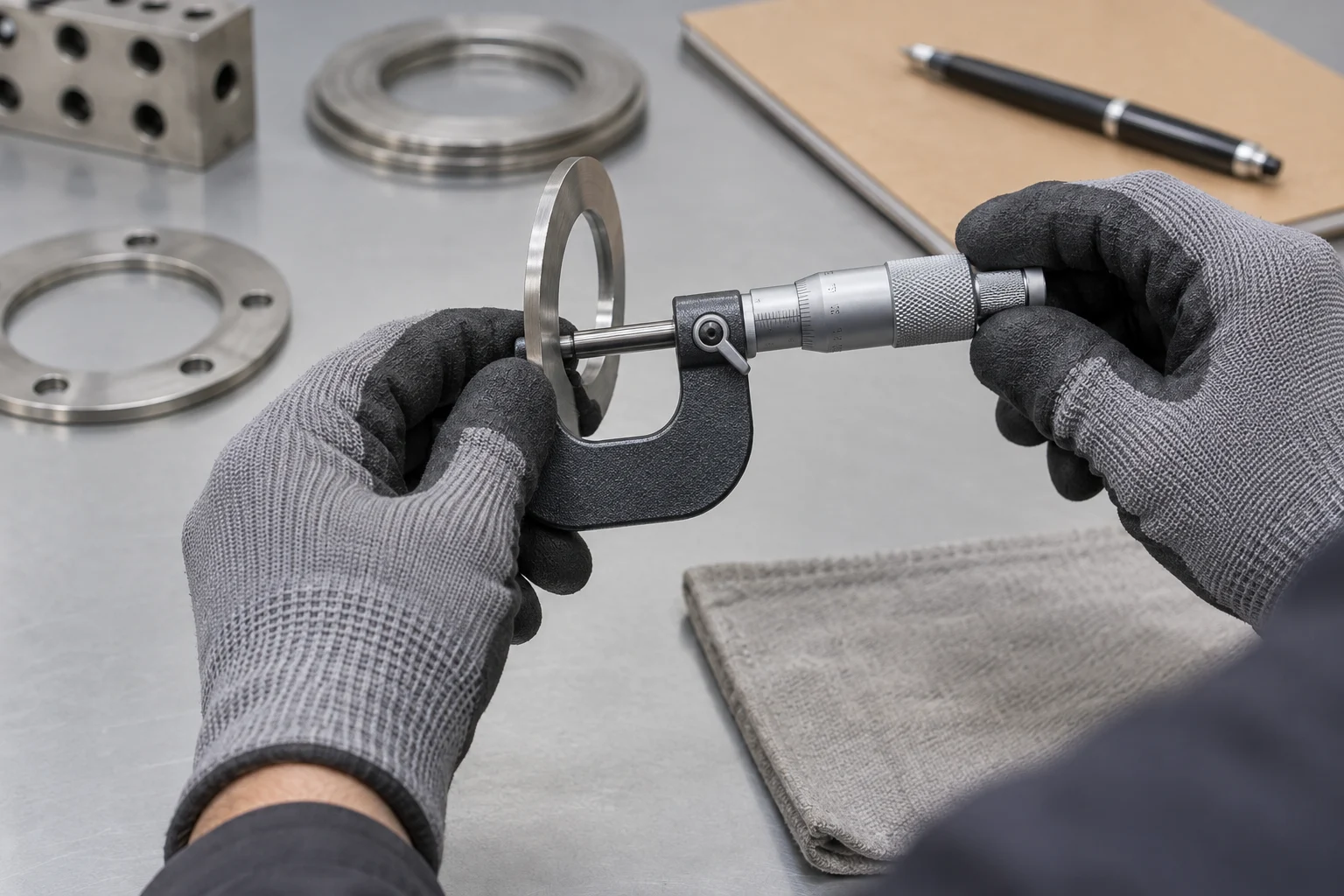
Specified Condition and Material Evidence
Verifying specified condition and material evidence requires relying on documentation rather than visual assumptions. Evaluating the color of a rubber seal is not proof of its chemical compound, as manufacturers use various dyes across different material grades.
Review the material declarations, inspection records or certificates required by the purchase specification, checking their identity and scope. Not every purchase requires the same certificate package. Photographs document condition, not chemistry; a certificate also needs a credible link to the relevant material or lot.
Component Lot-to-Kit Lot Mapping
Tracing component lots to the master kit lot is a critical aspect of quality control. It is completely normal for individual component lot numbers to differ from the master kit identifier, provided the supplier maintains a linked manufacturing record.
This traceability supports targeted investigations if a specific batch of parts is later found defective. The packing list should facilitate this lot-to-lot mapping, allowing the supplier to identify exactly which assembled kits contain the affected parts.
| Traceability Level | Identification Format | Quality Purpose |
|---|---|---|
| Master Kit Lot | Exterior carton alphanumeric code | Links full assembly to the shipment |
| Component batch | Agreed label or linked supplier record | Supports the defined component-to-kit traceability |
| Supplier Record | Internal manufacturer database | Connects components to the master kit |
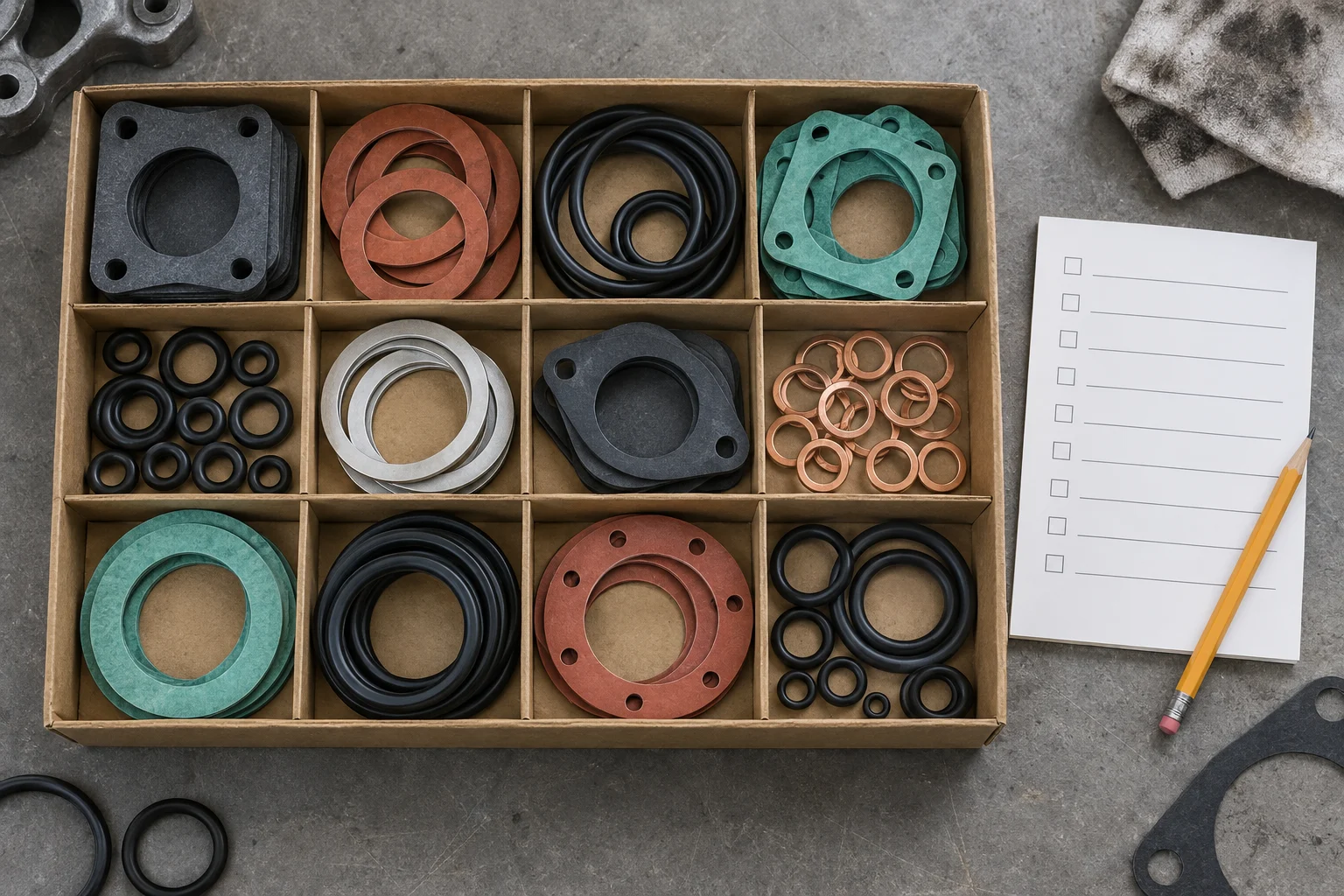
Risk-Based Inspection Coverage
Define receiving coverage using the significance of each characteristic, contract requirements, supplier history and current evidence. Critical hardware can require close attention too. There is no universal sampling percentage for every Cummins engine gasket kit packing list.
Specify the applicable sampling plan or full inspection requirements, acceptance criteria and escalation rules. Sampling has limitations and does not prove every uninspected item conforms. Keep the results and reviewer decision with the receiving record.
The ISO 9000 family overview explains quality-management context; a management-system certificate is not proof that this particular kit passed inspection.
Discrepancies and Authorized Release
When discrepancies occur, the receiving team must execute a structured quarantine procedure. If a component is missing, segregate the affected kit pending disposition rather than mixing it with active inventory or assuming a replacement will arrive instantly.
An inter-kit transfer needs authorization, confirmed part identity and acceptable condition. Record source and destination kit and lot references, and update both quantities and release status. Do not leave the donor kit marked complete after removing a required component.
| Identified Issue | Immediate Response | Documentation Required |
|---|---|---|
| Missing Component | Segregate the incomplete kit entirely | Note shortage on receiving report |
| Damaged Primary Gasket | Quarantine item pending supplier review | Photograph damage in original packaging |
| Borrowed Part Transfer | Authorize and verify the transfer before movement | Record lot numbers and update inventory counts |
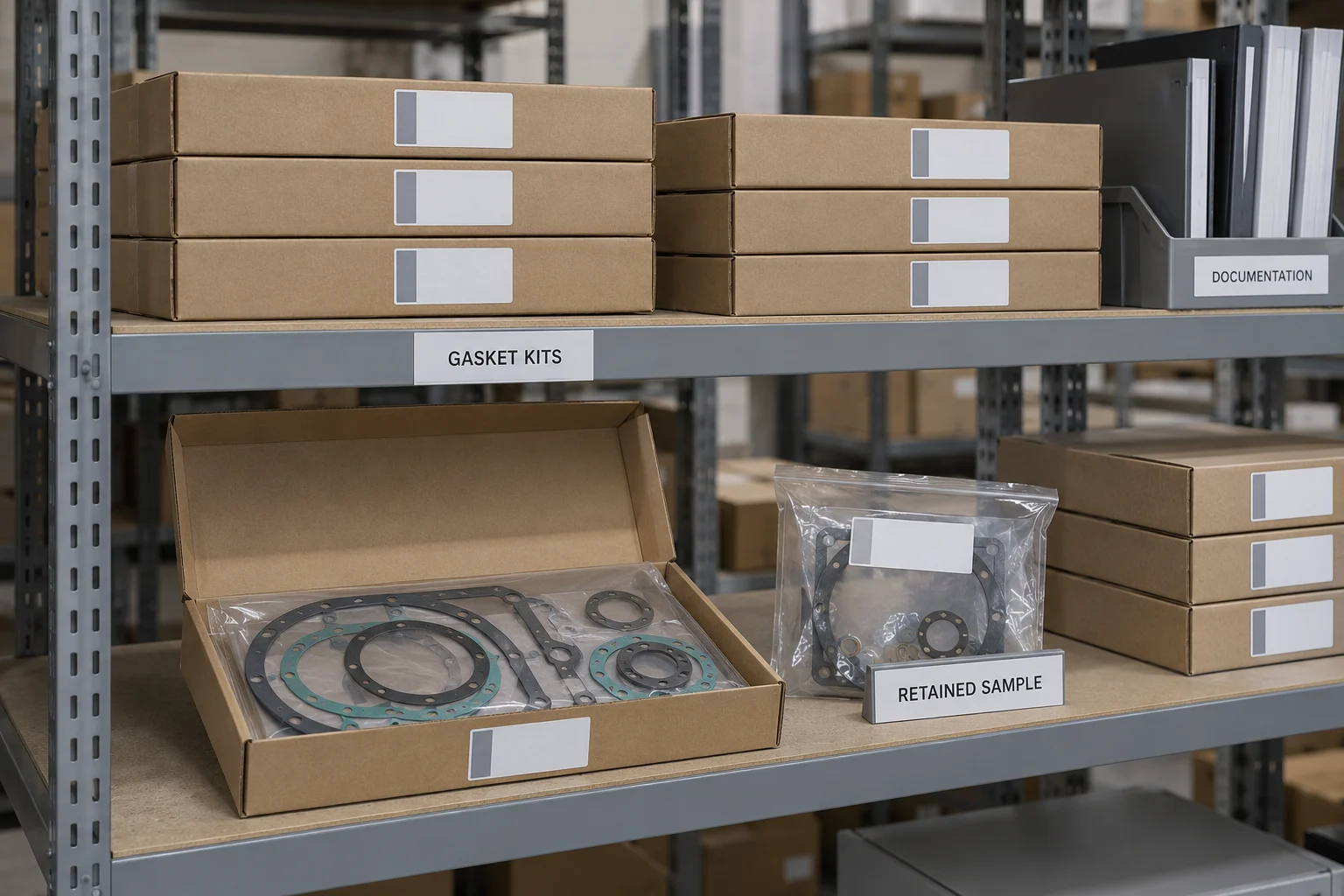
Receiving Evidence Checklist
Receiving Evidence Checklist
This records evidence only. It does not approve fitment, release a kit or authorize installation.
Frequently Asked Questions
Must every inner bag in the kit contain an OEM part number?
Not necessarily. Use the label requirements agreed for the purchase. A supplier SKU can provide the identity link where it maps unambiguously to the approved BOM; this does not override any required OEM reference or traceability field.
Is a ten percent sampling rate required for inspecting incoming gaskets?
There is no universal sampling percentage. Inspection coverage should be risk-based, depending on the complexity of the components and the historical performance of the supplier.
Can I test a multi-layer steel gasket by checking for daylight under a straight edge?
Do not use an improvised daylight test as an acceptance rule. Embossing and other intended features must be evaluated using the approved product inspection method and criteria, without flattening or separating the gasket.
What should the receiving team do if a component is missing from the kit?
The receiving team should segregate the entire affected kit pending disposition. Document the shortage on the receiving report and contact the supplier to resolve the discrepancy before releasing the kit to the workshop.
Make the Next Decision on Evidence
Use the Cummins engine gasket kit packing list as a controlled receiving reference, supported by quantity checks, condition evidence and agreed traceability. Document discrepancies and obtain an authorized disposition before release. Receiving acceptance does not by itself establish suitability for every engine or authorize installation.
Explore Cummins application gasket products and engine gasket sets for sourcing context. Send the identifiers, scope and approved BOM to discuss availability and unresolved requirements in writing.
Watch this VPGASKET factory overview for manufacturing context. A video does not certify a received lot or replace order-specific inspection.